
FREE DOWNLOAD – B.F.S INDUSTRIE
Explore the full spectrum of services and industries covered by B.F.S Industries.
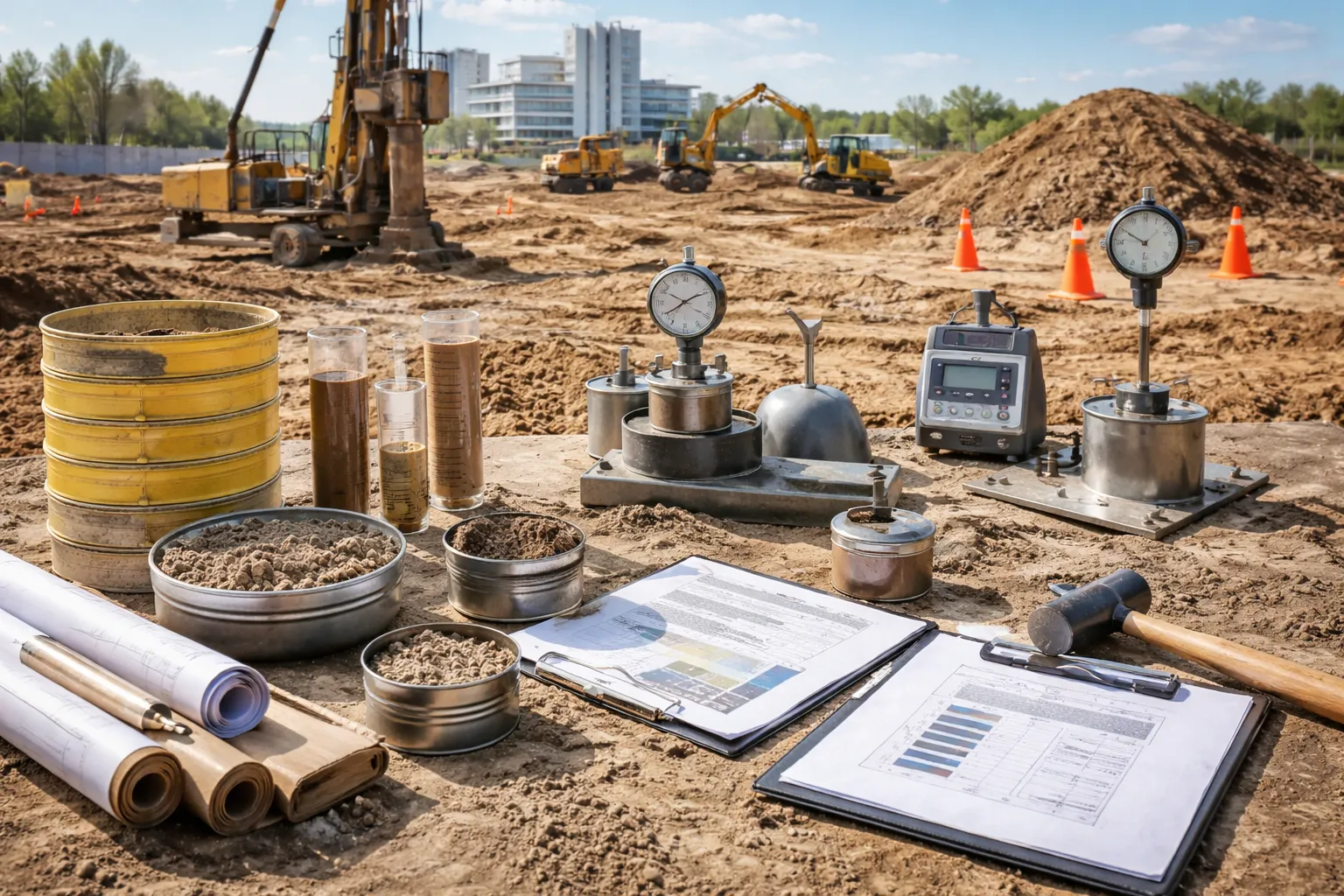
Every structure, from a simple residential home to a towering skyscraper, rests upon the earth. The unseen characteristics of the ground beneath are arguably the most critical factor determining a project’s stability and longevity. Geotechnical engineering, the branch of civil engineering concerned with the earth’s materials, relies heavily on rigorous analysis to mitigate risks like settlement, collapse, and structural failure. This makes understanding the various Types of soil tests not just a best practice, but a fundamental requirement for safe and durable construction. This comprehensive guide will walk you through the essential classification, strength, compaction, and environmental tests used to evaluate site suitability, ensuring that your next project starts on solid ground.
Understanding the Importance of Soil Testing in Construction
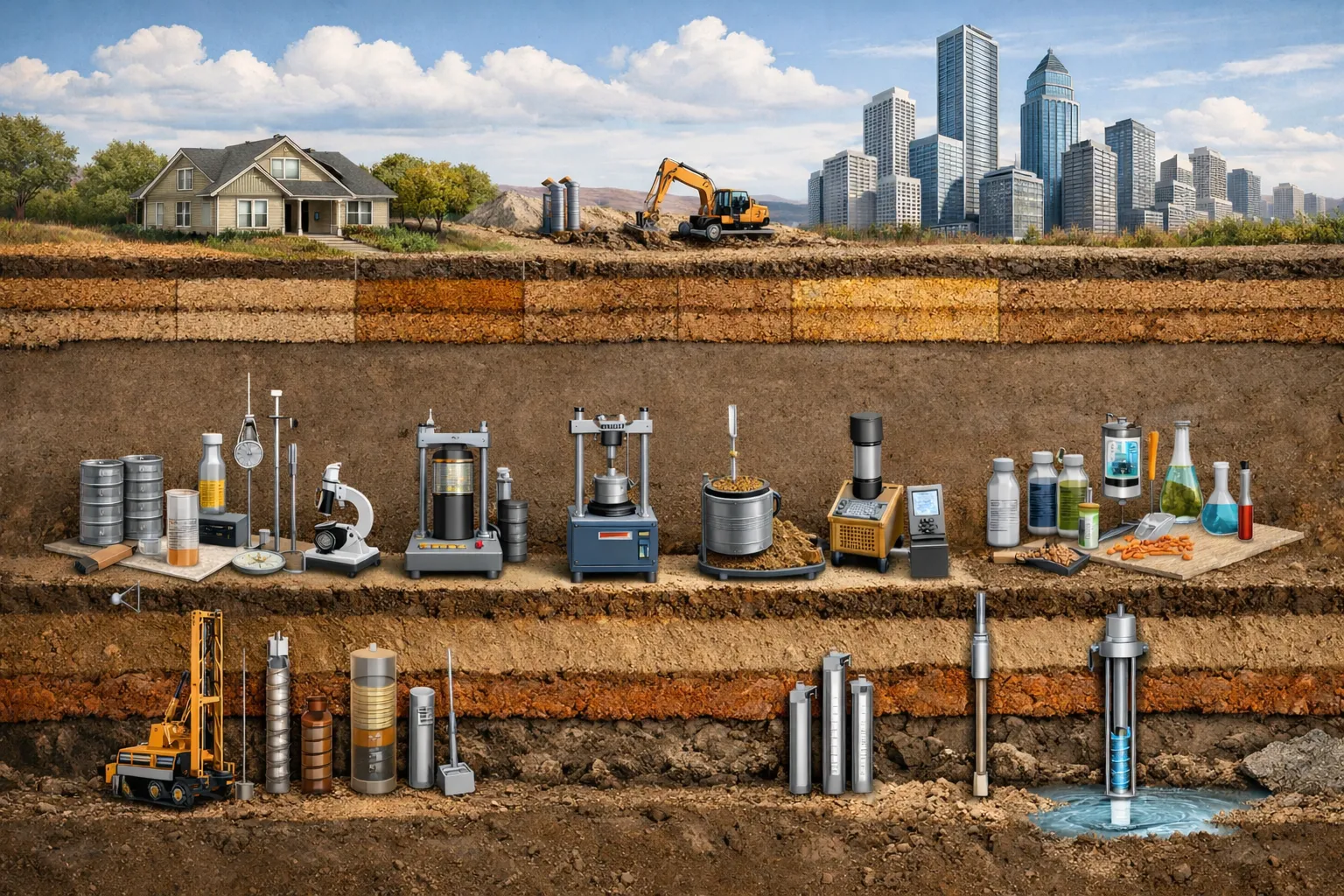
The first step in any major construction undertaking—even before the first piece of Concrete Column Formwork is assembled—must be a thorough investigation of the sub-surface conditions. Soil testing is indispensable as it provides engineers with the precise parameters needed for foundation design. Without this critical data, designs would be based on assumptions, leading to potential catastrophic failure or expensive rework. The insights gained prevent over-designing (which wastes material and money) and under-designing (which compromises safety), making the investment in comprehensive soil investigation a foundational element of project economics and safety.
How Soil Behavior Impacts Structural Safety
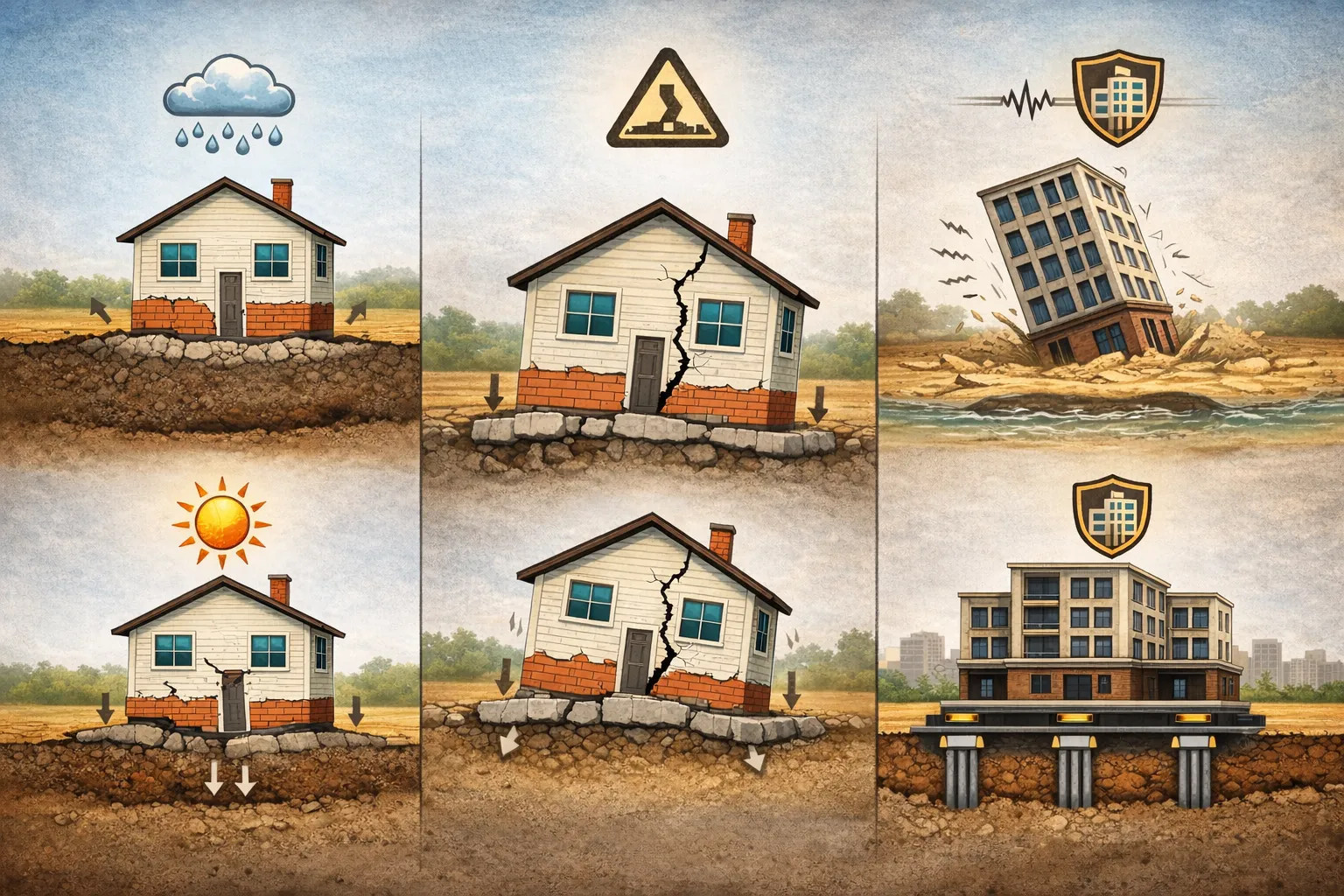
Soil is not a static material; its properties change significantly in response to moisture, temperature, and applied load. A building imposes considerable stress on the underlying soil, and the soil’s reaction—its ability to compress, shear, or consolidate—directly dictates the stability of the structure above. Clay soils, for instance, are notorious for their tendency to swell when wet and shrink when dry, leading to differential settlement that can crack walls and foundations. Sandy or gravelly soils, while having high bearing capacity, can be prone to liquefaction under seismic activity. By accurately predicting these behaviors through specific tests, engineers can apply essential principles of Earthquake-Resistant Construction Techniques, thereby ensuring maximum structural safety.
Role of Soil Tests in Early Construction Stages
Soil tests define the entire engineering approach, dictating everything from foundation type to the construction methods employed. The preliminary soil survey is one of the very first activities in the overall Stages of building construction. It reveals the depth to groundwater, the presence of bedrock, and the soil’s stratification (layers), all of which are vital inputs for site preparation. For instance, knowing the water table depth influences dewatering planning, while identifying weak or unstable soil layers immediately flags the need for deep foundations like piles or caissons instead of simple shallow footings. The data gathered provides the bedrock (pun intended) for the entire project’s geotechnical report.
Classification Tests: Identifying Soil Composition
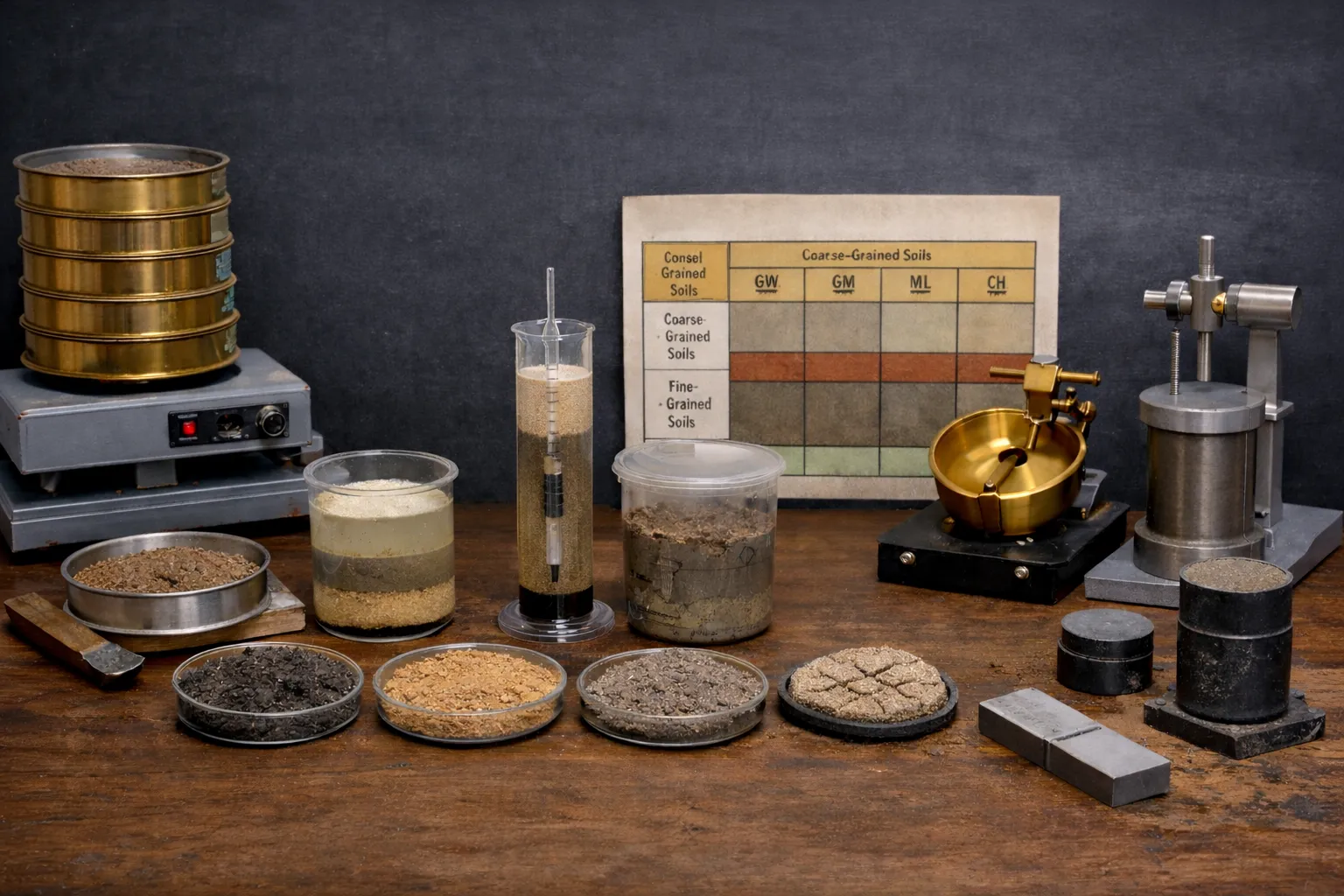
Classification tests are the initial and most fundamental suite of laboratory procedures. Their primary goal is to determine the physical properties of the soil—its constituent parts and how they relate to one another. This foundational data allows engineers to classify the soil according to established systems, such as the Unified Soil Classification System (USCS), which then serves as a common language for predicting its engineering behavior. Understanding the composition is the first critical step toward predicting how the soil will perform under load and environmental changes.
Moisture Content and Atterberg Limits Tests
Moisture content is the ratio of water mass to the mass of dry soil, a key parameter affecting strength and volume change. The Atterberg Limits, however, are specifically designed for fine-grained soils (silts and clays) and define the critical moisture contents at which the soil changes its state. These three limits are: the liquid limit (the moisture content at which the soil passes from a plastic to a liquid state), the plastic limit (the content at which it becomes brittle), and the shrinkage limit (the point below which no further volume reduction occurs upon drying). These limits are essential for calculating plasticity index, a measure used to identify highly expansive or problem soils.
Particle Size Distribution and Specific Gravity Tests
Particle size distribution, typically determined via sieve analysis for coarse soils and hydrometer analysis for fine soils, reveals the percentage of gravel, sand, silt, and clay within the sample. This distribution is critical because particle size strongly influences permeability, shear strength, and drainage characteristics. Specific gravity is the ratio of the mass of a given volume of soil solids to the mass of an equal volume of water. It is a necessary parameter for calculating other important properties, such as void ratio, porosity, and the degree of saturation. Accurate determination of these properties is fundamental in predicting potential issues like those related to concrete defects types caused by expansive soils.
Strength and Load-Bearing Soil Tests
Strength tests are designed to determine the soil’s capacity to withstand the stress imposed by a structure without experiencing shear failure. The maximum pressure the soil can tolerate without yielding is known as its ultimate bearing capacity. This is the single most critical factor in foundation design. These tests directly measure the soil’s internal resistance to failure and provide the data needed to calculate the safe load that can be placed on the ground.
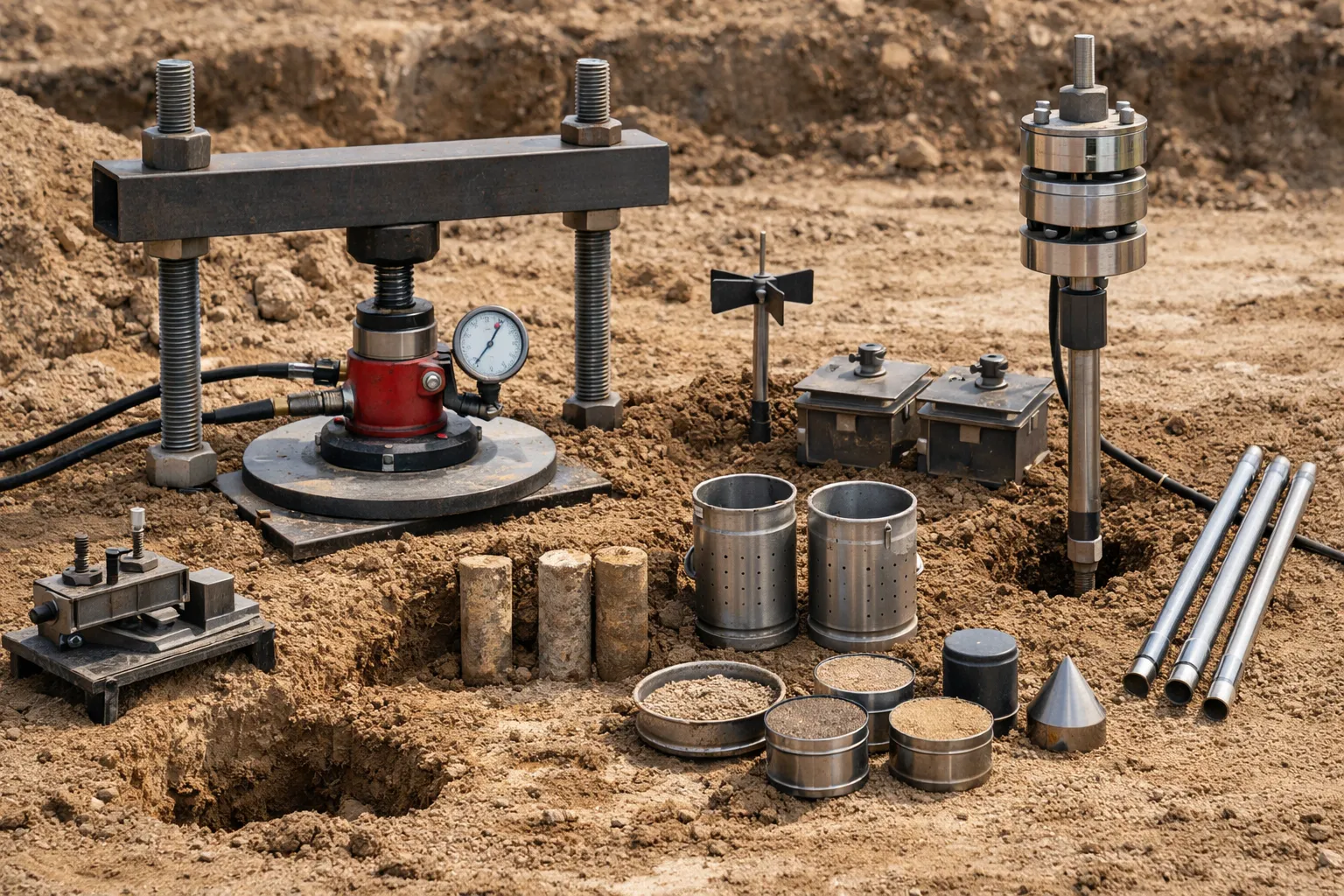
Shear Strength Tests: Triaxial and Direct Shear Methods
Shear strength is the soil’s resistance to lateral stress or sliding, which is a major mode of foundation failure. The Triaxial Test is one of the most sophisticated lab tests, simulating in-situ conditions by applying confining pressure (like the surrounding soil) and then increasing axial stress until the sample fails. It accurately determines the soil’s cohesion ($c$) and angle of internal friction ($\phi$). The Direct Shear Test is simpler, forcing a soil sample to shear along a predetermined plane. Both methods are vital for assessing the stability of slopes, retaining walls, and determining the ultimate bearing capacity of footings.
California Bearing Ratio (CBR) and Standard Penetration Test (SPT)
The California Bearing Ratio (CBR) test is primarily used for pavement design, measuring the relative strength of a subgrade, sub-base, and base course material. It compares the force required to penetrate the soil with a standard plunger to the force required to achieve the same penetration in a standard crushed rock material. The Standard Penetration Test (SPT), however, is the most common in-situ test, involving driving a standard split-spoon sampler into the ground using a specific weight hammer falling from a fixed height. The number of blows required for a fixed penetration distance (the ‘N-value’) provides an empirical measure of the soil’s density and strength.
Compaction and Density Tests for Construction
Compaction is the process of artificially increasing the soil’s density by reducing the air voids, usually achieved through mechanical means (e.g., rollers, vibratory plates). This process is crucial for creating stable bases for roads, embankments, and shallow foundations. Density tests are used to control the quality of this process, ensuring the field density meets the optimal laboratory-determined standards. Improved density significantly increases the soil’s strength and stiffness while reducing its future settlement potential.
Proctor Compaction Test and Dry Density Analysis
The Proctor Compaction Test (both Standard and Modified) is a laboratory method used to determine the Optimal Moisture Content (OMC) and the Maximum Dry Density (MDD) achievable for a given soil under specific compactive effort. The OMC is the moisture level at which the soil particles can be packed most efficiently, maximizing density. Once the OMC and MDD are established in the lab, they become the crucial benchmark for field compaction control. Dry Density Analysis helps engineers verify that the soil, once compacted on-site, has achieved the specified minimum dry density, ensuring long-term performance and stability.
Bulk Density and Core Cutter Method
Bulk density is the total mass of the soil (including solids, water, and air) divided by its total volume. It is a fundamental property for calculating the weight of structures and forces on retaining walls. The Core Cutter Method is a common field test used to quickly determine the bulk density of compacted ground or road subgrade. It involves driving a steel cylinder (the core cutter) of known volume into the soil and carefully removing it. The mass of the soil within the cutter is measured, and the bulk density is calculated directly. This method, often supported by equipment from suppliers like bfs industries, provides immediate feedback on the compaction quality achieved on-site.
Permeability, Drainage, and Environmental Soil Tests
Beyond strength and density, soil tests must also address the interaction of the ground with water, a crucial factor that influences the long-term stability and function of infrastructure. Water movement affects the effective stress in soil, influencing its strength, and dictates drainage requirements. Environmental tests, meanwhile, ensure the soil will not aggressively attack construction materials or pose a hazard.
Percolation and Permeability Tests for Water Movement
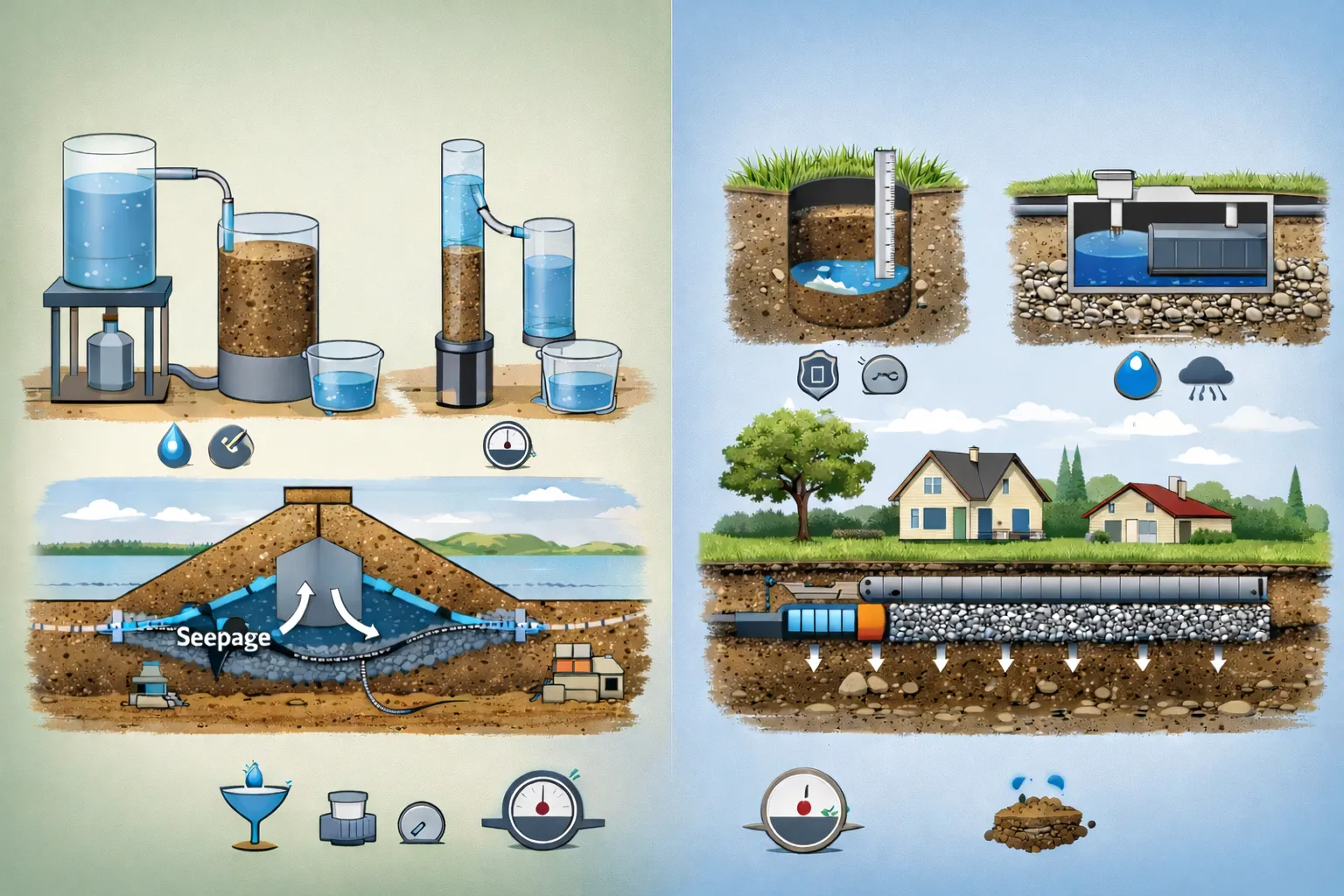
Permeability (or hydraulic conductivity) is a measure of the soil’s ability to transmit water, expressed as a coefficient. It is vital for calculating seepage beneath dams, dewatering requirements, and settlement rates. Laboratory methods include the Constant Head and Falling Head tests. Percolation tests, often simpler field tests, are used primarily for septic system design and stormwater drainage, measuring the rate at which water infiltrates the ground. Both test types are essential for effective site drainage design, preventing the detrimental effects of hydrostatic pressure or excess moisture buildup.
Soil Acidity, Resistivity, and Biological Tests
Environmental and chemical soil tests are critical for protecting the engineered structure. Soil acidity (pH) and the presence of sulfates or chlorides can accelerate the corrosion of buried steel foundations, piles, and pipes, and can cause deterioration of cementitious materials. Resistivity tests are performed to determine the soil’s resistance to electrical current, which is an indicator of its corrosivity to metal. Biological tests, though less common, check for contaminants or organic materials that might decay, cause settlement, or pose a risk to the health of construction workers and future occupants.
How Soil Test Results Influence Engineering and Design Decisions
The findings from the different Types of soil tests are not merely numbers; they are the primary determinants that guide all major engineering decisions, ensuring that the foundation is appropriately matched to the sub-surface conditions. The resulting geotechnical report is arguably the most important non-design document in any project. It provides the bearing capacity, predicted settlement, and recommendations for ground improvement, directly influencing the choice of foundation systems and the methods used to execute the build.
Selecting Foundation Types Based on Soil Testing
The safe bearing capacity derived from strength tests dictates whether a shallow foundation (like isolated footings or raft foundations) is adequate or if a deep foundation (like driven piles, bored piles, or caissons) is required. For instance, if the SPT N-value is low or the soil report indicates a layer of highly compressible clay, engineers will design a deep foundation to bypass the weak layer and transfer the structural load to a deeper, stronger stratum. Conversely, a high bearing capacity in the top layers allows for the more economical choice of shallow footings. The choice must also account for predicted total and differential settlement to maintain the integrity of the structure.
Mitigating Construction Risks Through Accurate Soil Analysis
Accurate and comprehensive soil analysis is the best defense against construction failures and delays. By identifying challenging soil conditions (like expansive clays, high water tables, or potential sinkholes) early on, engineers can design proactive measures, such as soil stabilization, deep compaction, or chemical treatment. This upfront mitigation reduces the risk of unexpected issues during excavation, avoids foundation failures, and prevents cost overruns associated with remediation work. In essence, thorough soil testing provides the necessary confidence to proceed with the entire project safely and on budget, turning potential vulnerabilities into reliable structural support.
Conclusion
The vast array of Types of soil tests, spanning from simple laboratory classification to complex in-situ strength evaluations, collectively provides the indispensable intelligence needed for successful civil engineering. These tests determine everything from the plastic limits of clay to the ultimate bearing capacity of the bedrock, informing critical design decisions such as foundation type and depth. Ultimately, a proper geotechnical assessment is the silent guardian of structural integrity. It is the crucial first step that ensures a building is not just aesthetically pleasing or functionally sound, but fundamentally safe and resilient against the forces of nature and time. Investing in meticulous soil investigation is the single most important decision for anyone embarking on a construction journey.
FAQ
1. Why is soil testing necessary before construction begins ?
Soil testing determines bearing capacity, settlement behavior, and soil stability, which are essential for safe foundation design.
2. What are the main soil classification tests used in geotechnical engineering ?
Moisture content, Atterberg limits, particle size distribution, and specific gravity tests are the primary classification tests.
3. What information does the Standard Penetration Test (SPT) provide ?
SPT provides an in-situ measure of soil strength and density through the N-value, which is widely used in foundation design.
4. Why is soil compaction testing important during construction ?
Compaction testing ensures the soil achieves the required density and moisture content to prevent excessive settlement and failure.
5. Can soil test results affect the choice of foundation type ?
Yes, soil test results directly determine whether shallow foundations or deep foundations such as piles are required.