
FREE DOWNLOAD – B.F.S. HOLDING
Explore the full spectrum of services and industries covered by B.F.S. Holding.
The relentless, unpredictable power of seismic activity necessitates a foundational shift in how we approach structural design and building standards. The global imperative to safeguard lives and property in seismically active zones has driven extraordinary innovation in Earthquake Resistant Construction Techniques, transforming buildings from rigid, static shields into flexible, dynamic systems capable of absorbing and dissipating massive amounts of energy. This comprehensive exploration delves into the sophisticated strategies civil engineers and architects employ today, moving far beyond simple reinforcement to embrace material science and cutting-edge passive control technologies. For professionals involved in large-scale infrastructure projects, such as those that require specialist formwork, understanding these resilience methods is crucial for ensuring longevity and safety.
Understanding the Principles of Earthquake Resistant Construction Techniques
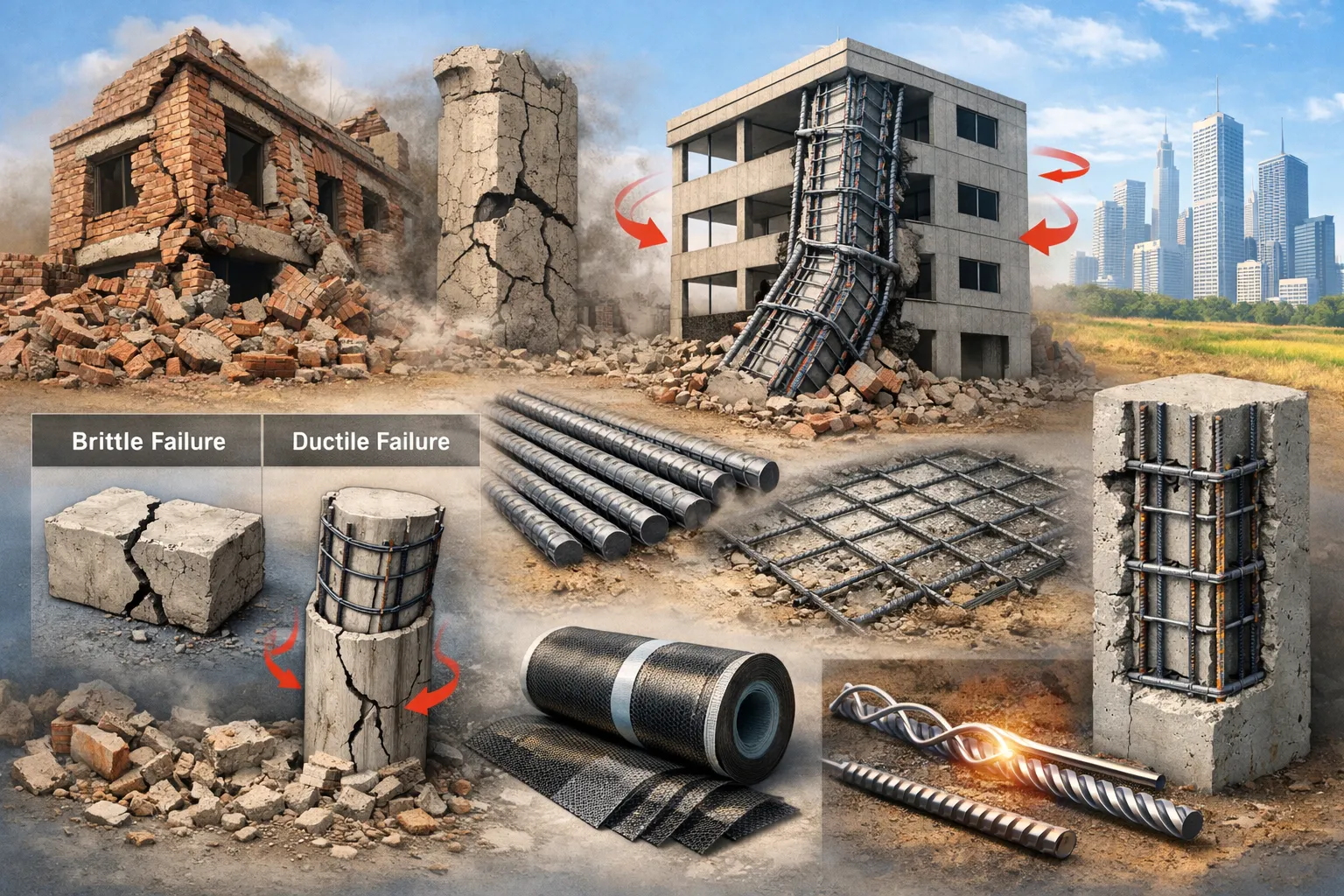
Earthquake resistance is fundamentally about modifying a structure’s response to ground motion, ensuring that the kinetic energy from a seismic event is either redirected away from the building’s core or absorbed in strategically designed, sacrificial components. This approach contrasts sharply with older, “brittle” design philosophies that simply aimed to make a structure immensely strong, often leading to catastrophic, sudden failures when the forces exceeded calculated limits. Modern design is centered on “ductility”—the ability of a structure to undergo large deformations without collapsing, providing occupants with precious time to evacuate and offering engineers repairable damage rather than total loss. This resilience is achieved through meticulous seismic analysis that considers site-specific geological factors and the potential amplification of ground shaking by local soil conditions, a factor often overlooked in projects facing tight deadlines.
How Seismic Forces Affect Buildings
When an earthquake strikes, it generates complex seismic waves—P-waves, S-waves, and surface waves—that propagate through the ground, subjecting structures to intense, rapidly reversing forces, primarily in the horizontal plane. While buildings are inherently designed to withstand significant vertical forces (gravity and dead loads), they are far more vulnerable to the lateral or sideways movement that attempts to twist, rack, and shear the frame. A critical phenomenon is resonance, which occurs when the frequency of the ground shaking closely matches the natural frequency, or harmonic period, of the building. When this occurs, the structure’s vibrations are amplified dramatically, leading to potentially fatal deformations and failures, particularly at connection points between columns and beams. Engineers must perform exhaustive seismic analysis using techniques like Building Information Modeling (BIM) to simulate these dynamic loads, enabling them to design structures that either push their natural period far away from the typical earthquake frequency spectrum or actively damp the vibrations, often using specialized accessories provided by reputable suppliers like bfs industries.
The Role of Material Behavior in Earthquake Resistance
The success of any earthquake-resistant structure hinges on the selection and utilization of materials that exhibit high levels of strength, stiffness, and, crucially, ductility. Brittle materials, such as unreinforced masonry or older forms of concrete, can fracture instantly under tensile and shear stress, leading to immediate structural collapse. In contrast, modern seismic design relies heavily on materials that can yield and deform significantly before failure, allowing the structure to flex and absorb energy. Reinforced concrete (RC), when properly detailed, is the backbone of ductile construction, using steel reinforcement bars to handle the tensile forces that concrete alone cannot manage. The quality of the concrete itself is also paramount; understanding and mitigating common concrete defects types is essential, as even minor flaws can become critical failure points under dynamic seismic loading. Furthermore, innovations like fiber-reinforced polymers (FRP) and shape-memory alloys are increasingly being incorporated into critical elements to further enhance elasticity and the capacity for self-centering, ensuring that the building returns to its original position after the ground motion subsides.
Modern Structural Techniques for Earthquake-Resistant Buildings
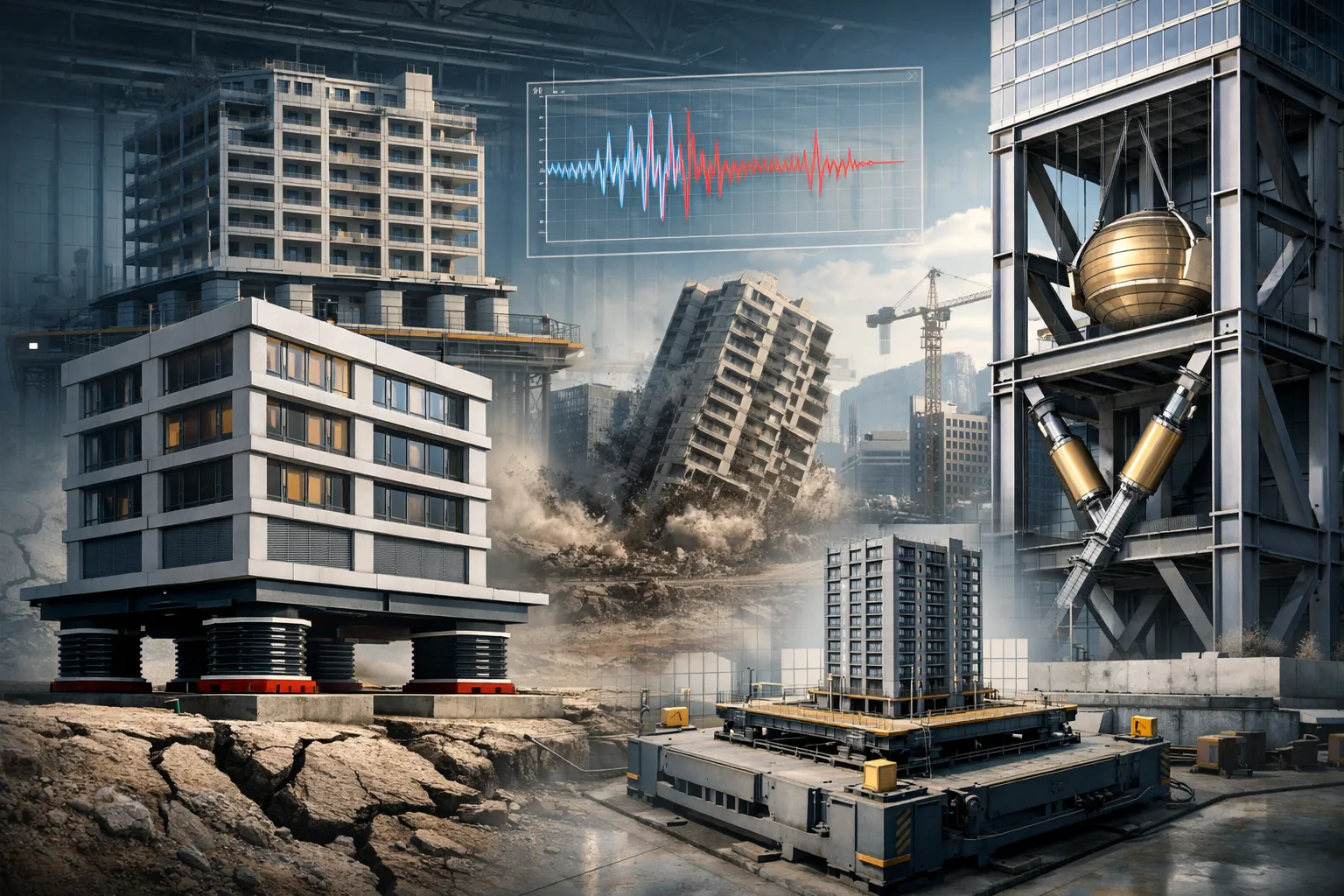
Modern engineering has pioneered sophisticated strategies that fall under the umbrella of passive control systems, designed not just to resist force but to actively decouple the building from ground motion or dissipate the kinetic energy before it can cause widespread damage. These techniques often require highly precise construction methods and specialized equipment, demanding a level of accuracy in pouring and assembly that is facilitated by advanced formwork technologies. The goal of these structural interventions is to provide an alternate, more flexible pathway for seismic energy, thereby protecting the main load-bearing elements of the superstructure.
Base Isolation Systems and Their Function
Base isolation is widely regarded as the gold standard in seismic protection, employing a strategy that fundamentally changes how a structure interacts with the shaking ground. This technique involves installing flexible units, known as isolators, between the building’s foundation and the superstructure. These isolators, commonly composed of layers of steel plates bonded to high-damping rubber or complex friction pendulum systems, act as a mechanical filter. During an earthquake, they absorb the intense horizontal energy, allowing the ground underneath to move violently while the structure above remains relatively still. By introducing this flexible layer, the building’s natural period is significantly lengthened, pushing it far outside the typical frequency range of seismic waves. This dramatic shift minimizes the inertia forces transferred to the upper levels, protecting not just the structural frame but also non-structural components and interior contents, a significant advantage in critical facilities like hospitals or data centers.
The Use of Dampers and Shock Absorption
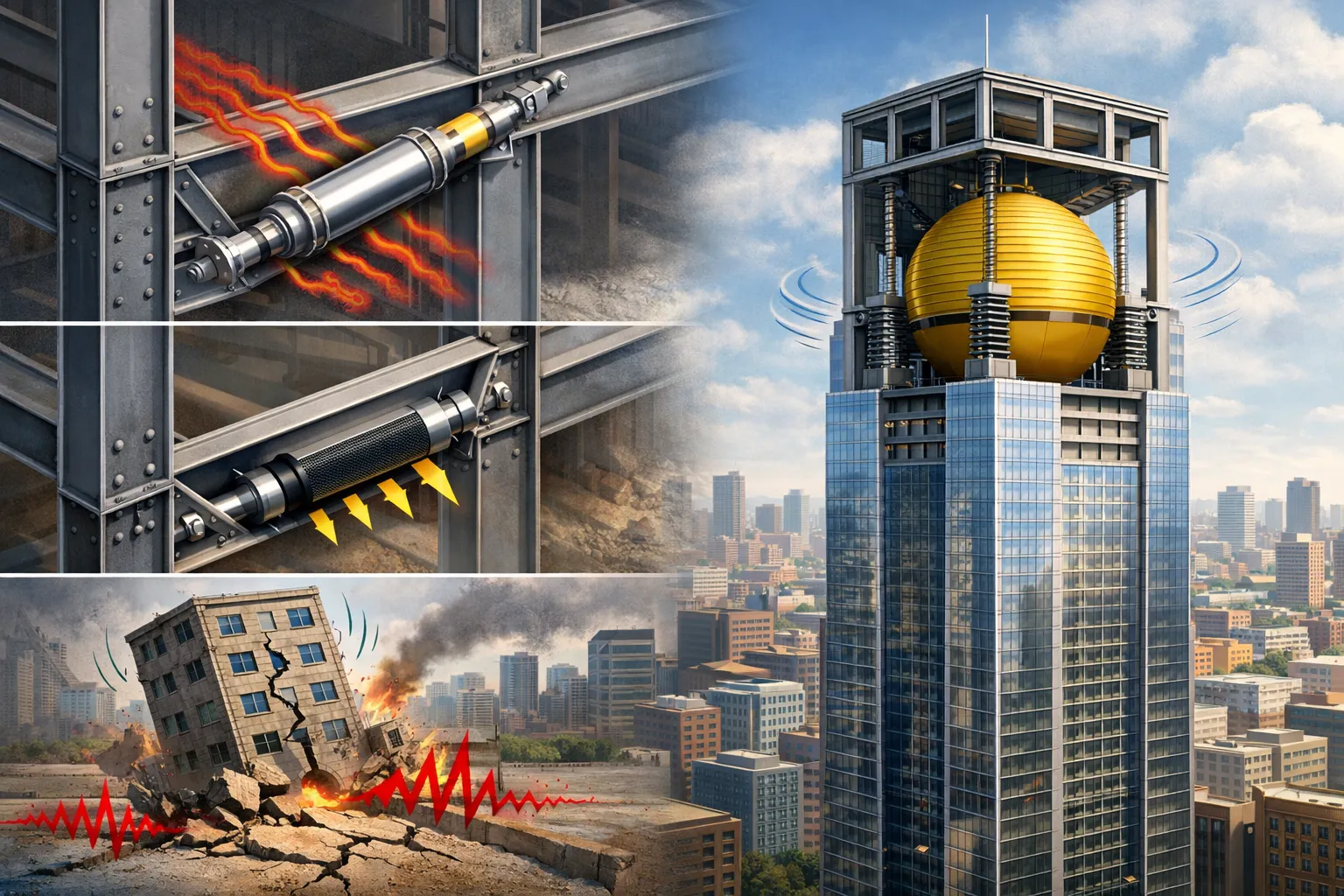
While base isolation aims to filter out seismic energy, damping systems are designed to absorb and dissipate that energy through mechanical resistance. These are essentially structural shock absorbers installed strategically throughout the building frame, analogous to the suspension system in a car. The most common varieties include viscous fluid dampers and viscoelastic dampers. Fluid viscous dampers, often resembling large hydraulic cylinders, work by pushing a silicone fluid through small orifices, transforming the kinetic energy of the earthquake into heat, which is safely dispersed. Viscoelastic dampers use materials that behave like very stiff, energy-absorbing putty, deforming under stress and dissipating energy through internal friction. These devices are typically placed diagonally across a steel frame or in the joints of Steel Column Shuttering and beams, where maximum relative displacement is expected. Tuned mass dampers (TMDs), on the other hand, are enormous masses, often placed near the top of skyscrapers, that are tuned to vibrate in opposition to the building’s motion, effectively counteracting and neutralizing the seismic energy, a technique crucial for preventing excessive sway in high-rise constructions.
Shear Walls and Cross-Bracing for Lateral Stability
In addition to sophisticated damping, the fundamental principle of structural stiffness remains vital, primarily implemented through the use of shear walls and cross-bracing. Shear walls are rigid vertical elements, typically thick reinforced concrete walls or structural steel plates, designed to resist lateral forces parallel to their plane, acting like deep vertical beams cantilevered from the foundation. They capture the horizontal shear forces generated by an earthquake and efficiently transfer them down to the foundation, preventing the structure from racking or collapsing. Cross-bracing, often taking the form of diagonal steel members integrated into the frame, performs a similar function by creating rigid triangular units that resist deformation. These bracing systems—such as X, V, or K bracing—work in tension and compression to absorb the back-and-forth movement caused by seismic oscillation. For towering structures, advanced methods like the self climbing formwork system are employed to rapidly and accurately construct the core shear walls that provide the primary vertical and lateral stability, ensuring a high degree of precision in these critical structural elements.
Advanced Engineering Materials Used in Earthquake-Resistant Construction
The advancement of seismic engineering is inextricably linked to innovations in material science, moving away from purely monolithic elements toward composite and smart materials that offer superior strength-to-weight ratios and enhanced ductile performance. These materials are selected not just for their inherent strength but for their ability to withstand multiple cycles of deformation without catastrophic failure, a key requirement for structures in high-risk zones.
Reinforced Concrete and Composite Systems
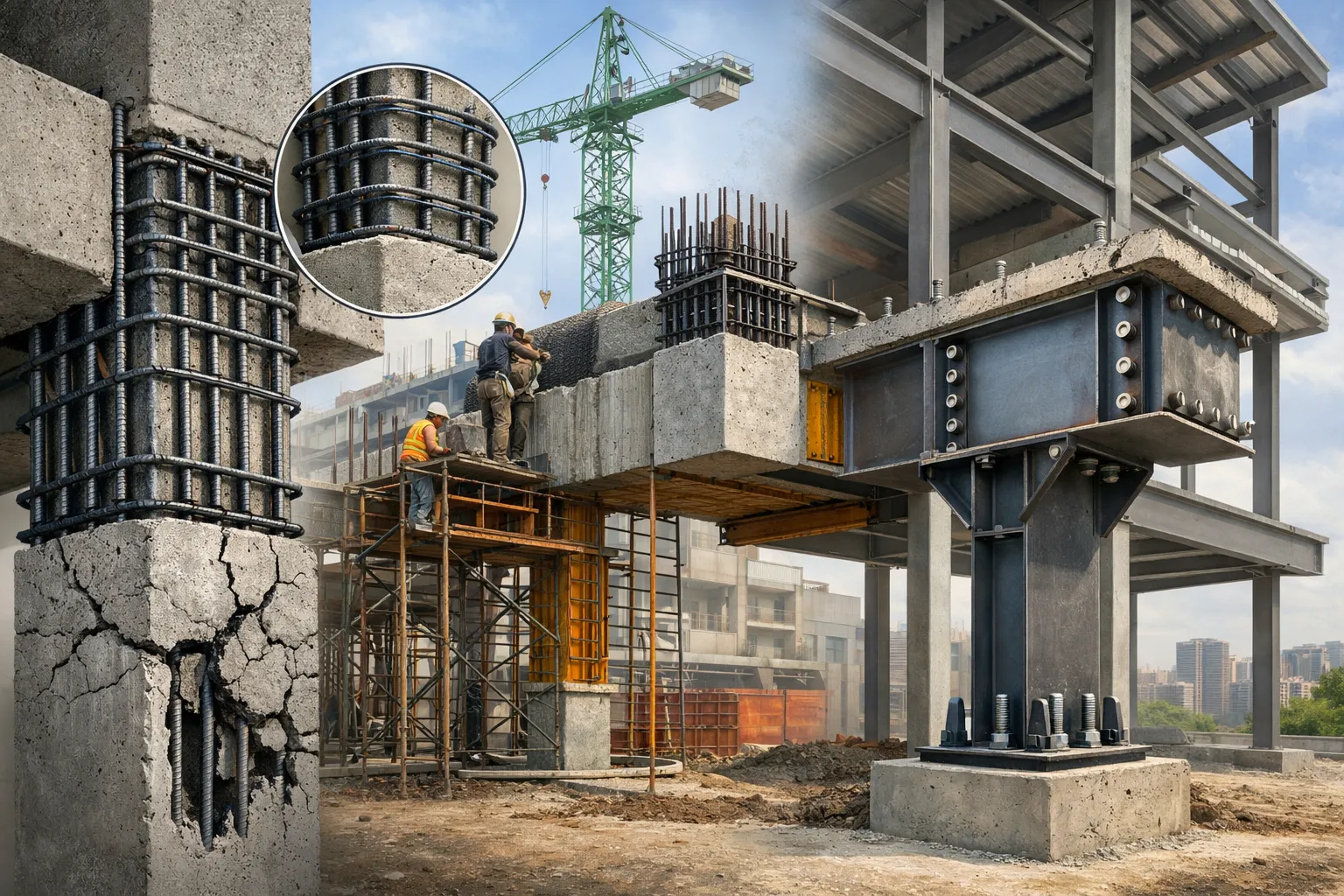
Reinforced concrete (RC) remains the most common and versatile material in earthquake-resistant construction, but its effectiveness relies heavily on proper detailing—a concept known as ductile detailing. This involves specific configurations of steel reinforcement, such as closely spaced lateral ties (hoops) in columns and beams, designed to confine the concrete core. This confinement prevents the concrete from spalling and losing its load-bearing capacity even after cracking, ensuring the structural member maintains its strength and continues to exhibit ductility. Composite systems, which combine the compressive strength of concrete with the tensile strength and flexibility of structural steel members, offer an even higher degree of resilience. These systems utilize the best properties of both materials, often leading to lighter, stiffer, and more highly ductile frames capable of surviving major seismic events, provided the formwork used for pouring is designed to maintain geometric accuracy, especially around complex beam-column joints.
Lightweight and Flexible Construction Materials
A fundamental axiom in earthquake engineering is that reducing the mass of a structure also reduces the inertial forces acting upon it during a quake. Therefore, modern design often prioritizes lightweight, high-strength materials for the superstructure and non-structural elements. Materials like cold-formed steel framing, high-performance lightweight concrete, and advanced timber products are increasingly utilized, particularly in upper floors, to minimize the overall seismic load. Furthermore, incorporating materials that exhibit inherent flexibility and energy dissipation properties is a growing trend. This includes the integration of fiber-reinforced polymers (FRPs) used for wrapping columns to increase confinement and enhance strength, and even advanced polymer-based composites that can flex significantly without brittle failure. The judicious use of these materials ensures that while the structure is light, it retains the necessary tensile capacity and flexibility to absorb seismic movement, a crucial consideration for infrastructure projects such as those where a dam formwork supplier must guarantee the integrity and lightweight properties of the constructed water barrier.
Foundation Engineering for Improved Earthquake Resistance
The foundation serves as the critical interface between the vibrating ground and the structure, making its design paramount to earthquake resistance. A building’s ability to survive a major earthquake often comes down to how well its foundation manages the movement and stress transferred from the soil, particularly in areas susceptible to liquefaction or significant ground amplification.
Flexible Foundations
A cornerstone of base isolation is the flexible foundation, which intentionally introduces a mechanism for displacement between the ground and the building. However, even in traditional construction, a degree of flexibility is desirable. Flexible foundation systems aim to distribute the seismic forces uniformly across a wide area and utilize soil-structure interaction to their advantage. Techniques may involve shallow raft foundations that act as a single, large mat, allowing the entire building to move horizontally as one unit, reducing differential settlement and localized stress concentrations. The design must also account for dynamic soil properties, which can dramatically change during shaking, potentially amplifying the motion. In areas with competent soil, a well-designed, integrated foundation system can ensure a continuous load path that minimizes the rotational and torsional effects that are frequently responsible for structural damage in conventional, rigid foundations.
Deep Foundations and Their Seismic Benefits
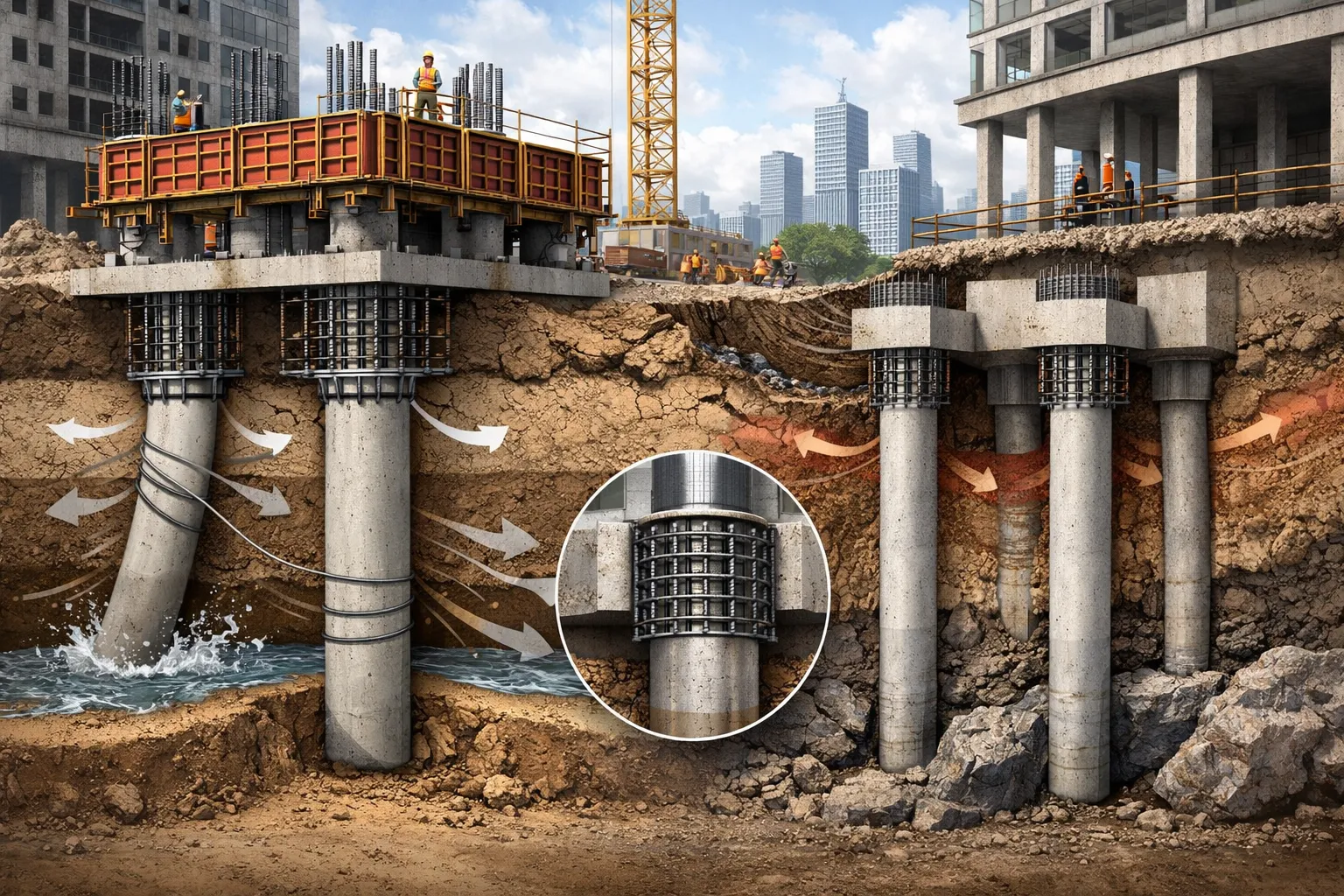
In areas with poor surface soil conditions, particularly soft clays or loose sands prone to liquefaction, engineers rely on deep foundations, such as piles or caissons, to transfer the seismic loads down to deeper, more competent soil or bedrock layers. Deep foundations provide enhanced stability by bypassing unstable shallow soil, effectively anchoring the structure. During a seismic event, these piles are subjected to complex lateral bending and shear forces, known as “kinematic loading,” as the surrounding soil layers move relative to one another. Therefore, deep foundations must be designed with exceptional ductile detailing, including high confinement reinforcement at the pile-cap connections, which are critical fusion points between the vertical and horizontal structural components. Furthermore, specialized formwork is often necessary to construct deep foundation elements, and a company known as a tunnel lining formwork suppliers may often provide similar heavy-duty, highly customizable systems adapted for deep pile caps and basement structures, ensuring the necessary quality and precision for these life-safety-critical elements.
Seismic Retrofitting Techniques for Existing Structures
Given the vast number of older, non-seismically compliant buildings in active zones, seismic retrofitting has become an essential engineering discipline. Retrofitting involves modifying existing structures to enhance their resistance to seismic activity without complete demolition and rebuilding. This is a complex task that requires meticulous planning and a deep understanding of the building’s original design and vulnerabilities.
Common Retrofitting Methods
The selection of a retrofitting method depends heavily on the structure’s age, material, and critical weaknesses. Common methods focus on increasing the strength and ductility of the structural elements. This often includes adding new reinforced concrete shear walls or steel moment frames to bolster lateral resistance, a process known as jacketing. External column jacketing involves encasing existing columns in steel cages or concrete jackets to increase their cross-sectional area and confinement, thereby improving ductility. Another popular technique is the installation of external buttresses or tie rods to brace unreinforced masonry walls and prevent them from collapsing outward. For highly valuable or historically significant buildings, the most sophisticated method is often the application of base isolation, where the entire structure is carefully lifted, columns are surgically cut, and isolators are inserted between the foundation and the structure, a complex, high-precision operation.
Strengthening Strategies for Older Buildings
Strengthening strategies for older, non-ductile buildings often center on correcting deficiencies in the load path and connectivity. A significant vulnerability in many older wooden and masonry structures is the lack of proper anchorage between walls, floors (diaphragms), and the foundation. Bolting the sill plate to the foundation and installing wall-to-floor and roof-to-wall connectors can dramatically improve the structure’s ability to act as a unified, cohesive box during shaking. For concrete buildings exhibiting signs of potential failure or previous damage, techniques like the injection of epoxy resins into fine cracks can restore some original strength, although this is usually coupled with external reinforcement like wrapping the column or beam with carbon fiber-reinforced polymer sheets. These strengthening strategies aim to prevent the most dangerous modes of failure—pancake collapse and brittle shear failure—by forcing the inelastic deformations to occur safely in designated, highly confined locations.
Key Design Considerations for Earthquake Resistant Construction Techniques
Successful earthquake resistance is not achieved by merely adding isolated components; it requires a holistic design philosophy where every element is interconnected and works in harmony to control the flow of seismic energy. The meticulous detailing of every connection and the clear path for load distribution are arguably as vital as the primary structural system itself.
Ductile Detailing and Structural Connections
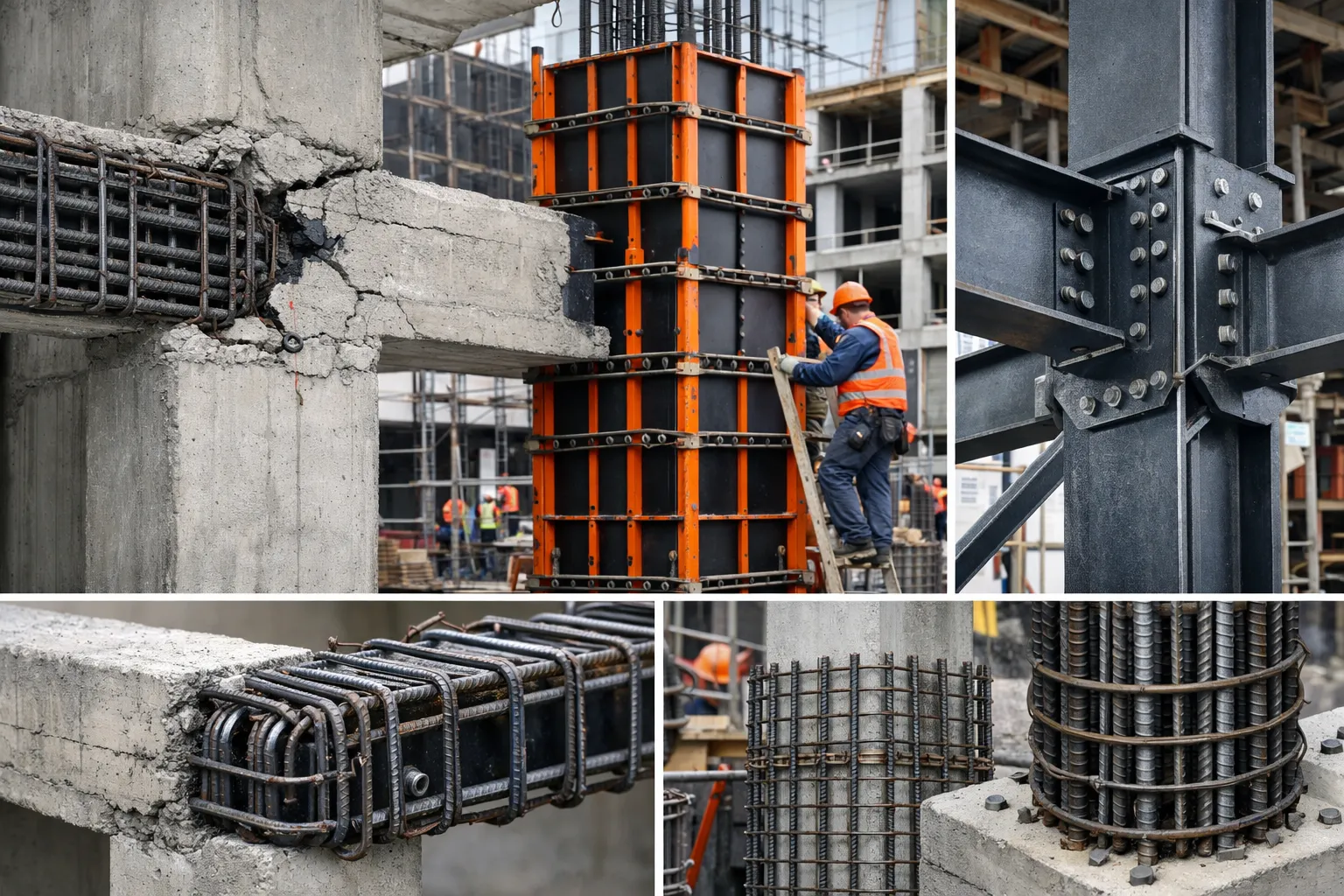
Ductile detailing is the set of prescriptive rules governing the placement, spacing, and anchorage of steel reinforcement in concrete members to ensure they can undergo extensive plastic deformation without losing load-carrying capacity. This includes the “strong column-weak beam” philosophy, which mandates that columns must be inherently stronger than the beams framing into them. This ensures that yielding and energy dissipation, known as the formation of plastic hinges, occur in the less critical beam ends rather than in the columns, which are essential for vertical support and preventing catastrophic global collapse. The connections themselves are critical; whether in reinforced concrete or steel, they must be designed to withstand the cyclic demands of seismic loading, including strain hardening and load reversal. Proper design and installation of the steel elements used in these connections, such as specialized cage reinforcement for column ties and stirrups, are essential, paralleled by the precision required in the application of specialized formwork used for Steel Column Shuttering to maintain the precise geometric integrity necessary for these high-stress zones.
Importance of Diaphragms and Load Paths
A building’s diaphragms—its floors and roof—play a pivotal, though often unseen, role in earthquake resistance. These horizontal elements act as deep, rigid structural components that collect the inertia forces generated by the mass of the building at each floor level. They then distribute these forces horizontally to the vertical elements (shear walls, moment frames) which are responsible for carrying the load down to the foundation. Without a stiff and well-connected diaphragm, the structure would shake unevenly, leading to dangerous differential movement and localized failure. Therefore, ensuring a continuous and robust load path from the diaphragm to the vertical resisting elements, and finally to the foundation, is a fundamental design requirement. This continuity must be maintained throughout the structure, including the transition to critical infrastructure like tunnels or dams, where specialized suppliers like the dam formwork supplier must guarantee that the constructed material seamlessly integrates with the rest of the facility’s seismic framework to ensure the entire system functions as a cohesive, earthquake-resilient unit.
Frequently Asked Questions (FAQs)
1. What is the main goal of earthquake-resistant construction ?
The primary goal is to protect lives by allowing buildings to absorb and dissipate seismic energy without collapsing.
2. Why is ductility more important than strength in seismic design ?
Ductility allows structures to deform safely under earthquake loads, preventing sudden brittle failure and total collapse.
3. How does base isolation improve seismic performance ?
Base isolation reduces the transfer of ground motion to the structure by decoupling the building from the shaking soil.
4. Which materials perform best during earthquakes ?
Ductile materials such as well-detailed reinforced concrete, structural steel, and composite systems perform best.
5. Can existing buildings be upgraded to resist earthquakes ?
Yes, seismic retrofitting techniques like shear wall addition, column jacketing, and dampers can significantly improve performance.