


Pipe Rack Design
Introduction
In the complex world of industrial infrastructure, pipe racks serve as the backbone for efficient fluid and material transport. These elevated steel structures are engineered to support a wide range of pipelines, cable trays, and instrumentation in high-demand environments. For oil & gas companies, petrochemical plants, and energy infrastructure firms, pipe racks are indispensable—ensuring seamless operations while minimizing downtime and safety risks. At their core, pipe racks are frameworks designed to organize and elevate piping systems above ground level. This elevation not only protects pipelines from hazards such as flooding or mechanical damage but also facilitates safe access for inspections and repairs. In large-scale projects like refineries and power plants, a well-designed pipe rack can support thousands of feet of piping—carrying everything from crude oil to chemicals and gases. The importance of pipe racks cannot be overstated: they improve plant layout efficiency, reduce installation costs, and ensure compliance with stringent safety regulations. BFS Industries, a leader in steel structure solutions, specializes in custom pipe rack design, fabrication, and installation. Our expertise ensures that your infrastructure withstands harsh conditions while optimizing space, functionality, and long-term performance.

Safety is our unwavering priority, shaping everything we do every single day.

Certified by trusted external bodies to ensure our customers’ complete peace of mind.

Creative design and smart material planning to deliver cost-efficient solutions.

Innovations for now and the future of the civil and construction industries.
Types of Pipe Racks
Pipe racks come in various configurations to meet the needs of different industrial projects, from heavy-duty oil and gas facilities to precise chemical plants. Selecting the right type ensures the system can handle specific loads, environmental conditions, and safety requirements while complying with engineering standards.
The choice of pipe rack affects plant layout, accessibility, and maintenance efficiency. Modular pipe racks offer fast installation and flexibility, structural steel racks support heavy loads, and specialized systems like pipe flange racks or warehouse-style racking provide tailored solutions. Understanding these main categories helps decision-makers balance cost, performance, safety, and durability for their projects.
Modular Pipe Racks
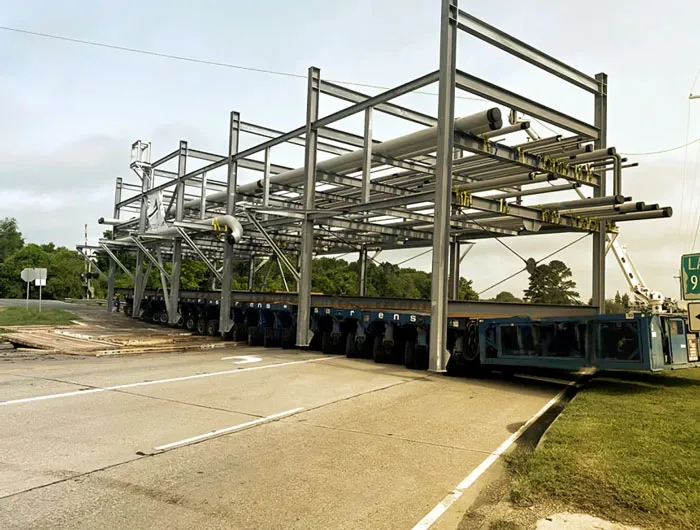
Modular pipe racks are prefabricated structural units that are transported to the project site and assembled quickly, offering unmatched flexibility and speed in deployment. These innovative systems are built using standardized components such as beams, braces, and fittings, which allow engineers to make quick adjustments without the need for extensive on-site welding or fabrication. This modular approach not only streamlines installation but also minimizes labor costs and reduces potential safety risks during construction.
One of the greatest advantages of modular pipe rack systems is their ability to cut construction time by up to 50% compared to traditional pipe rack fabrication methods. This makes them particularly valuable in dynamic industrial environments, such as petrochemical plants and large oil & gas facilities, where rapid deployment and adaptability are critical. Because these facilities often undergo frequent expansions and modifications, modular pipe racks provide scalable solutions that integrate seamlessly with existing infrastructure, ensuring minimal downtime.
In addition to time savings, modular pipe racks also offer enhanced quality control since most of the fabrication is completed in a controlled factory environment. This ensures higher precision, compliance with international standards, and reduced likelihood of on-site errors. For companies focused on efficiency, safety, and sustainability, modular designs represent a future-ready solution in modern industrial construction.
Structural Steel Pipe Racks
Structural steel pipe racks are the most common type of pipe rack, constructed from high-strength steel to safely bear substantial loads. As a form of steel structure, these open-frame systems are engineered with beams and braces to deliver maximum durability in harsh industrial environments, such as power plants and refineries. Beyond supporting multiple pipelines, they also accommodate electrical conduits, cable trays, and instrumentation—ensuring complete structural integrity under wind, seismic, and thermal stresses.
For energy infrastructure firms, structural steel pipe racks provide exceptional longevity. Advanced protective coatings help these steel structures resist corrosion in saline or chemical-laden atmospheres, making them a reliable choice for coastal facilities, chemical plants, and other demanding applications. By combining the inherent strength of structural steel with smart engineering design, these pipe racks represent a cost-effective, long-term solution for industrial projects where safety, resilience, and efficiency are paramount.
Pipe Flange Racks
Pipe flange racks are specialized variants of pipe rack systems designed specifically to support flanged connections in complex piping networks. Unlike standard pipe racks, these structures focus on providing precise alignment and stability for flanges, which are critical components in high-pressure and high-temperature applications. By maintaining proper alignment, pipe flange racks reduce the risk of leaks, misalignments, and costly system failures.
As a trusted pipe flange racks manufacturer, BFS Industries produces customized solutions tailored to industries that require both precision and flexibility. These racks are particularly valuable in projects where frequent maintenance or disassembly is necessary, since flanged connections can be dismantled and reassembled more efficiently when supported by a dedicated structure.
Pipe flange racks are also widely used in warehousing and storage facilities, where they provide secure mounting and organization for flanged components awaiting installation or repair. In this context, they improve workflow efficiency while ensuring safety standards are met.
Modern pipe flange racks factories place strong emphasis on precision engineering and advanced fabrication techniques to meet the demands of petrochemical, oil & gas, and energy industries. Built with durable steel structures and corrosion-resistant coatings, these racks are engineered to withstand harsh environments while ensuring operational reliability.
Pipe Racking Systems
Comprehensive pipe racking systems encompass integrated setups that include supports, bridges, and trusses. These systems are versatile, used in above-ground pipeline networks for oil & gas or chemical plants. They allow for multi-level configurations, optimizing vertical space and improving workflow. In energy projects, pipe racking systems ensure safe routing of utilities, reducing interference and enhancing overall plant efficiency.
Selecting the right type depends on load requirements, site constraints, and operational demands. BFS Industries offers consultations to match your needs with our advanced steel structure designs.
Pipe Rack Design Standards and Engineering Considerations
Designing high-quality pipe racks requires meticulous engineering to ensure both safety and optimal performance. Several key factors must be considered, including load calculations, structural integrity, material selection, and strict adherence to international engineering standards.
Load calculations form the foundation of every pipe rack design. Engineers must account for dead loads (the weight of the structure itself), live loads (maintenance personnel and equipment), and operating loads from filled pipelines. For example, the Process Industry Practices (PIP) recommend a uniform distributed load of 40 psf for pipes, roughly equivalent to 8-inch schedule 40 pipes filled with water. Additional environmental factors such as wind forces (per ASCE 7), seismic activity, and thermal expansion must be carefully modeled using advanced structural software to predict performance accurately under all conditions.
Structural integrity is achieved through the use of braced frames, moment-resisting connections, and high-strength steel materials such as ASTM A36 or A572. Finite element analysis (FEA) ensures deflection limits are met, typically L/240 for horizontal members, providing a safe and durable framework capable of withstanding heavy industrial demands. By integrating these principles, steel structure pipe racks deliver reliable support for thousands of feet of pipelines, electrical conduits, and instrumentation.
Safe access for piperack repairs is another critical design consideration. Walkways, platforms, and handrails are incorporated in accordance with OSHA guidelines, enabling maintenance technicians to perform inspections and repairs without elevated risk. Properly designed access points also reduce downtime, improve workflow, and extend the lifespan of the infrastructure.
Pipe Rack Fabrication and Manufacturing Process
The fabrication of pipe racks is a precision-driven process that transforms raw materials into durable, industrial-ready structures. High-grade carbon steel is selected for its strength and weldability, while protective coatings such as epoxy or galvanization guard against corrosion in harsh oil & gas environments. CNC cutting ensures accurate dimensions, followed by welding per AWS D1.1 standards to guarantee joint integrity.
Assembly often involves bolt and nut structure, allowing for modular installation and minimizing on-site errors. Quality control is rigorous, including non-destructive testing (NDT), dimensional verification, and hydrostatic testing. As a leading pipe flange racks manufacturer, BFS Industries adheres to ISO-certified processes, integrating automation to reduce lead times while delivering custom solutions that meet client specifications with uncompromising reliability.
Installation and Commissioning
Once fabricated, pipe racks proceed to the installation and commissioning phase, where they are integrated into the industrial site. On-site assembly begins with careful foundation preparation, often using concrete piers designed according to ACI 318 standards. Modular components are lifted with cranes and securely bolted together, with alignment verified using laser leveling tools. Strict adherence to safety protocols, including PPE and fall protection, ensures the installation process remains accident-free.
Coordinating with other structures, such as equipment platforms, requires careful planning to avoid clashes and maintain workflow efficiency. The commissioning process includes load testing and system inspections to confirm structural stability and operational readiness before handover. BFS Industries offers turnkey installation services, delivering fully functional pipe racks with minimal disruption to ongoing operations.
Inspection and Maintenance of Industrial Pipe Racks
Regular inspection and maintenance are essential for prolonging the lifespan of pipe racks and preventing costly failures. A typical industrial piperack inspection checklist includes visual assessments for corrosion, weld cracks, and bolt tightness, structural evaluations for deflection, and non-destructive testing (NDT) to detect hidden defects. These inspections should be performed annually or following extreme events, in accordance with API standards.
Preventive maintenance focuses on proactive measures such as recoating surfaces and lubricating moving parts, while corrective maintenance addresses issues identified during inspections. BFS Industries offers tailored piperack maintenance solutions, including customized maintenance plans and drone inspections for hard-to-reach areas, helping facilities reduce downtime by up to 30%. Implementing these practices ensures industrial operations remain safe, compliant, and efficient.
Safe Access and Repair Solutions
Ensuring safe access for piperack repairs is essential in high-risk industrial environments. Platforms, scaffolding, and walkways provide secure pathways, designed with anti-slip surfaces and guardrails in compliance with OSHA 1910.29 standards. These features often allow workers to perform repairs safely without the constant use of harnesses, improving both efficiency and productivity.
Worker safety is further strengthened through training programs and well-established emergency protocols. Typical repair projects include retrofitting corroded sections in oil refineries, where modular scaffolding enables quick and safe access without interrupting ongoing operations. BFS Industries integrates these solutions into all pipe rack designs, ensuring safety remains a top priority throughout the structure’s lifecycle.
Applications of Pipe Racks
Pipe racks play a crucial role in supporting essential infrastructure across a variety of industrial sectors. In oil & gas facilities, they safely route pipelines for crude oil and gas transport, designed to withstand extreme pressures and demanding operating conditions. Chemical plants depend on pipe racks for handling corrosive materials, often incorporating specialized coatings to prevent damage and ensure long-term reliability.
Power plants utilize pipe racks to organize steam, coolant, and utility lines, maintaining consistent and efficient energy production. Even in warehousing and storage environments, pipe racking systems help organize materials and inventory, optimizing space and workflow. Across all these applications, well-designed pipe racks enhance safety, operational efficiency, and long-term durability for industrial operations.
Why Choose BFS Industries as Your Pipe Rack Manufacturer
With decades of industry experience, BFS Industries has established itself as a leading pipe flange racks manufacturer. Our ISO 9001 and AISC certifications highlight our unwavering commitment to quality and precision. We provide fully customized solutions, guiding your project from initial design through fabrication and delivery, ensuring that every pipe rack meets your specific operational requirements.
Frequently Asked Questions (FAQ) - Pipe Racks
What is the primary purpose of a pipe rack in an industrial facility?
Pipe racks are primarily used to support and organize piping systems, electrical cables, and instrument pathways, ensuring safe and efficient transportation of fluids, gases, and power throughout the facility.
What materials are commonly used for constructing pipe racks?
The most common material for pipe rack structure construction is steel structure due to its strength, durability, and cost-effectiveness. However, in specific applications, other materials like reinforced concrete or fiberglass-reinforced plastic (FRP) may be used.
What factors influence the design of a pipe rack?
Several factors influence pipe rack design, including the number and size of pipes and cables, the weight of transported materials, environmental loads (wind, seismic, snow), accessibility requirements for maintenance, and future expansion plans.
What are the different types of pipe rack structures?
Common types of pipe rack structures include single-level, multi-level, and pipe bridges. They can be self-supporting or attached to other plant structures, depending on the specific requirements of the facility.
What are the key benefits of using well-designed pipe racks?
Key benefits include improved safety, better organization of utilities, enhanced accessibility for maintenance, optimized space utilization, flexibility for future modifications, and overall cost-effectiveness in the long run.