
FREE DOWNLOAD – B.F.S INDUSTRIE
Explore the full spectrum of services and industries covered by B.F.S Industries.
Concrete formwork systems play a critical role in modern Concrete Construction, directly influencing structural accuracy, surface quality, project speed, and overall cost efficiency. Selecting the right system is no longer a purely technical decision reserved for site engineers; it is a strategic choice that affects productivity, safety, and long-term project performance. In the past, formwork was often an afterthought, fabricated on-site from available lumber. However, as construction projects become more complex, taller, and more time-sensitive, the industry has shifted toward engineered solutions. Understanding the different types of concrete formwork systems is essential for contractors, engineers, and developers aiming to optimize both quality and profitability. The choice of system dictates the cycle time of the pouring schedule, the finish of the concrete surface, and the overall safety of the workforce, making it a pivotal component of successful project management.
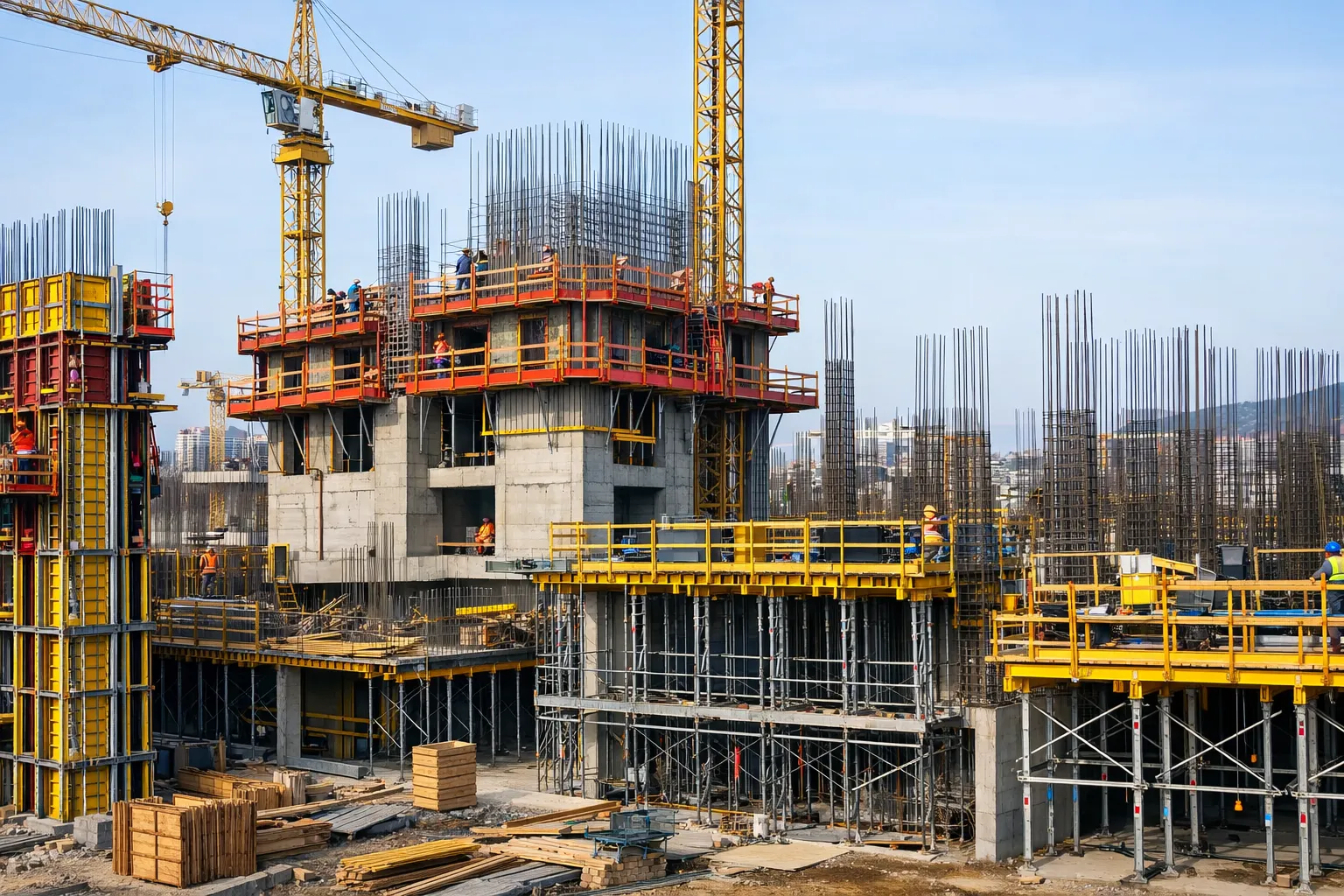
What is Concrete Formwork?
Concrete formwork refers to the temporary or permanent molds used to shape fresh concrete until it gains sufficient strength to support its own weight and the loads imposed upon it. A well-designed formwork system ensures dimensional accuracy, proper alignment, and a high-quality concrete finish while minimizing risks such as deformation, leakage, or common concrete defects types. Modern formwork systems are engineered solutions that integrate structural strength, ease of assembly, and compatibility with repetitive construction cycles. Beyond simply containing the liquid concrete, these systems must resist significant hydrostatic pressure without bowing or failing. The evolution of formwork has moved from simple containment to complex engineering systems that include integrated safety platforms, lifting mechanisms, and rapid stripping capabilities. This evolution allows construction teams to maintain tight tolerances and achieve architectural finishes that were previously difficult or prohibitively expensive to create with traditional methods.
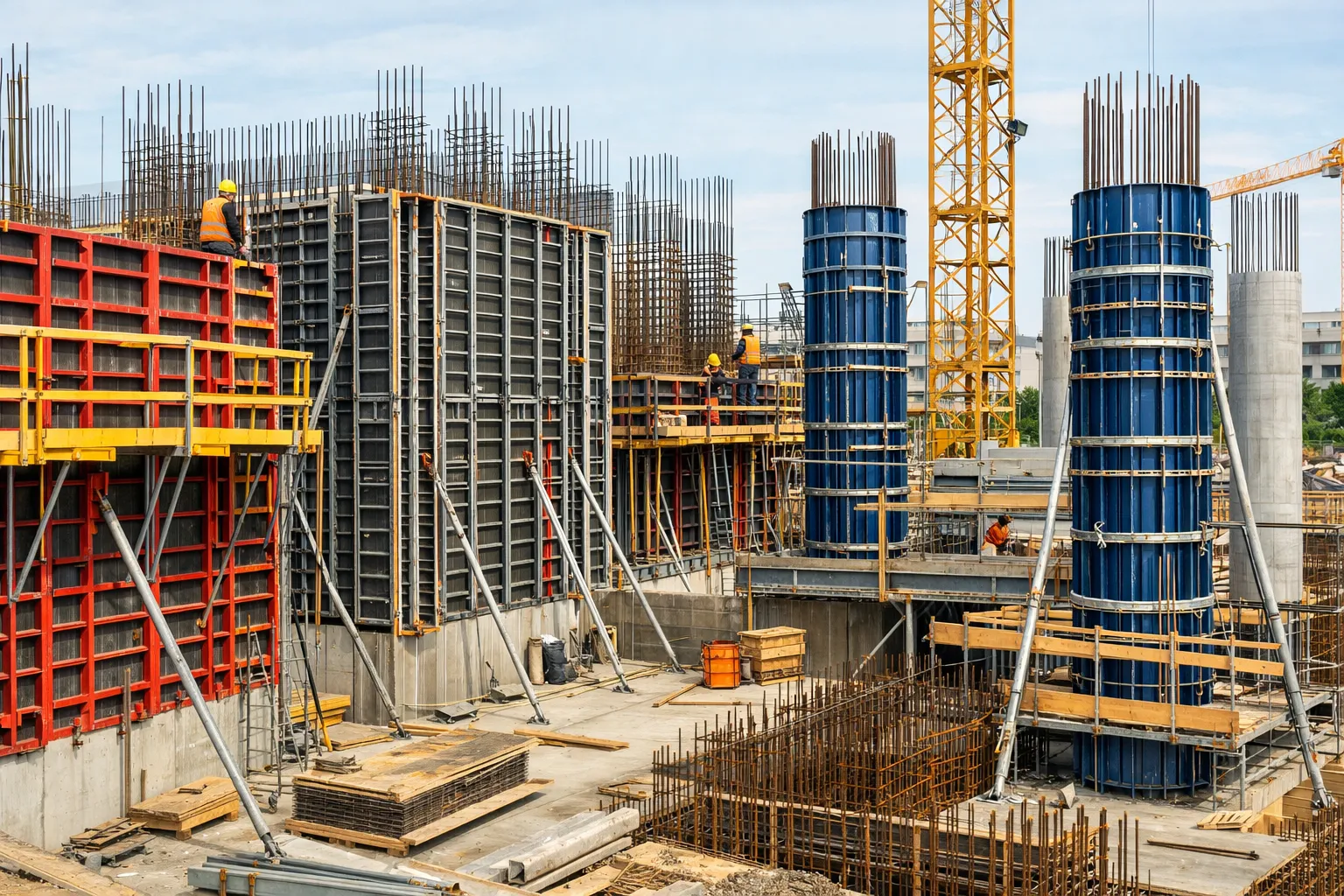
Classification of Concrete Formwork Systems
Concrete formwork systems can be generally classified based on their material composition, structural application, and their level of mechanization or integration. Material-based classifications typically differentiate between traditional timber, engineered plywood, structural steel, lightweight aluminum, durable plastic, and flexible fabric formwork. Structural-based classifications categorize systems designed specifically for foundations, columns, walls, slabs, and climbing cores. However, the most distinct categorization in modern construction is the distinction between traditional loose-form methods and system formwork. System formwork represents an advanced category where modular, pre-engineered components are reused effectively across multiple pours, offering significantly higher efficiency compared to conventional site-built solutions. These classifications help project managers identify the appropriate tools for specific structural elements, ensuring that the chosen types of formwork systems align with the load-bearing requirements and the desired architectural aesthetic of the final structure.
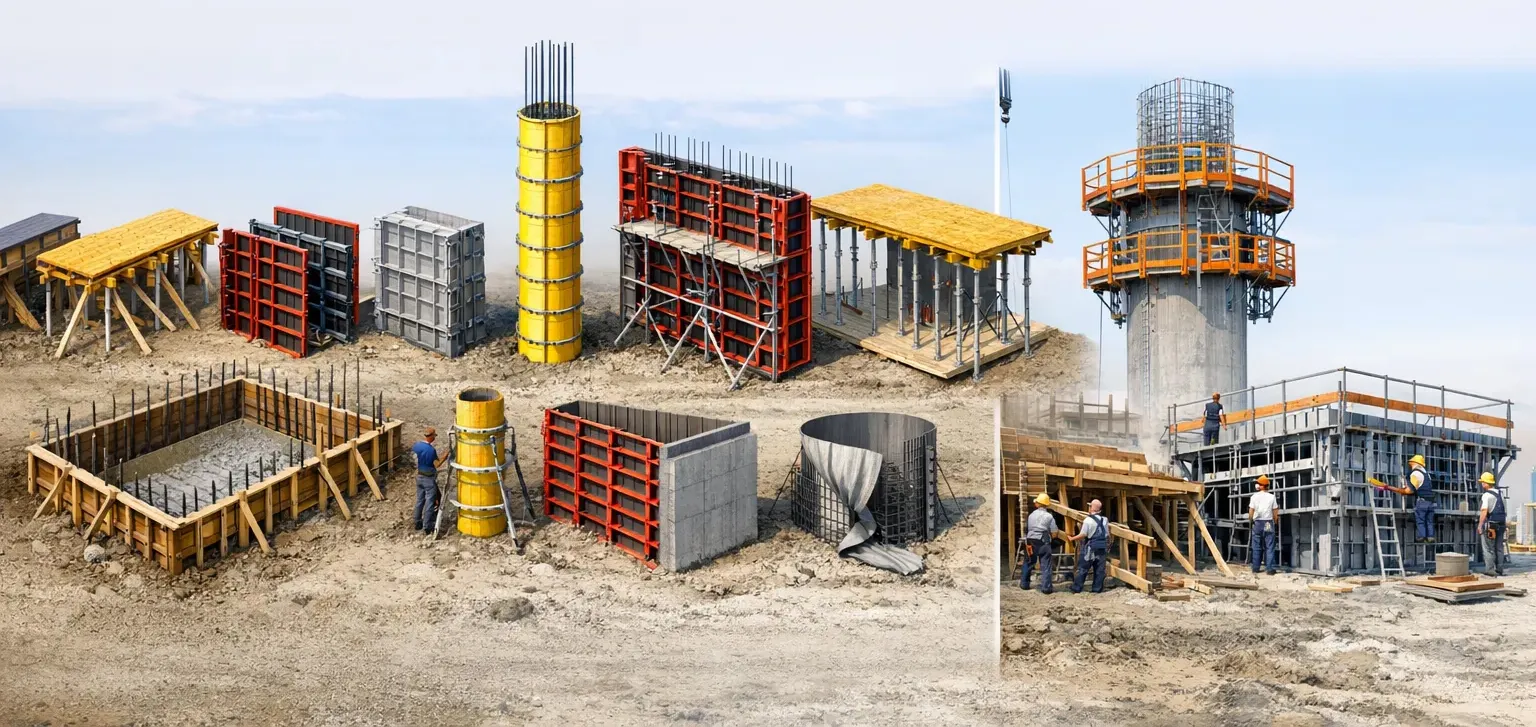
Timber and Plywood Formwork
Timber and plywood formwork systems are among the most traditional and historically significant solutions in the construction industry. They are widely used for small to medium-scale projects due to their inherent flexibility, availability, and relatively low initial investment cost. Timber allows for on-site customization, enabling carpenters to create complex, non-standard shapes that might be difficult to achieve with rigid modular systems. However, these systems are highly labor-intensive, requiring significant man-hours for fabrication, erection, and stripping. They also have limited reuse cycles compared to metal counterparts and are more susceptible to moisture-related damage, warping, and swelling over time. While still practical in specific applications where customization outweighs speed, they are gradually being replaced by more durable, engineered concrete formwork systems in professional, large-scale construction environments where consistency, speed, and long-term durability are paramount.
Steel and Aluminum Formwork Systems
Steel and aluminum formwork systems offer high strength, excellent dimensional accuracy, and an exceptionally long service life, making them the standard for large-scale vertical construction. Steel formwork is ideal for heavy-duty applications where the concrete pressures are immense, providing a rigid surface that results in a smooth, defect-free finish. Aluminum systems provide similar precision but with the distinct advantage of reduced weight, which improves handling speed and labor efficiency, often allowing for hand-set applications without the need for a crane. These systems are commonly used in repetitive projects such as high-rise buildings, infrastructure works, and Concrete Column Formwork where consistency and fast cycle times are critical. The durability of metal allows these forms to be reused hundreds or even thousands of times, spreading the initial capital investment over many projects and drastically reducing the cost per use compared to disposable timber options.
Plastic and Specialized Formwork
Plastic formwork systems have emerged as a modern alternative, offering a lightweight, corrosion-resistant, and easy-to-clean solution that is particularly suitable for mass housing projects and repetitive wall construction. These interlocking modular systems are intuitive to assemble, often requiring less skilled labor than traditional carpentry or heavy metal systems. Beyond rigid plastics, fabric and stay-in-place formwork represent specialized solutions used for creating complex architectural concrete shapes or ensuring permanent structural integration. Insulated permanent formwork systems, for example, contribute to energy efficiency by combining structural shaping and thermal insulation functions within a single construction process. This integration eliminates the need for subsequent insulation installation, streamlining the building envelope construction. These specialized system formwork options highlight the industry’s move toward materials that solve multiple problems simultaneously, addressing weight, finish, insulation, and labor constraints in one innovative package.
Tunnel and System Formwork
Tunnel formwork and modular system formwork are advanced solutions designed specifically for large-scale, repetitive cellular construction such as residential complexes, hotels, and prisons. These highly mechanized systems allow vertical walls and horizontal slabs to be cast simultaneously in a single operation, significantly reducing construction time and accelerating the structural cycle. When integrated with specific concrete wall formwork solutions, tunnel systems deliver high structural integrity and consistent surface quality while minimizing dependency on skilled labor and finishing trades. The monolithic structure created by tunnel forms is exceptionally strong and seismically resistant. Furthermore, the speed of these systems is unmatched; a daily cycle is often achievable, meaning a new floor can be poured every day. This efficiency makes them indispensable for projects with tight deadlines and repetitive floor plans, representing the pinnacle of industrialized construction methods.
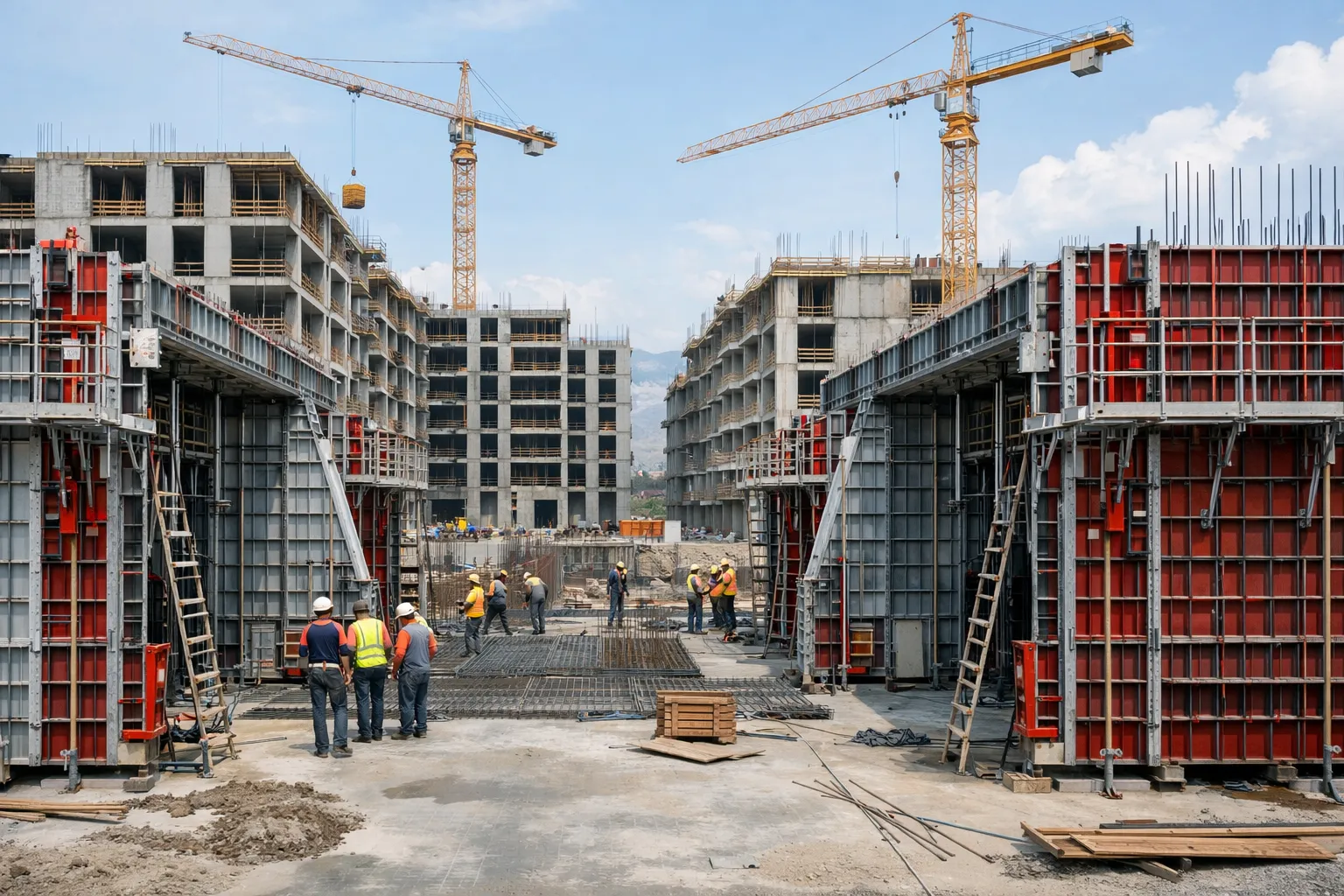
How to Choose the Right Formwork System
Selecting the appropriate formwork system is a multifaceted decision that depends on project scale, repetition level, concrete finish requirements, available budget, and the construction timeline. Factors such as crane availability, site logistics, labor skill level, and local safety standards must also be heavily weighed during the planning phase. For instance, types of concrete wall forms that require heavy lifting gear may not be suitable for congested urban sites with limited crane time. Conversely, hand-set systems might be too slow for a high-rise core. Experienced suppliers and manufacturers, such as bfs industries, provide vital technical consultation to align formwork selection with the structural design. Their expertise helps contractors navigate the trade-offs between rental costs and labor savings, ultimately helping to reduce risks, improve operational efficiency, and control overall project costs through optimized engineering solutions.
Economic and Quality Considerations
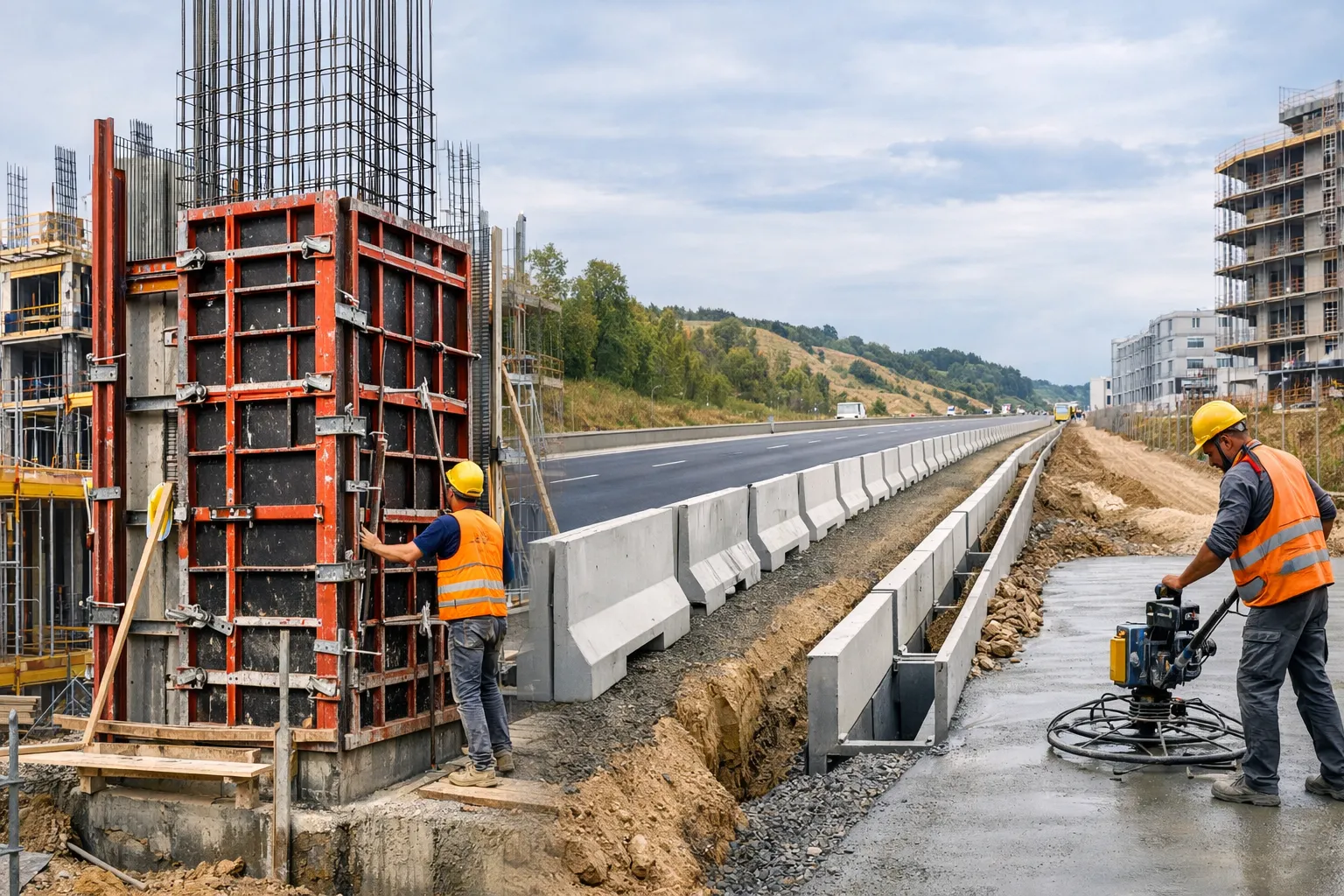
The right formwork system directly impacts construction speed, labor efficiency, and material waste, serving as a major lever for project profitability. Poor formwork selection can lead to surface defects, dimensional inaccuracies, and costly rework, such as grinding or patching uneven surfaces. Investing in high-quality formwork in construction reduces long-term expenses by improving reuse cycles, minimizing delays, and enhancing concrete performance across structural elements. This applies not only to buildings but also to infrastructure, including applications related to Types of road construction where consistent barriers and drainage channels are required. High-quality forms produce surfaces that require little to no architectural finishing, saving substantial amounts on plastering or cladding. Therefore, the economic analysis of formwork must look beyond the initial rental or purchase price to consider the holistic impact on the construction schedule, labor force requirements, and final remedial costs.
Conclusion
Understanding the diverse types of concrete formwork systems is essential for delivering durable, cost-effective, and high-quality concrete structures in the modern built environment. From the flexibility of traditional timber solutions to the rapid efficiency of advanced modular and tunnel systems, each formwork type serves a specific construction need and project constraint. By aligning technical requirements with business objectives and partnering with reliable formwork providers, construction professionals can significantly enhance project outcomes. Whether the goal is maximizing speed on a high-rise or ensuring intricate details on an architectural feature, the correct formwork strategy is the foundation of success in today’s competitive construction landscape.
FAQ
1. What is a concrete formwork system ?
A concrete formwork system is a temporary or permanent mold used to shape fresh concrete until it gains enough strength to support itself.
2. Why is choosing the right formwork system important ?
The right system improves construction speed, surface quality, safety, and overall cost efficiency of the project.
3. What are the main types of concrete formwork systems ?
Common types include timber and plywood, steel and aluminum, plastic formwork, and advanced systems like tunnel and modular formwork.
4. When is steel or aluminum formwork preferred ?
They are ideal for large-scale and repetitive projects due to their high durability, precision, and long reuse life.
5. How does formwork selection affect project cost and quality ?
Proper formwork reduces defects, minimizes rework, speeds up construction cycles, and lowers long-term project costs.