
FREE DOWNLOAD – B.F.S INDUSTRIE
Explore the full spectrum of services and industries covered by B.F.S Industries.
The Differences Between Steel Formwork and Aluminum Formwork are fundamental considerations that every project manager, engineer, and contractor must weigh carefully before breaking ground on a new construction site. Selecting the correct shuttering system is not merely a matter of material preference; it dictates the project’s budget, timeline, structural integrity, and the final aesthetic quality of the concrete surface. While both materials serve the essential function of molding wet concrete into structural elements, they diverge significantly in terms of initial cost, load-bearing performance, durability, and on-site construction efficiency. This comprehensive comparison aims to dissect the technical nuances of these two dominant formwork systems, providing clarity for decision-makers navigating complex construction requirements.
Weight and Density Comparison
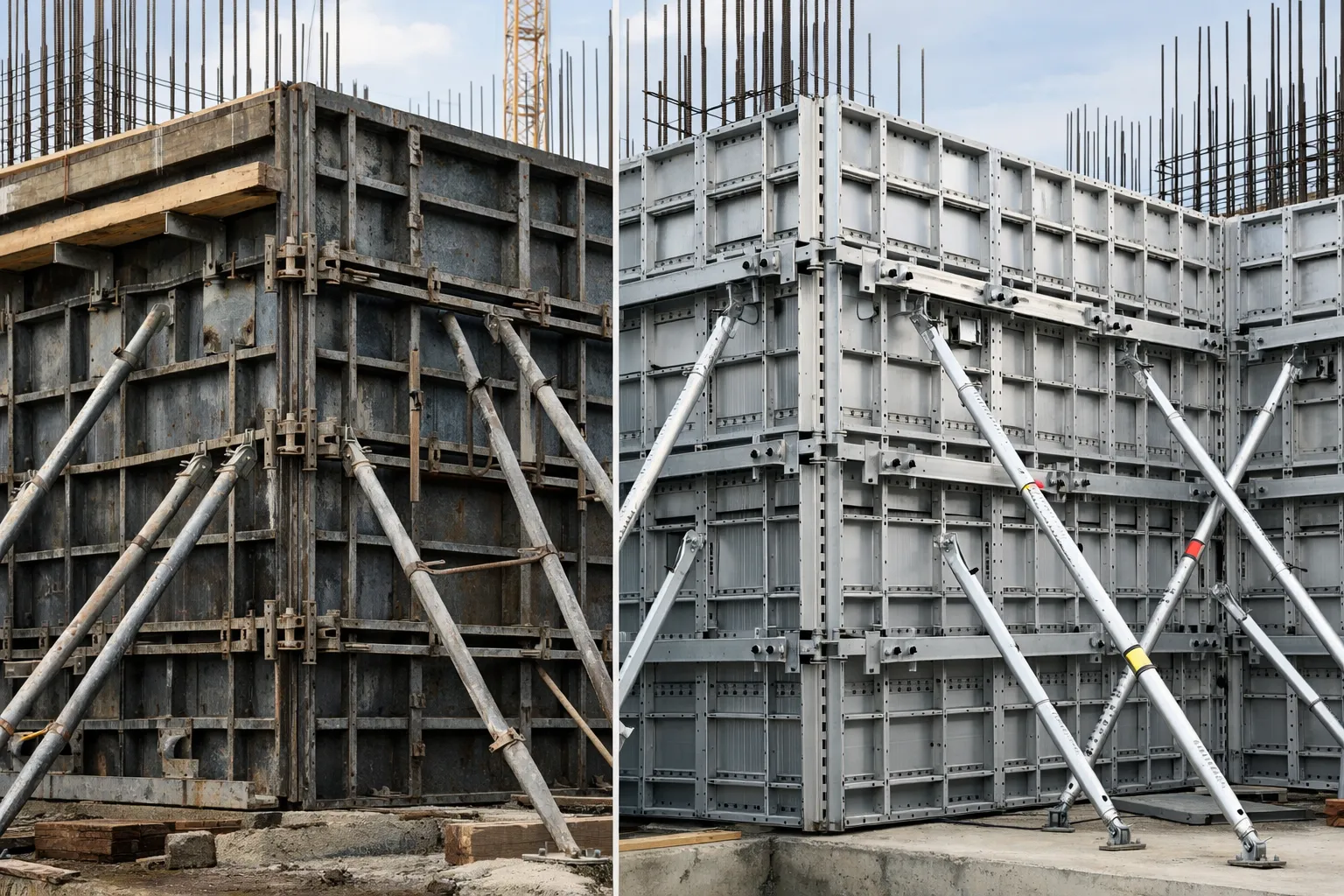
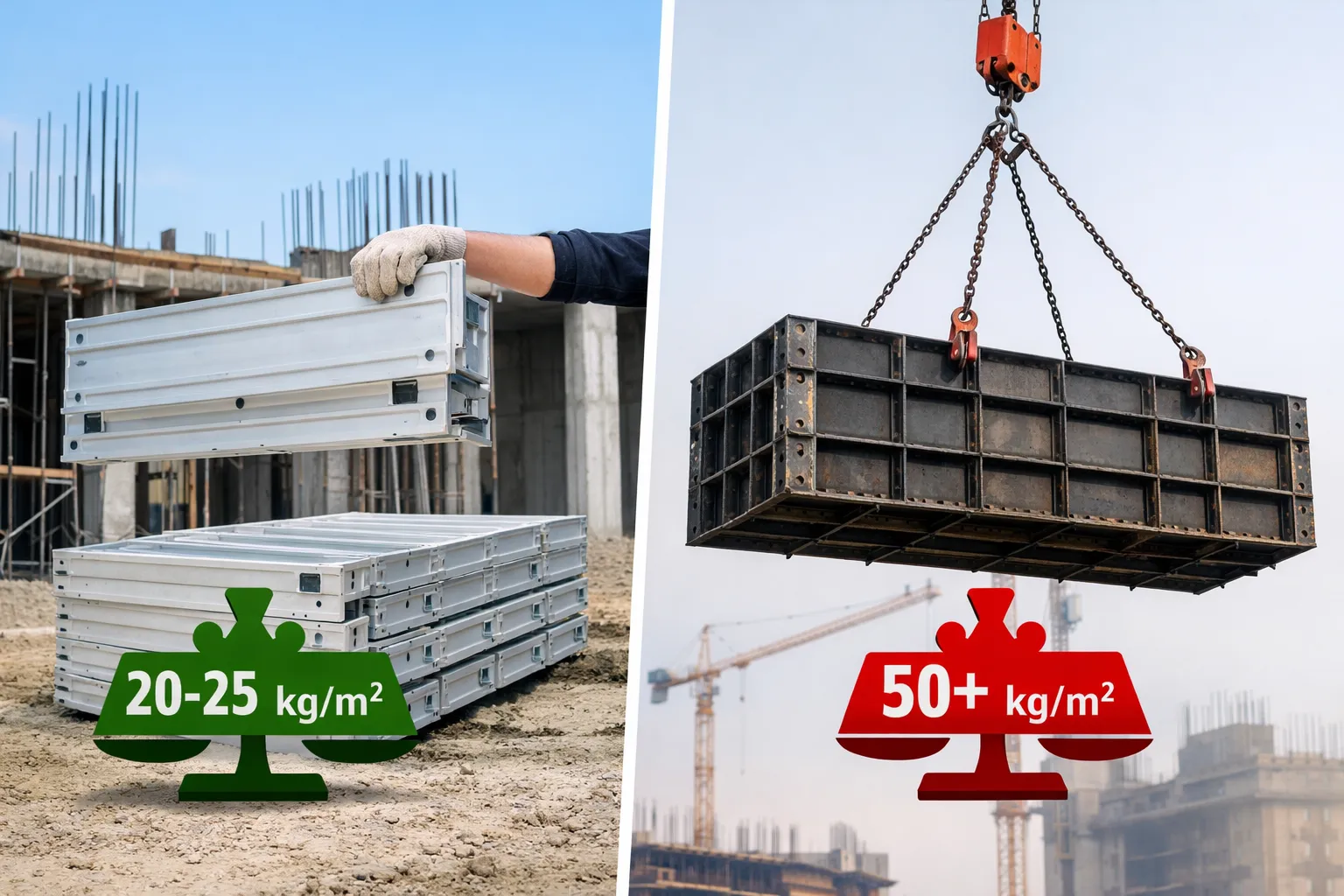
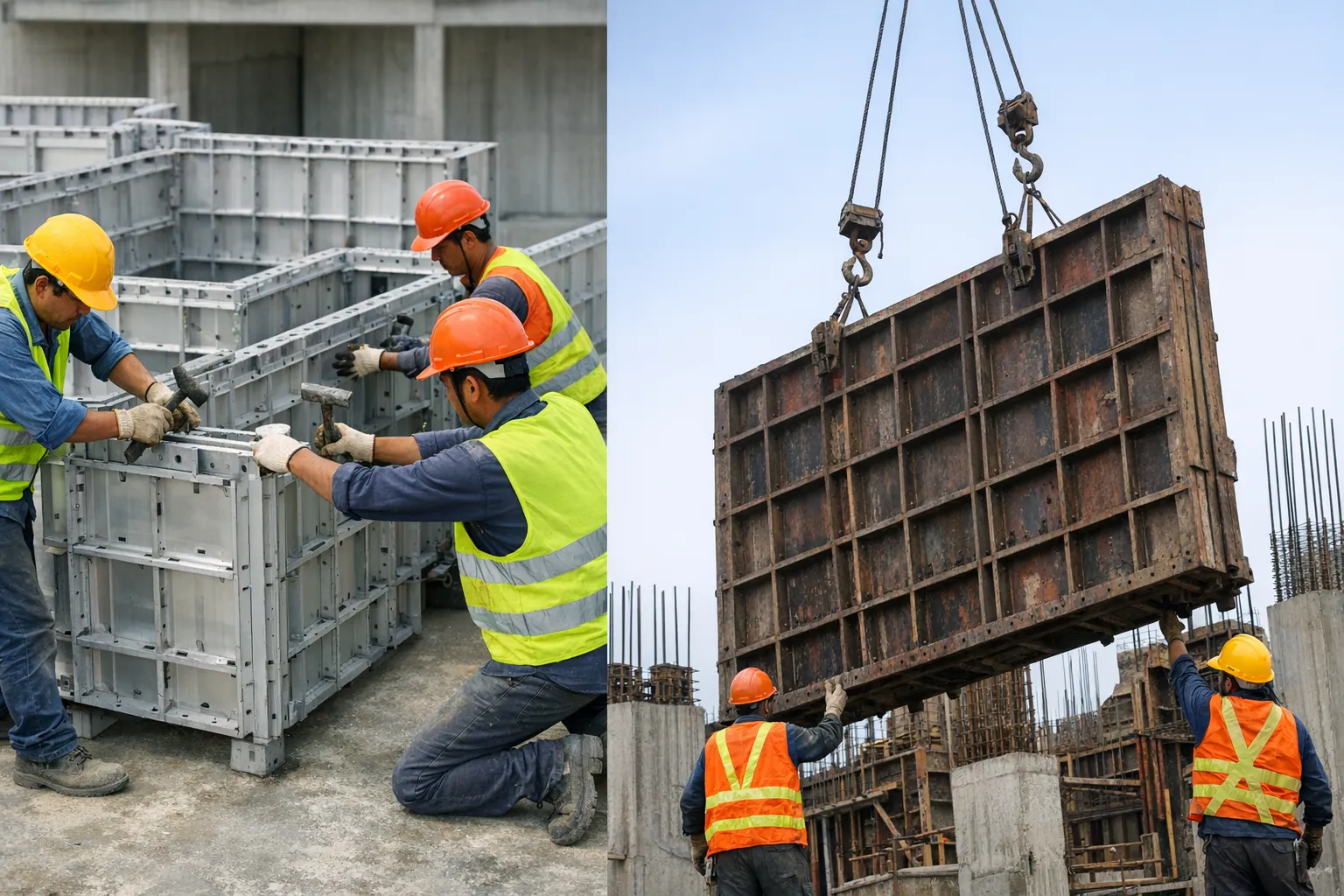
One of the most immediate physical distinctions between the two systems is their weight, which directly influences handling logistics and labor requirements. Aluminum formwork is renowned for its lightweight nature, typically weighing between 20 to 25 kg per square meter. This low density allows for manual handling, meaning workers can carry and install panels without the constant assistance of heavy lifting equipment. This characteristic significantly speeds up the workflow in residential projects where crane availability might be limited or where the site footprint is restricted.
In contrast, steel formwork is considerably heavier, with a density that necessitates mechanical lifting for all but the smallest components. The substantial weight of steel panels, often exceeding 50 kg per square meter depending on the frame thickness and skin, provides immense stability but demands a more robust logistical setup. Contractors must account for the rental and operation of cranes to move steel shutters, which can add to the daily operational costs. However, companies like bfs industries have optimized their designs to balance this weight with structural efficiency, ensuring that the heavy lifting is justified by the system’s robustness.
Cost and Budget Implications
When analyzing the financial aspect, the comparison splits into two distinct perspectives: initial investment versus long-term economic efficiency. Steel formwork generally commands a lower initial purchase price compared to aluminum. For projects with tight upfront budgets or those that do not require hundreds of repetitions, steel can be the more attractive option. Its raw material cost is lower, and fabrication processes are well-established globally.
However, the economics shift when looking at the entire lifecycle of a large-scale development. Aluminum formwork involves a higher initial capital expenditure due to the cost of the metal and the precision extrusion processes required for manufacturing. Yet, its value becomes apparent in high-repetition scenarios. Because aluminum systems are often modular and can be reused hundreds of times, the amortized cost per use can drop significantly below that of steel systems in mass housing projects. When evaluating concrete formwork systems, it is crucial to calculate not just the purchase price, but the cost per square meter of poured concrete over the project’s duration.
Durability and Lifespan Expectations
The longevity of formwork is a critical factor in calculating return on investment (ROI). Both materials offer superior durability compared to traditional timber, but they behave differently under the stress of repeated construction cycles.
Aluminum Formwork Lifespan
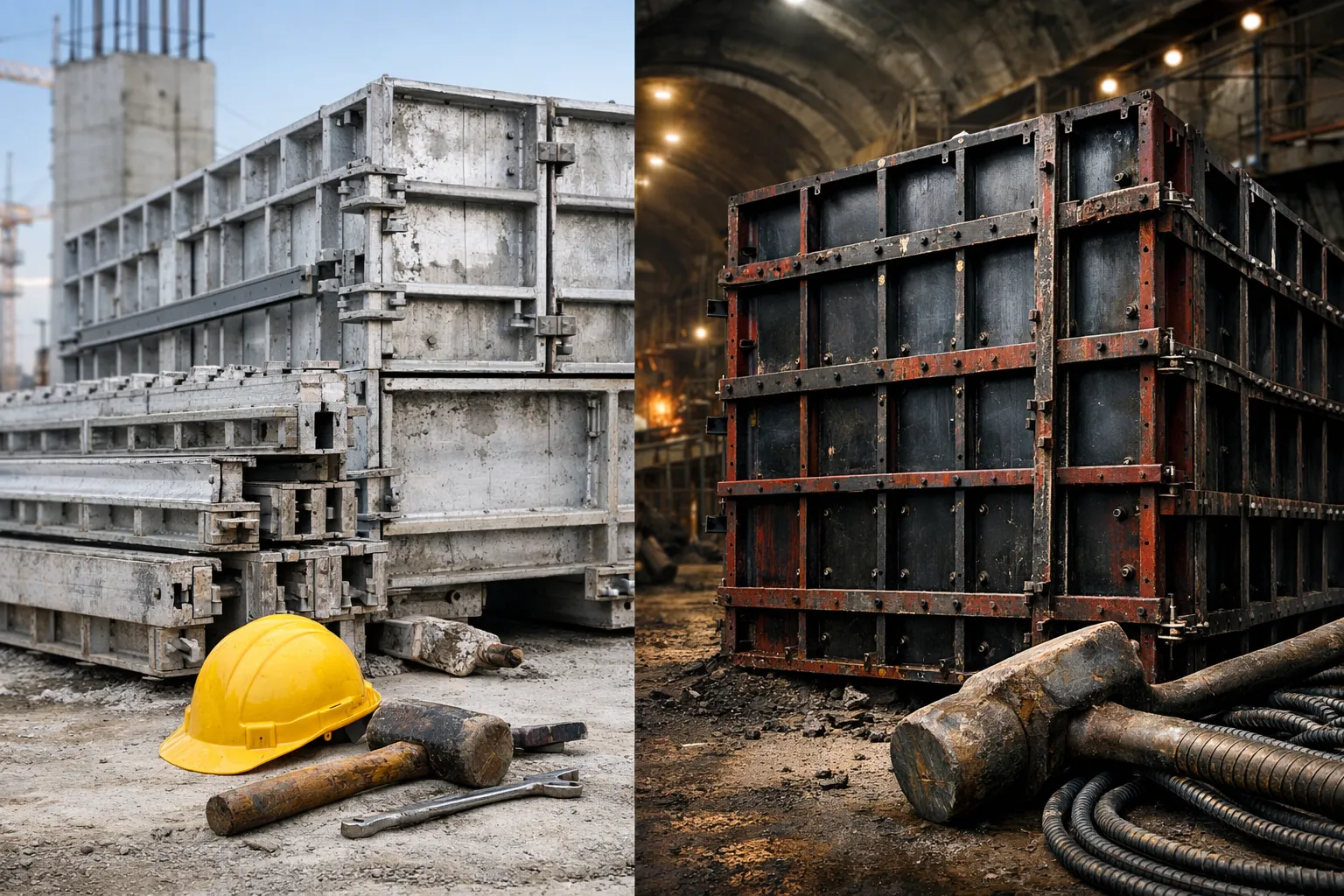
Aluminum formwork is engineered for high-frequency reuse. A well-maintained aluminum system can often withstand 300 or more casting cycles before the panels require significant refurbishment or replacement. The alloy used is specifically tempered to resist deformation, though it is softer than steel. The key to maintaining this lifespan is proper handling; while the panels are tough, they are susceptible to impact damage if dropped from heights or struck with heavy hammers during stripping. Regular maintenance involves cleaning concrete residue to ensure the modular connections remain precise, preserving the shuttering in construction efficiency that aluminum is famous for.
Steel Formwork Longevity
Steel formwork is the undisputed champion of longevity in terms of raw physical toughness. It is exceptionally resistant to warping, denting, and physical abuse that occurs on rugged job sites. High-quality steel frames can last for an indefinite number of years if the plywood facing (in frame systems) is replaced regularly, or if the all-steel face is maintained against rust. This robustness makes steel the preferred choice for a tunnel formwork system supplier dealing with infrastructure projects where the equipment is subjected to harsh conditions and extreme loads over many years.
Reusability and Repurposing Options
The concept of reusability extends beyond just the number of pours; it also encompasses how easily the system can be adapted to new designs. Aluminum formwork is highly modular. The panels are designed like a sophisticated kit of parts that can be reconfigured for different wall lengths and heights, making them versatile for residential complexes with varying layouts. This adaptability is a primary reason why aluminum is often cited among the Best Formwork Systems for Residential Construction, specifically for monolithic pours where walls and slabs are cast simultaneously.
Steel formwork, particularly large gang forms, is less flexible in terms of reconfiguration but offers superior reusability for standard repetitive structures. For example, in retaining walls, columns, or bridge piers where dimensions remain constant, steel forms can be reused rapidly without disassembly. However, resizing steel panels often requires welding or heavy bolting modifications, making them less agile than the pin-and-wedge systems found in aluminum setups.
Corrosion Resistance and Maintenance
Environmental exposure plays a significant role in the maintenance schedule of formwork systems. Steel is naturally prone to oxidation and rust when exposed to moisture and the alkaline nature of wet concrete. To mitigate this, steel formwork requires a rigorous maintenance regime involving the application of release agents and rust inhibitors. If left unprotected in a damp storage yard, a steel system can degrade rapidly, pitting the surface and compromising the finish of future concrete pours.
Aluminum, on the other hand, naturally forms a protective oxide layer that resists corrosion. While it can react with the alkalinity in fresh concrete (a process that can create hydrogen gas bubbles on the surface), this is easily managed with proper release agents. The inherent weather resistance of aluminum makes it ideal for projects in humid or coastal climates where steel might require constant sandblasting and repainting. A comprehensive Shuttering Material List for a project in a tropical region will often prioritize aluminum or galvanized steel components to combat these environmental challenges.
Strength and Load-Bearing Capacity
The structural capabilities of the formwork define the pour rates and safety margins on site. This is where the physical properties of the metals create a sharp divide in application.
Load Capacity Limits
Steel formwork possesses a significantly higher modulus of elasticity compared to aluminum. This stiffness allows steel forms to withstand immense fresh concrete pressures, often exceeding 80 kN/m² to 100 kN/m². This high load capacity enables contractors to pour tall walls and columns continuously and rapidly without fear of the formwork bursting or bulging. It is the material of choice for heavy civil engineering, which is why you will invariably find a dam formwork supplier recommending heavy-duty steel systems for massive hydraulic structures.
Structural Integrity Factors
Aluminum, while strong, has a lower stiffness than steel. Consequently, aluminum panels usually have a lower permissible fresh concrete pressure, typically around 40 kN/m² to 60 kN/m². To compensate for this, aluminum formwork systems often require a denser network of wall ties and supports to prevent deflection. While this ensures safety, it can slightly increase the labor involved in setting up the tie system. However, for standard residential heights, the structural integrity of aluminum is more than sufficient and offers excellent dimensional stability.
Thermal Expansion and Contraction
Temperature fluctuations on a construction site can affect the dimensional accuracy of the formwork. Steel has a lower coefficient of thermal expansion compared to aluminum. This means that in environments with extreme daily temperature swings—such as desert construction sites—steel forms will expand and contract less than their aluminum counterparts.
While the dimensional change in aluminum is generally manageable for standard buildings, it can become a factor in very long, continuous pours where cumulative expansion might affect the alignment of tie holes or assembly joints. Engineers calculating the tolerances for Concrete Construction Formwork in extreme climates often favor steel for its thermal stability, ensuring that the precise geometry of the structure is maintained regardless of the ambient heat.
Formwork Assembly and Disassembly
The speed of the construction cycle is often the deciding factor in modern fast-track projects. The assembly mechanisms of the two systems differ fundamentally.
Efficient Assembly Techniques
Aluminum formwork systems utilize a simple pin-and-wedge or pin-and-clip assembly method. This allows unskilled or semi-skilled labor to secure panels together rapidly using only a hammer. The intuitive design facilitates a short learning curve, allowing crews to reach peak efficiency quickly. This ease of assembly is a major driver for construction efficiency in mass housing projects.
Steel formwork assembly often involves heavy clamps, bolted connections, or specialized locking mechanisms. While these connections are incredibly secure, they take longer to engage and often require heavy tools. Furthermore, because the panels are larger and heavier, the assembly pace is dictated by the crane’s cycle time rather than the speed of the manual workforce.
Quick Disassembly Methods
Stripping, or striking the formwork, follows a similar pattern. Aluminum systems are designed for “early stripping,” particularly for slab forms, where drop-head systems allow the panels to be removed while leaving props in place. This allows the expensive panels to be cycled to the next floor immediately. Steel systems, generally being used for vertical elements or heavy infrastructure, are stripped in large gangs. While a crane can remove a large section of steel wall formwork in one go (which is very fast), the preparation time to detach anchors and attach crane hooks adds to the overall cycle time.
Concrete Surface Finish Quality
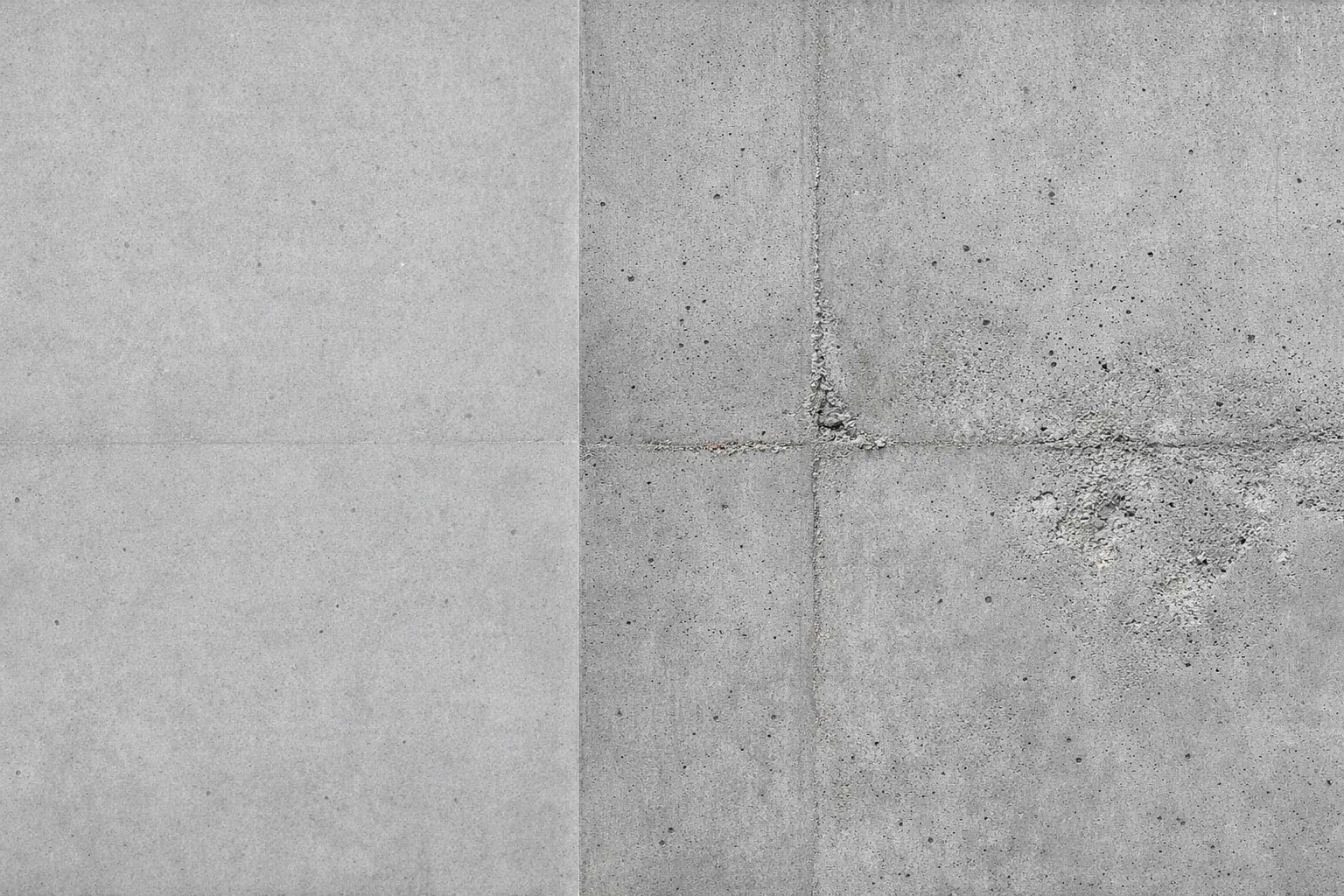
The aesthetic requirement of the concrete surface often dictates the formwork choice. Aluminum formwork is celebrated for producing a high-quality, smooth “off-form” finish. The joints between the aluminum panels are tight and minimal, leaving very faint fins that can be easily ground off. In many residential developments, the finish from aluminum formwork is good enough to eliminate the need for plastering, allowing for direct painting after a skim coat.
Steel formwork also produces an excellent finish, especially when using large steel faceplates which eliminate panel joints over large areas. However, if the steel panels are older or have been repaired, the surface might show imperfections. Additionally, the joints between steel panels, if not perfectly aligned, can result in more significant grout leakage and honeycombing compared to the precision-machined edges of aluminum profiles.
Environmental Impact and Sustainability
Sustainability is increasingly governing construction methodologies. Both steel and aluminum are highly recyclable materials, which is a positive attribute for green building certifications. Aluminum has a high scrap value, incentivizing recycling at the end of the formwork’s life. Furthermore, because aluminum formwork eliminates the need for timber and plywood (which are consumable and often end up in landfills), it significantly reduces construction waste.
Steel is also 100% recyclable and has a lower embodied energy in its initial production compared to aluminum. However, the heavy machinery required to transport and install steel formwork consumes more fuel, potentially increasing the project’s carbon footprint regarding logistics. Conversely, the lightweight nature of aluminum reduces transportation emissions.
Conclusion
In the debate of Differences Between Steel Formwork and Aluminum Formwork, there is no single winner—only the right tool for the job. Steel offers unmatched strength, durability, and load capacity, making it indispensable for heavy infrastructure and high-pressure vertical pours. Aluminum offers agility, speed, and exceptional surface finishes, revolutionizing the efficiency of residential construction through its lightweight, modular design.
Project stakeholders must evaluate their specific needs—considering the availability of cranes, the complexity of the design, the required concrete finish, and the budget lifecycle. Whether you choose the rugged reliability of steel or the rapid efficiency of aluminum, engaging with experts to understand the full capabilities of these systems is the first step toward a successful build. We encourage you to consult formwork specialists and explore advanced shuttering solutions to ensure your next project stands on a solid foundation.
Frequently Asked Questions
Can Aluminium Formwork Be Used for Curved or Irregular Shapes?
Yes, aluminum formwork can be manufactured to suit curved or irregular shapes, although it is most cost-effective for straight, repetitive geometries. Custom aluminum extrusions or special fabrication can create circular columns or curved walls, but this reduces the modularity and interchangeability of the components for future standard projects.
Can Steel Formwork Be Used for High-Rise Building Construction?
Absolutely. Steel formwork is frequently used in high-rise construction, particularly for the central core walls (lift shafts and stairwells) where climbing systems or jump forms are employed. The strength of steel is necessary to support the heavy hydraulic climbing mechanisms and the tall pours typical of core construction.
Are There Any Special Storage Requirements for Aluminium Formwork?
Aluminum formwork should be stored in a dry, covered area if possible, or stacked off the ground to prevent prolonged contact with moisture and soil. While resistant to corrosion, organizing the panels by size and type in racks prevents physical damage and deformation that can occur if panels are haphazardly piled.
Can Formwork Be Designed for Specific Concrete Mix Designs?
Yes, formwork design must account for the concrete mix. Self-compacting concrete (SCC), for instance, exerts full hydrostatic pressure on the forms. Steel formwork is often preferred for SCC due to its higher load-bearing capacity and stiffness, ensuring the forms do not bulge under the fluid pressure of the mix.
Are There Any Specific Safety Considerations for Steel Formwork?
The primary safety consideration for steel formwork is lifting operations. Because large gangs of forms are moved by crane, strict protocols regarding tagline use, wind speeds, and exclusion zones must be enforced. Additionally, workers must be aware of pinch points during the alignment of heavy steel panels.
Which Projects Benefit More from Steel or Aluminum Formwork Frames?
Choosing between steel and aluminum frames depends heavily on the specific architecture and scale of the development.
Best Use Cases for Steel Formwork Frames in Construction
Steel formwork frames excel in heavy civil engineering projects such as bridges, tunnels, dams, and industrial foundations. They are also the ideal choice for high-rise commercial buildings requiring large column sizes and core walls where the concrete pressures are immense. Projects that have open space for crane access and require robust, indestructible equipment will benefit most from steel.
Ideal Scenarios for Using Aluminum Formwork Frames
Aluminum frames are the gold standard for low-to-mid-rise residential mass housing, apartment complexes, and repetitive villa developments. Any project with a cellular layout (many walls and rooms) benefits from the manual handling capability of aluminum. It is also perfect for sites with restricted access where heavy machinery cannot operate effectively.
Project Size, Timeline, and Design Complexity as Decision Factors
For short timelines requiring rapid cycling of floors (e.g., a 7-day cycle), aluminum is often superior due to early stripping capabilities. For projects with massive structural loads or where the formwork serves as a climbing platform, steel is necessary. Complex, non-repetitive designs might favor traditional timber or hybrid systems, as the high fabrication cost of custom aluminum or steel forms may not be recoverable.