
FREE DOWNLOAD – B.F.S. HOLDING
Explore the full spectrum of services and industries covered by B.F.S. Holding.
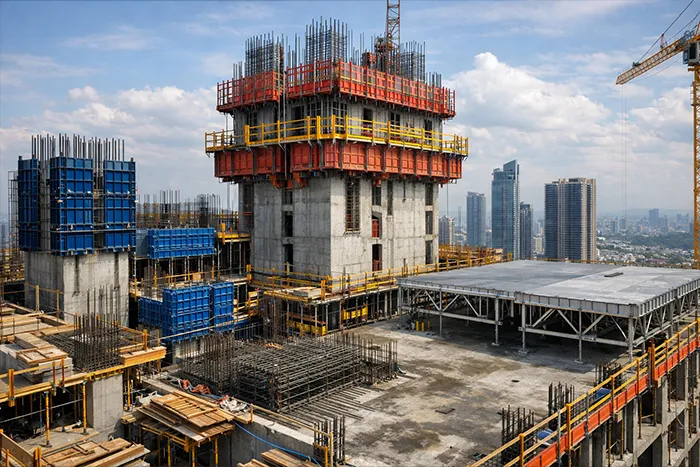
Best Project Management Software For Construction has become a critical requirement because construction projects operate in an environment where uncertainty is structural, not incidental. Unlike generic project workflows, construction combines fragmented teams, constantly changing site conditions, regulatory oversight, subcontractor coordination, procurement delays, and financial risk exposure that can escalate rapidly if visibility is lost. Traditional spreadsheets and general project management platforms struggle to reflect this reality because they were not designed to manage field-driven execution, cost-loaded schedules, or document-intensive workflows.
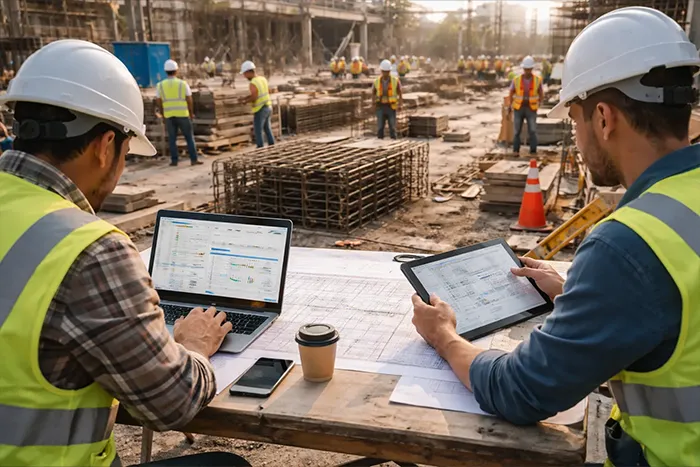
Over the last decade, construction project management software has evolved from basic scheduling tools into integrated operational systems. By 2026, the best construction management platforms function as digital control centers that connect the office, field, and executive layer in real time. This shift is no longer optional. Contractors who fail to adopt construction-specific software often experience schedule slippage, uncontrolled change orders, documentation disputes, and profit erosion. The competitive advantage now lies in visibility, predictability, and decision speed.

What Is Construction Project Management Software?
Construction project management software is a category of digital platforms purpose-built to manage the lifecycle of construction projects from preconstruction planning through closeout. These systems integrate scheduling, cost control, document management, communication, and field execution into a single environment aligned with construction workflows.
Unlike generic task management tools, construction platforms are designed to handle drawings, RFIs, submittals, change orders, daily logs, inspections, and progress tracking in a way that mirrors real construction operations. They are deeply connected to cost codes, work breakdown structures, and contractual relationships between owners, consultants, general contractors, and subcontractors.
Modern construction project management software is typically cloud-based, enabling real-time data exchange between site teams and headquarters. This allows decision-makers to act on accurate field data rather than delayed reports, which is critical when managing multiple concurrent projects across different locations.
How It Differs From General PM Tools
General project management software focuses on task sequencing, collaboration, and productivity tracking across a wide range of industries. While these tools can be adapted for construction, they lack native support for construction-specific processes. Construction projects are not simply task lists with deadlines. They are capital-intensive operations governed by contracts, drawings, specifications, and compliance requirements.
Construction-specific platforms understand relationships between activities, cost items, materials, and subcontractors. They track how a delayed concrete pour affects downstream trades, cash flow, and manpower allocation. They also manage document revisions, ensuring that field teams are always working from the latest approved drawings. This depth of contextual awareness is where construction software fundamentally diverges from generic PM tools.
Top Construction Project Management Software Solutions (Detailed Reviews)
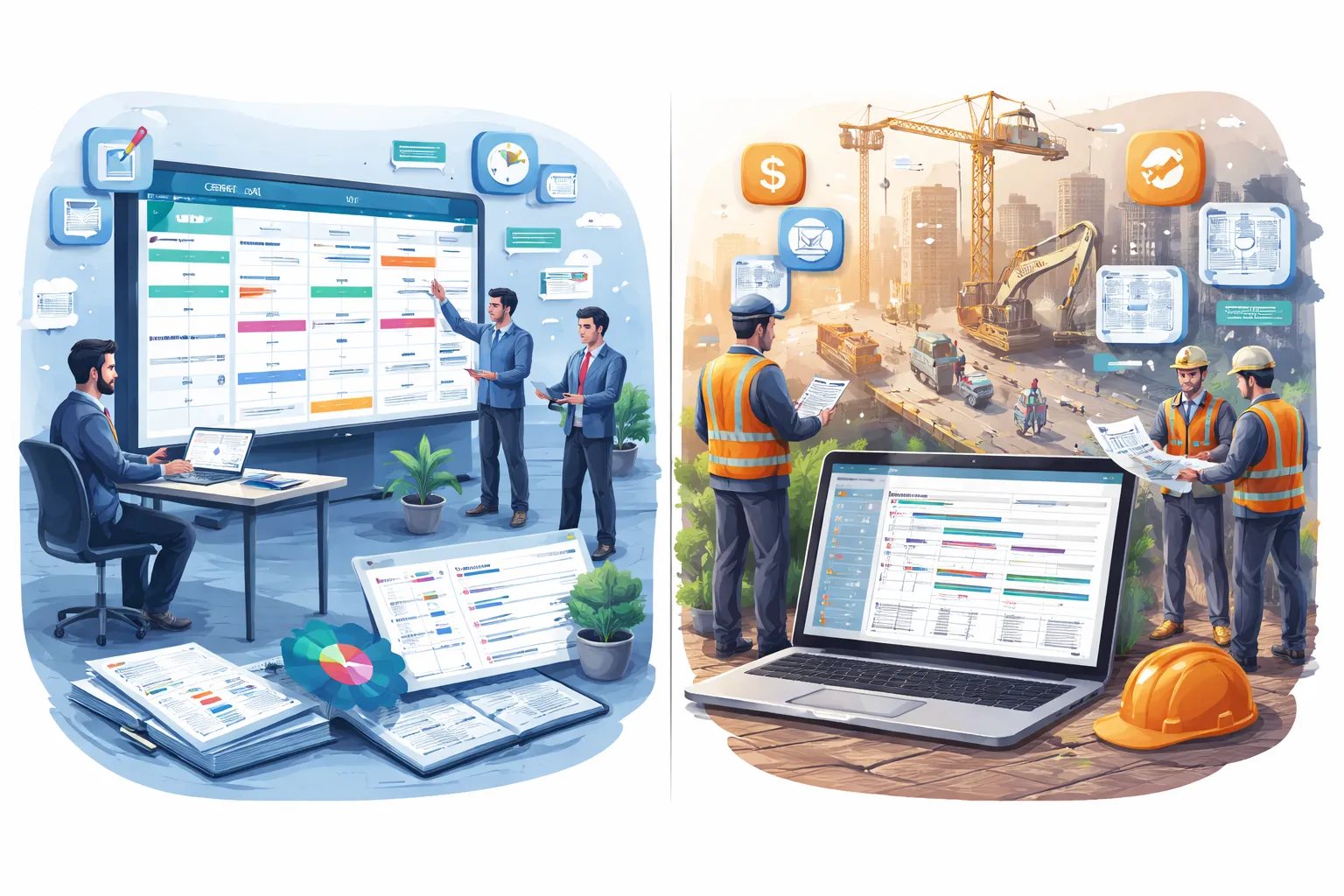
The software platforms reviewed in this section are evaluated through a construction-specific lens rather than generic feature checklists. The comparison is based on four practical criteria that most directly influence real-world performance: company size and organizational maturity, project complexity and scale, depth of integration with financial, BIM, and field systems, and overall cost sensitivity including licensing, implementation, and long-term operational overhead. This approach allows readers to understand not only what each platform does, but also in which construction scenarios it delivers the highest value and where its limitations begin.
Procore
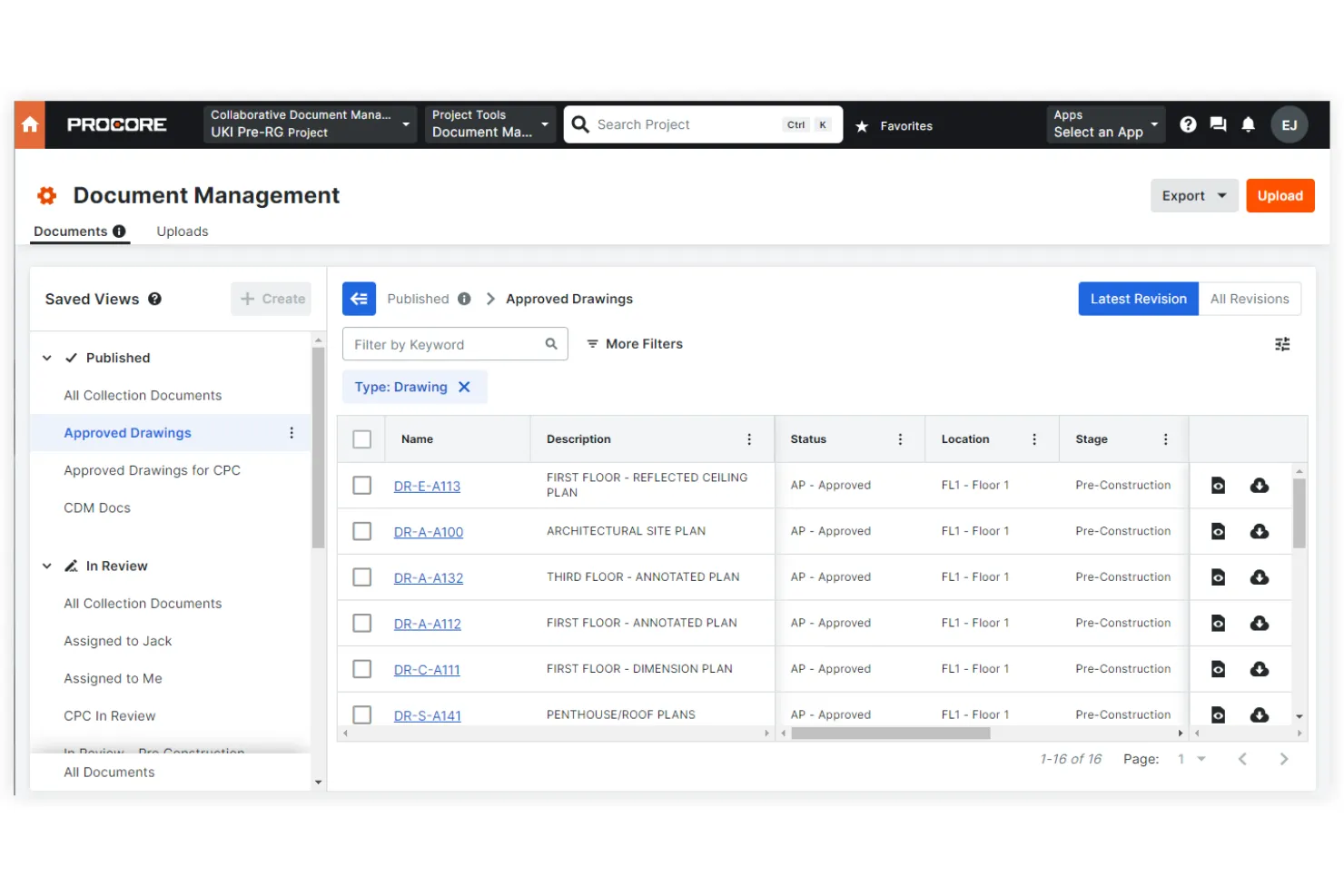
Procore remains one of the most widely adopted construction project management platforms globally. Its strength lies in its comprehensive ecosystem that spans project management, financials, quality, safety, and analytics. Procore is particularly effective for medium to large contractors managing complex, multi-stakeholder projects.
The platform excels in document control, RFI workflows, and real-time collaboration between office and field. Its reporting capabilities provide executives with visibility into project health across portfolios. However, Procore’s pricing model can be prohibitive for smaller contractors, and its depth requires structured implementation to avoid underutilization.
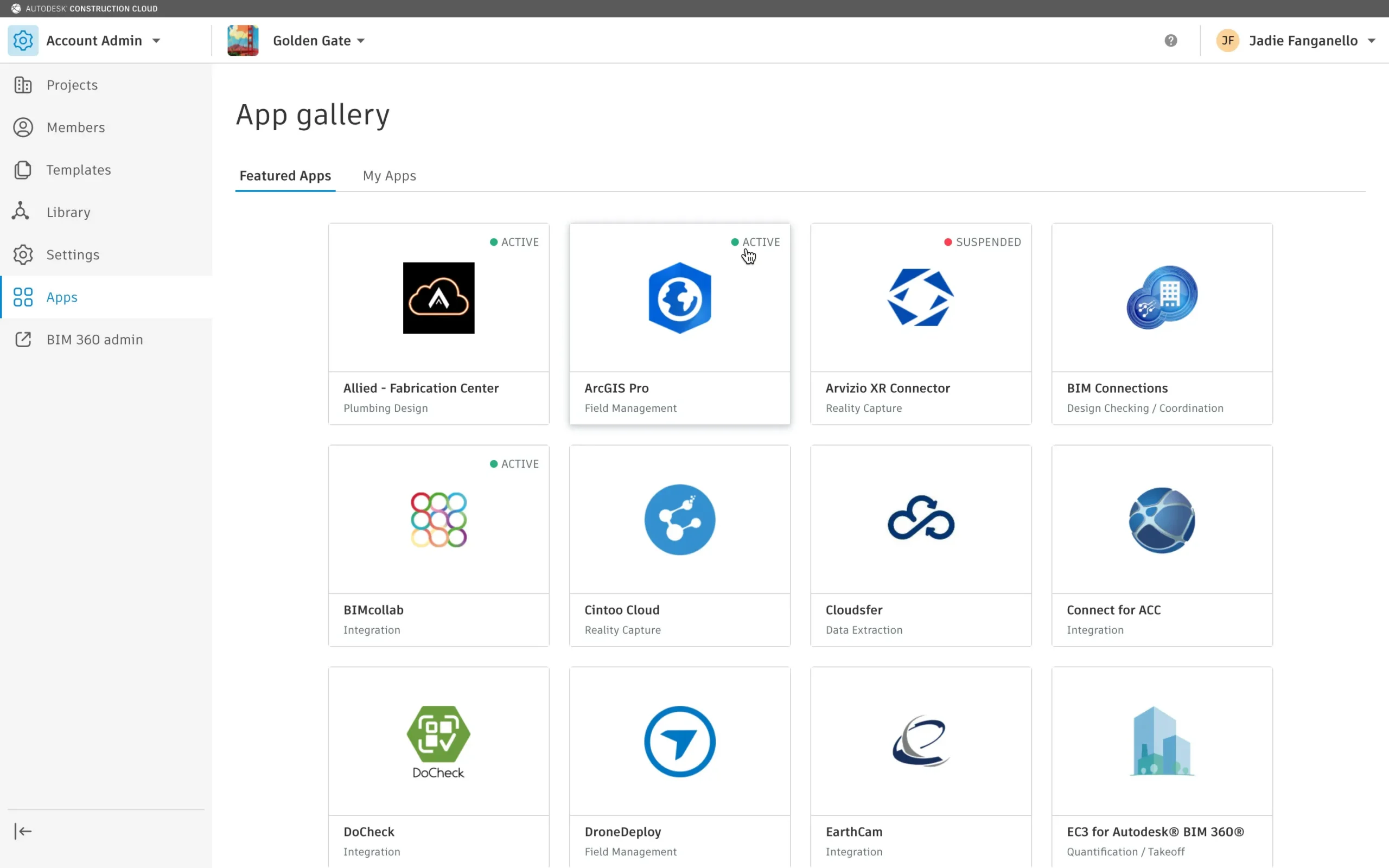
Autodesk Construction Cloud
Autodesk Construction Cloud integrates project management with design and BIM workflows, making it a natural choice for firms heavily invested in Autodesk products. Its strength is the seamless connection between design data and construction execution, reducing coordination errors and rework.
This platform is particularly valuable when managing complex formwork and execution sequencing derived from BIM models, especially in workflows such as Formwork Planning with BIM Models. While powerful, it may feel overwhelming for smaller teams that do not require deep BIM integration.
Buildertrend
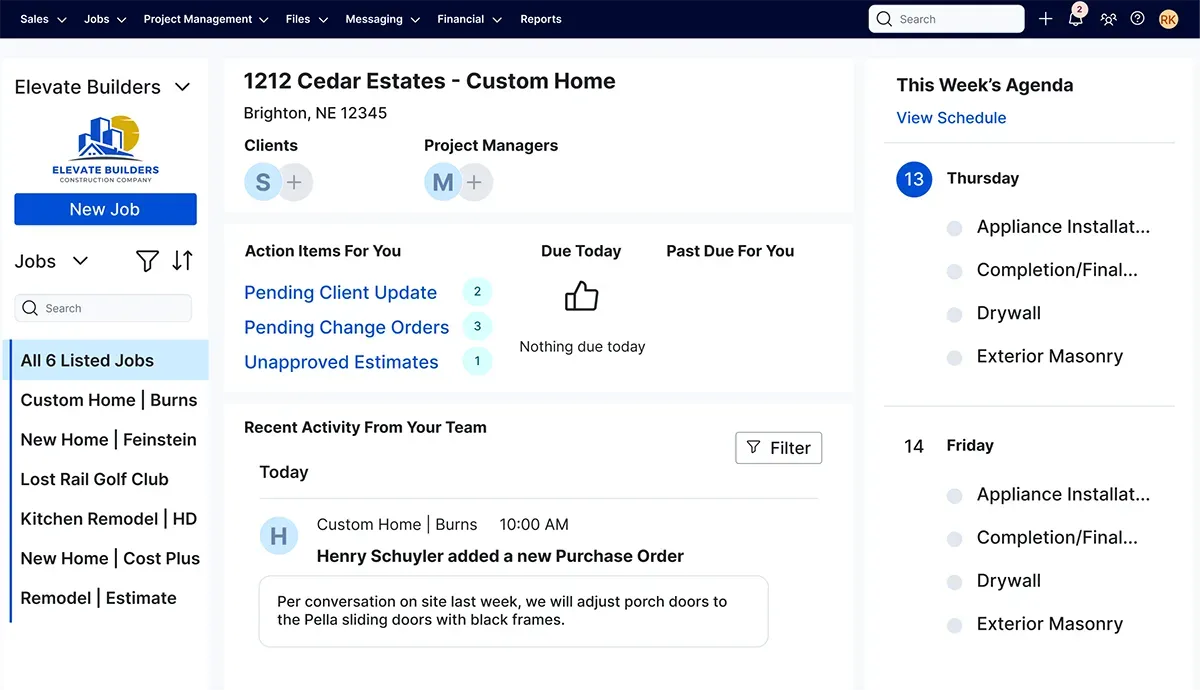
Buildertrend is widely adopted among residential and light commercial contractors. It combines project management with customer-facing features such as client portals, making it suitable for builders who need transparency with owners.
Its scheduling, budgeting, and communication tools are intuitive, and its learning curve is relatively low. Buildertrend may lack the depth required for large infrastructure or industrial projects, but it performs strongly within its target segment.
Contractor Foreman
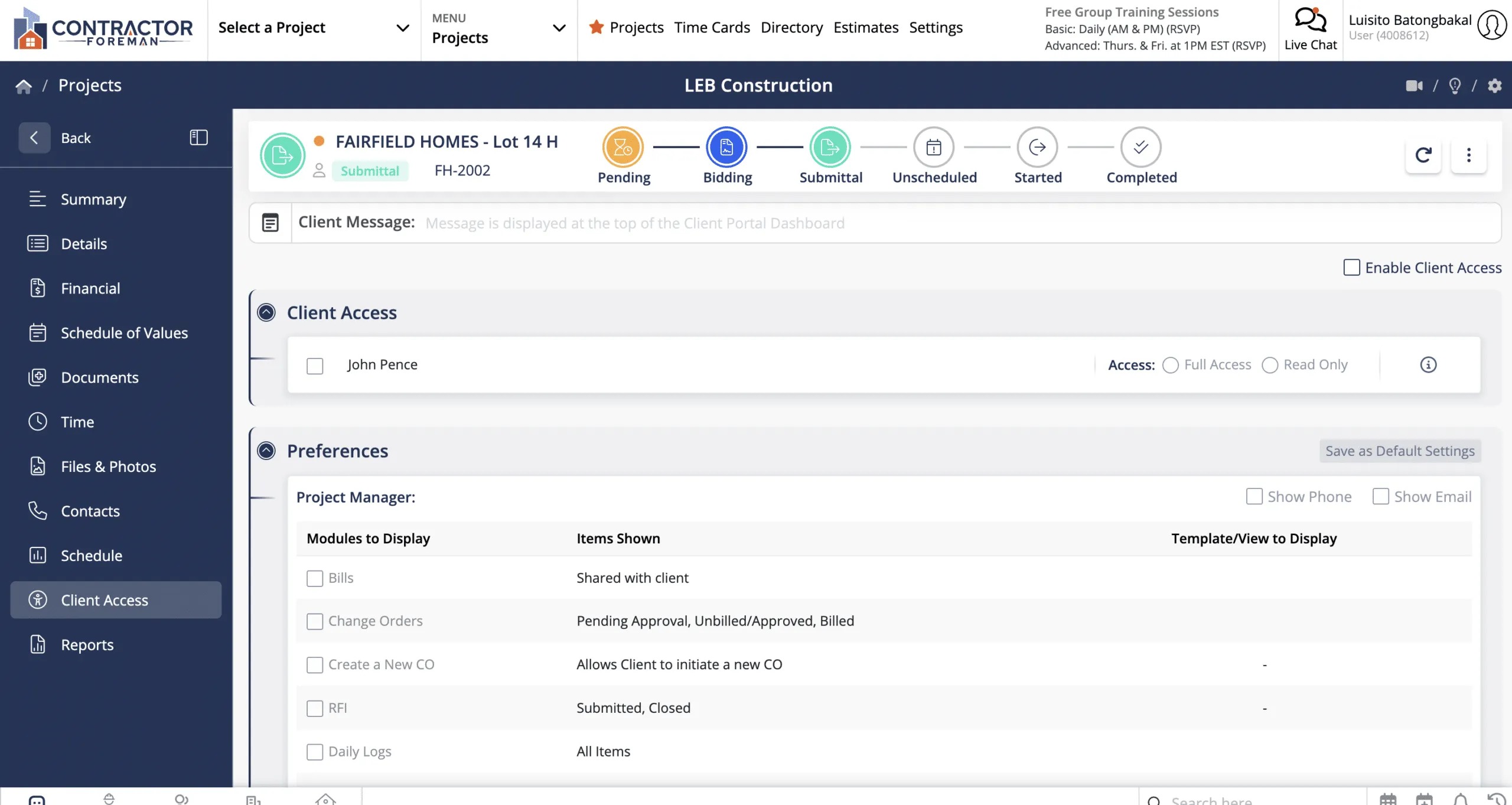
Contractor Foreman positions itself as a cost-effective, all-in-one solution for small to mid-sized construction businesses. It offers a broad feature set including scheduling, cost tracking, safety management, and document control at a competitive price point.
For contractors transitioning from spreadsheets to digital systems, Contractor Foreman provides a practical entry point. Its interface is less polished than premium platforms, but its value proposition is compelling for budget-conscious firms.
monday.com
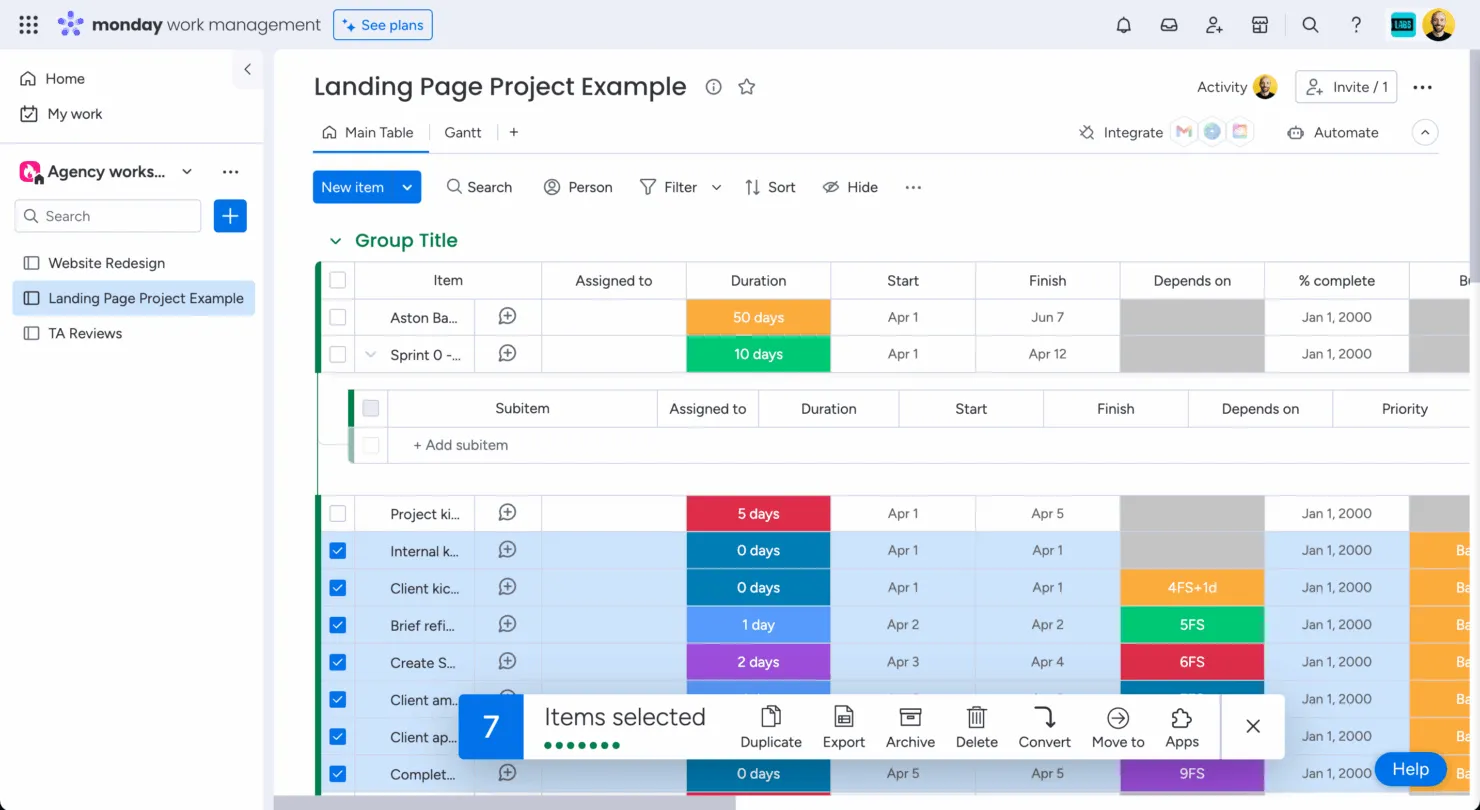
monday.com is a general project management platform that has gained traction in construction due to its flexibility and visual workflow customization. It is best suited for firms that want to design their own processes rather than adopt predefined construction workflows.
While it lacks native construction modules, it can effectively manage coordination tasks, high-level scheduling, and cross-department collaboration. However, critical construction functions such as RFIs and submittals require customization or third-party integrations.
Wrike
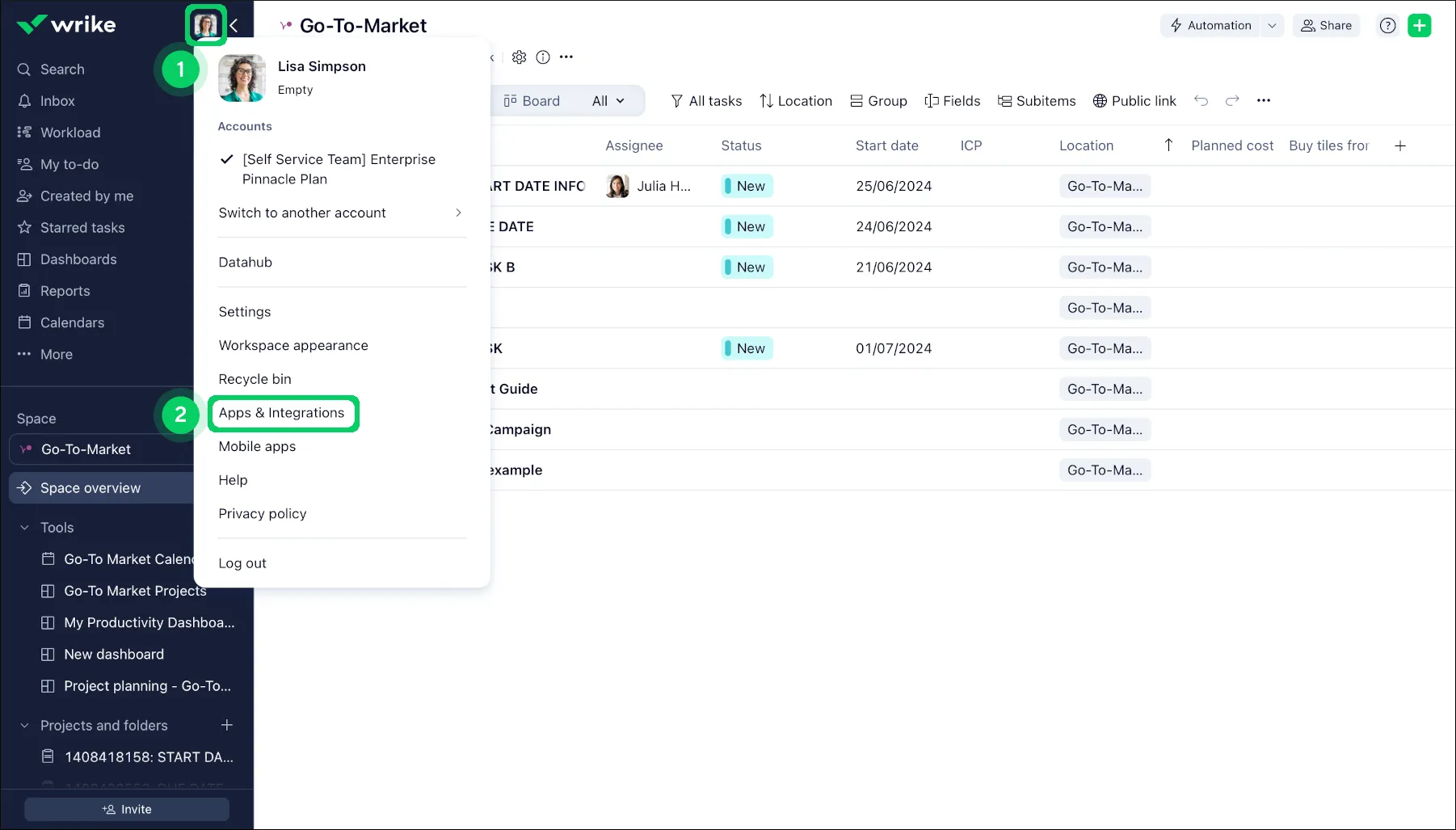
Wrike focuses on structured work management and is often used by engineering and design teams within construction organizations. It supports complex workflows and approvals but does not natively support construction documentation standards.
Wrike works best as a coordination layer rather than a full construction management system. It is often paired with specialized field or financial tools to cover operational gaps.
Smartsheet
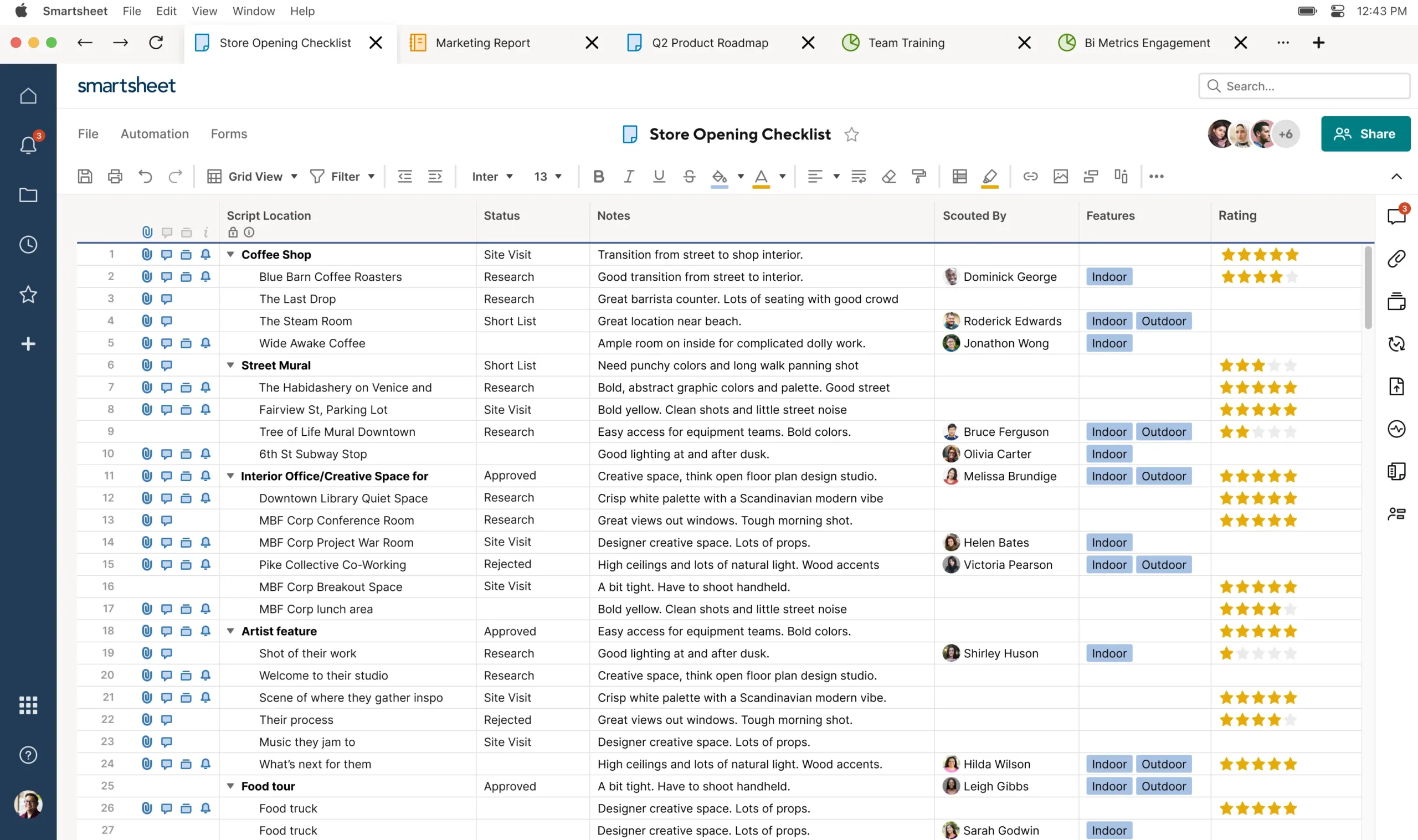
Smartsheet bridges the gap between spreadsheets and project management software. Its grid-based interface appeals to teams familiar with Excel, while offering automation and collaboration features.
In construction, Smartsheet is frequently used for tracking projects, reporting, and portfolio oversight rather than field execution. It is effective for managing projects at scale but requires careful structuring to avoid data fragmentation.
Zoho Projects
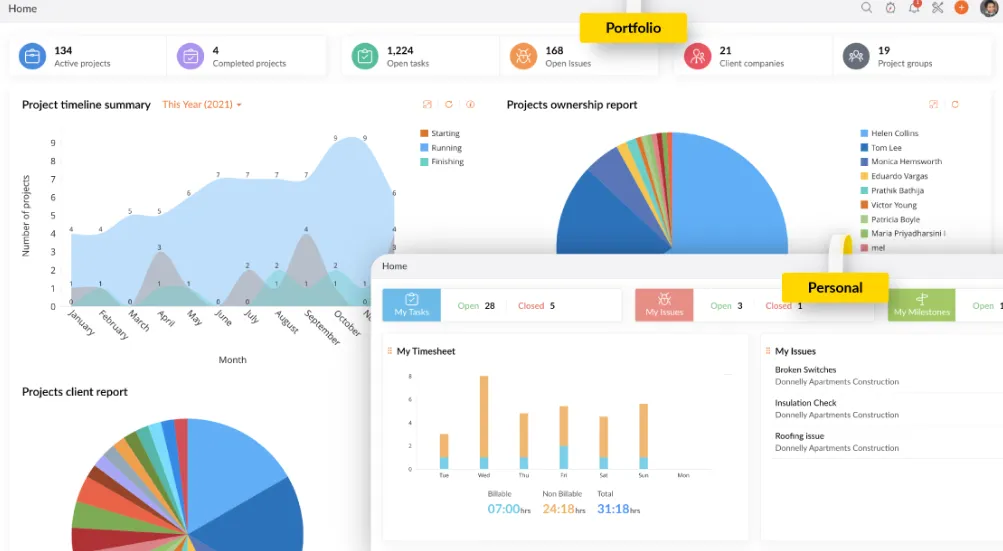
Zoho Projects offers a cost-effective general PM solution with time tracking, task management, and collaboration features. It integrates well with the broader Zoho ecosystem, making it attractive for firms already using Zoho for accounting or CRM.
While not construction-specific, it can support smaller construction businesses with relatively simple workflows. Its limitations become apparent as project complexity increases.
ClickUp
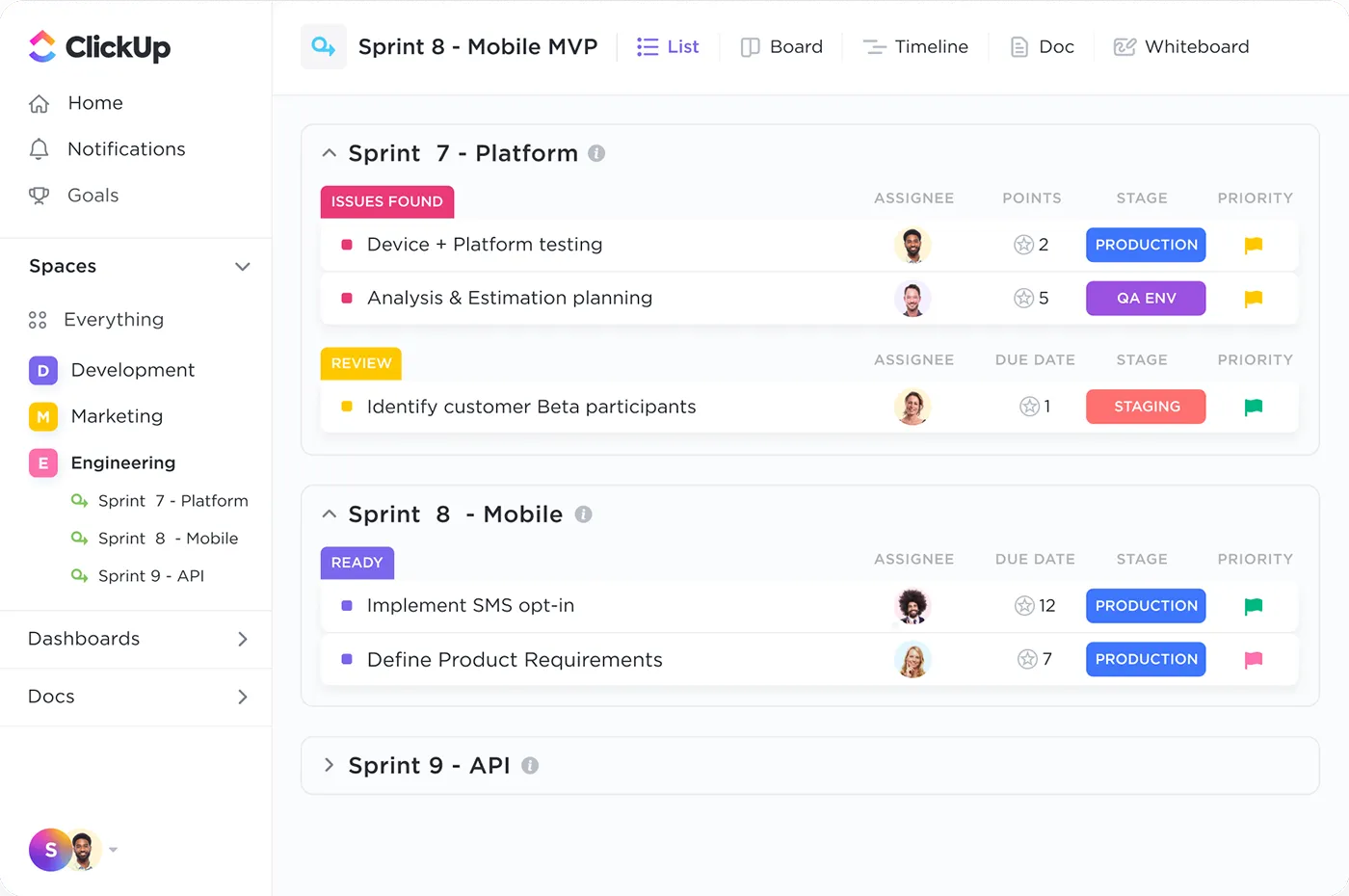
ClickUp emphasizes customization and productivity. In construction, it is often used by startups or innovative firms seeking a flexible digital workspace.
Its strength lies in adaptability, but like other general PM tools, it lacks native construction intelligence. Successful use in construction requires disciplined configuration and integration.
CMiC
CMiC is an enterprise-grade construction ERP and project management platform. It is designed for large contractors managing complex financial structures, compliance requirements, and multi-project portfolios.
CMiC’s strength is its financial control and integration between accounting and project execution. Implementation is resource-intensive, making it suitable primarily for larger organizations with dedicated IT support.
Jonas Construction
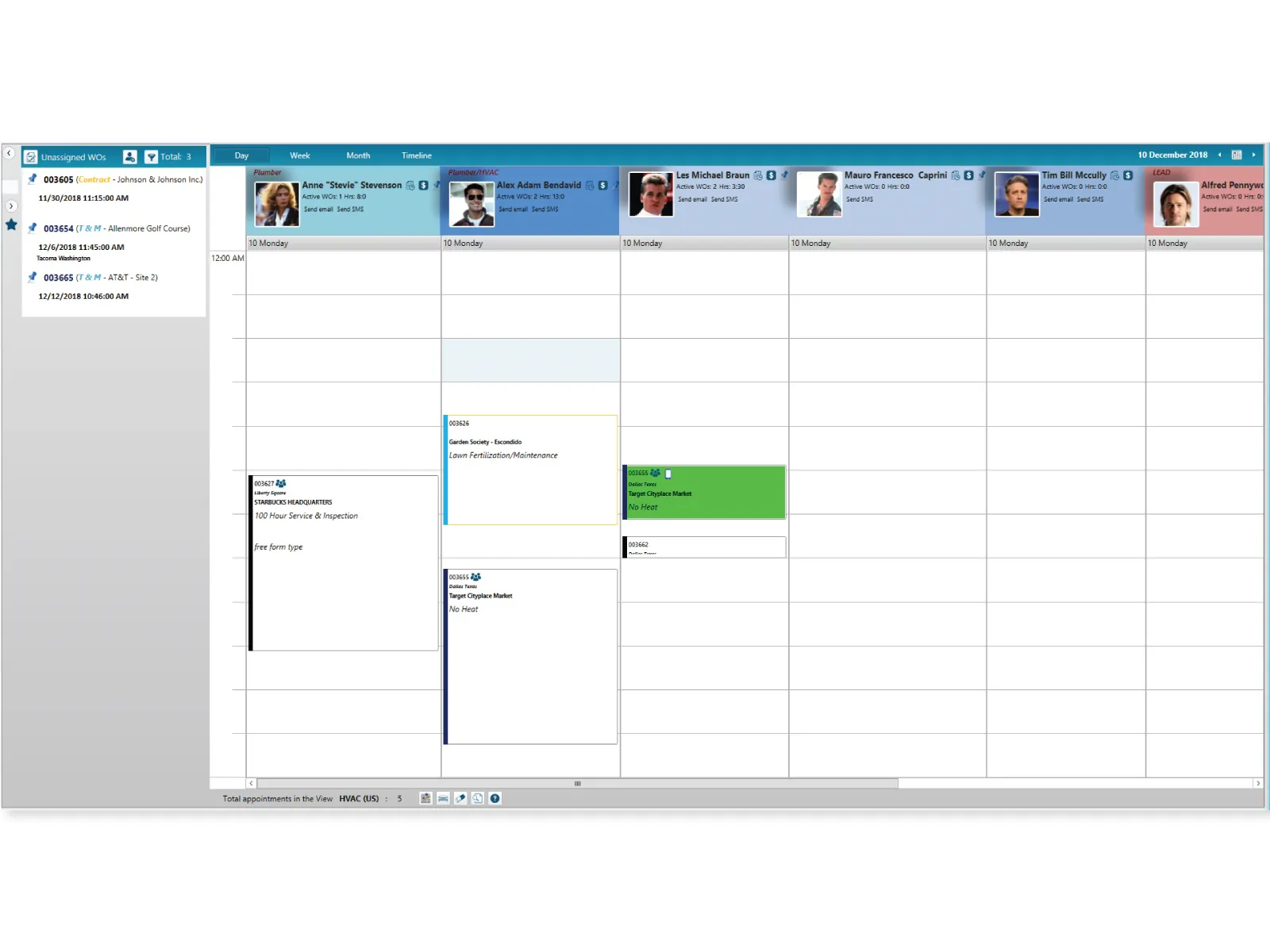
Jonas Construction combines construction accounting with project management, making it attractive for firms seeking tight financial integration. It provides strong job costing and financial reporting capabilities.
While functional, its user interface is less modern compared to newer platforms. Jonas is often favored by firms prioritizing financial accuracy over user experience.
ConstructionOnline
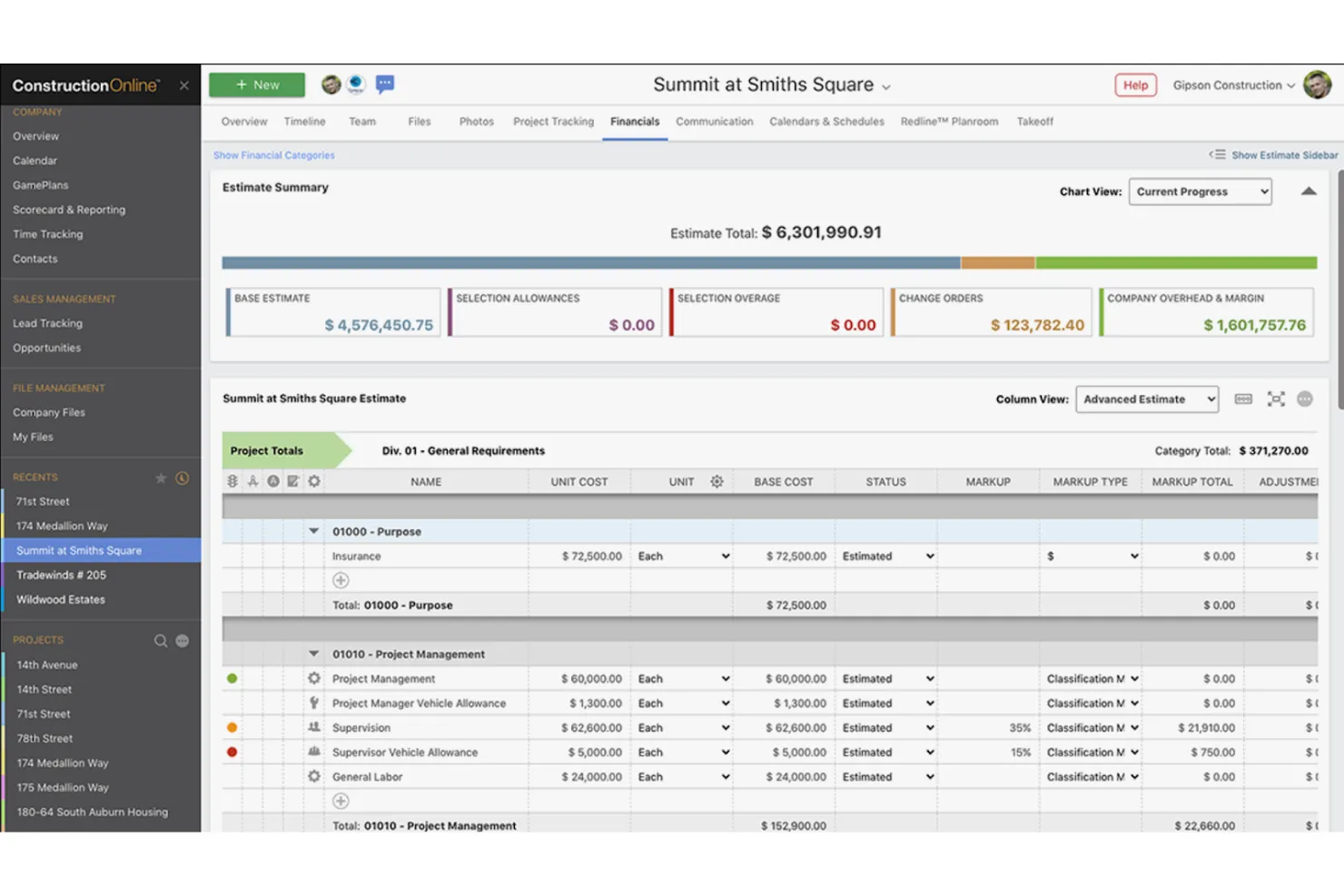
ConstructionOnline focuses on collaboration, document management, and scheduling. It serves a wide range of contractors, particularly in commercial construction.
Its strength lies in plan management and communication, making it suitable for firms seeking structured coordination without enterprise-level complexity.
Free vs Paid Construction PM Software
Free construction project management software can be useful for startups, small teams, or short-term projects. These tools typically offer basic task tracking and limited collaboration features. However, they rarely support core construction workflows such as change management, cost control, or document versioning.
Paid platforms justify their cost by reducing risk, improving efficiency, and protecting margins. The return on investment often comes from avoided errors, faster decision-making, and improved coordination rather than direct cost savings.
Best Software for Small Construction Businesses
Small construction businesses benefit most from platforms that balance functionality with simplicity. Tools such as Contractor Foreman, Buildertrend, and Zoho Projects provide manageable entry points without overwhelming teams.
The key is choosing software that aligns with current operational maturity while allowing room for growth. Overly complex systems can hinder adoption and reduce value realization.
AI Trends in Construction PM Software (2026)
By 2026, AI is no longer an experimental feature in construction software. Predictive analytics, automated risk detection, and intelligent scheduling are becoming standard capabilities. AI-driven systems analyze historical project data to forecast delays, cost overruns, and resource constraints before they materialize.
In construction project management software, AI is increasingly used to automate document classification, detect drawing conflicts, and generate actionable insights from field data. These capabilities are particularly valuable in large projects where manual oversight is impractical.
Key Features to Look For
Effective construction project management software should provide real-time visibility, structured document control, financial integration, and field accessibility. The ability to track projects across multiple sites while maintaining standardized processes is critical for scalability.
Types of Concrete Formwork Systems: A Comprehensive Guide for Modern Construction
Integration with execution workflows such as Concrete Column Formwork and Special Formworks ensures that planning aligns with on-site realities. Without this alignment, software becomes a reporting tool rather than a control system.
Cloud vs On-Premise Comparison
Cloud-based construction project management software dominates the market due to its accessibility, scalability, and lower upfront costs. Cloud platforms enable real-time collaboration between field and office teams, which is essential in dynamic construction environments.
On-premise solutions may still be relevant for organizations with strict data governance requirements, but they require significant IT infrastructure and maintenance. For most contractors, cloud-based systems offer superior agility and cost efficiency.
Pricing Structures and Cost Considerations
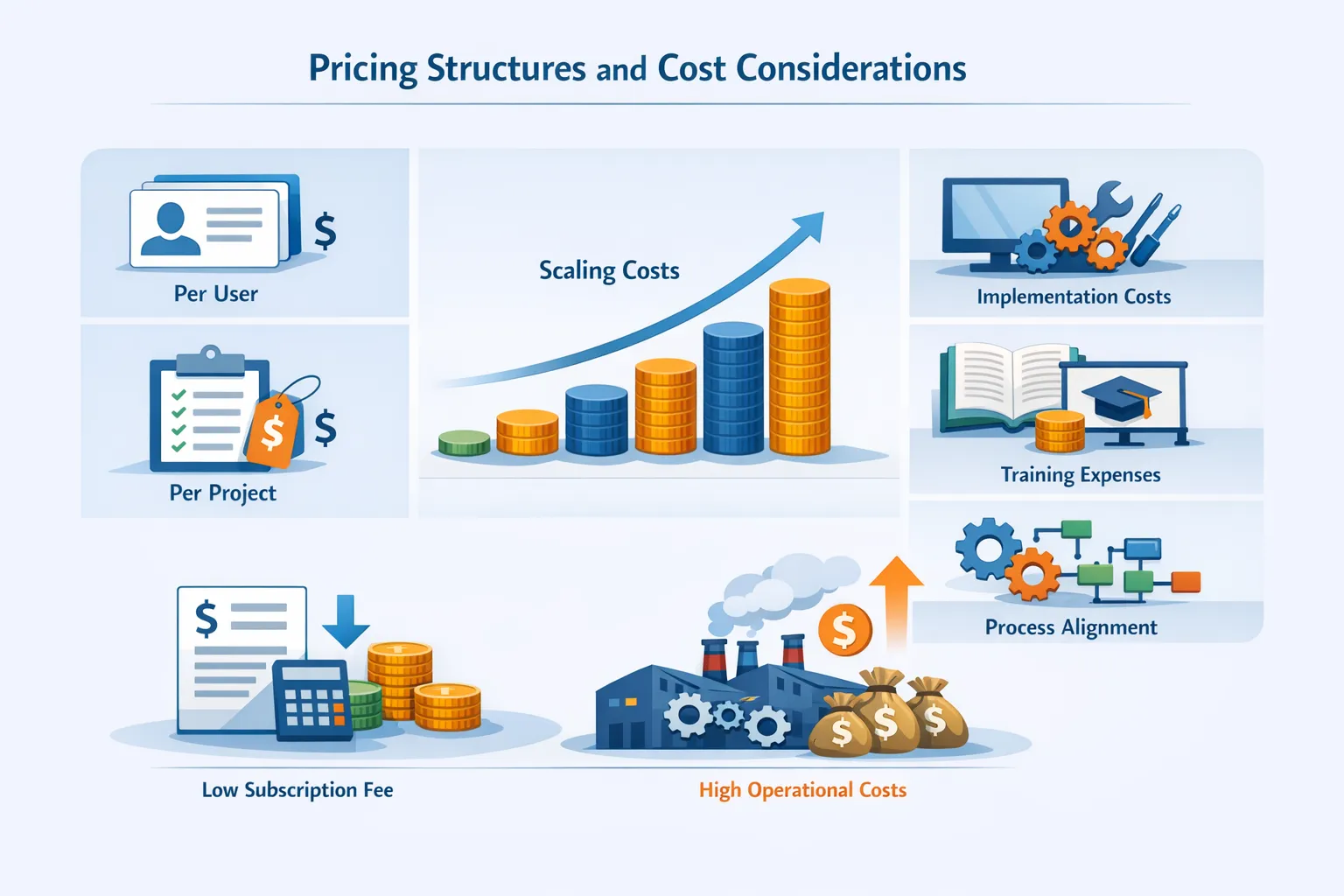
Pricing models vary widely, ranging from per-user subscriptions to project-based licensing. Understanding how pricing scales with team size and project volume is essential to avoid unexpected costs.
The true cost of software extends beyond licensing. Implementation, training, and process alignment significantly impact total cost of ownership. A lower subscription fee may result in higher operational costs if the system is poorly adopted.
Integration With BIM, Accounting, and Field Tools
Integration is a defining factor of effective construction software. Platforms that connect seamlessly with BIM models, accounting systems, and field tools reduce data silos and improve decision-making accuracy.
Linking project management with portfolio-level projects tracking enables executives to assess performance across the organization rather than in isolation. This holistic view supports strategic planning and resource optimization.
How to Choose the Right Software for Your Company
Choosing the best project management software for construction requires a clear understanding of operational priorities, project complexity, and organizational maturity. The goal is not to adopt the most feature-rich platform, but the one that best supports decision-making and execution.
Piloting software on active projects and involving field teams in evaluation ensures practical alignment. Successful adoption depends as much on usability and cultural fit as on technical capabilities.
Common Implementation Mistakes
Many construction firms underestimate the importance of change management during software implementation. Failing to train users, standardize workflows, or align leadership expectations often leads to underutilization.
Another common mistake is attempting to replicate legacy processes digitally rather than rethinking workflows to leverage software capabilities. Construction project management software delivers value when it enables new ways of working, not when it reinforces inefficiencies.
Conclusion
The best construction management software in 2026 is defined by its ability to integrate people, processes, and data across the project lifecycle. Whether managing a single project or a diverse portfolio, the right platform enhances visibility, reduces risk, and supports sustainable growth.
As construction continues to digitize, firms that invest strategically in project management software position themselves to compete on efficiency, reliability, and performance rather than price alone.
FAQs
What is the best project management software for construction in 2026?
The best solution depends on company size, project complexity, and integration requirements. Procore and Autodesk Construction Cloud lead in enterprise environments, while Contractor Foreman and Buildertrend serve small to mid-sized businesses effectively.
Is there free construction project management software?
Free options exist but are limited in functionality. They may support basic coordination but lack advanced construction-specific features required for professional project control.
Can general PM tools replace construction software?
General PM tools can support certain workflows but cannot fully replace construction-specific platforms due to missing industry-specific capabilities.
How does AI improve construction project management software?
AI enhances forecasting, automates data analysis, and improves decision-making by identifying risks and trends earlier than traditional methods.
What integrations matter most in construction software?
Integration with accounting, BIM, and field data collection tools is critical for maintaining data consistency and operational visibility.
How long does implementation typically take?
Implementation timelines vary based on system complexity and organizational readiness, ranging from a few weeks for smaller platforms to several months for enterprise systems.