FREE DOWNLOAD – B.F.S. HOLDING
Explore the full spectrum of services and industries covered by B.F.S. Holding.
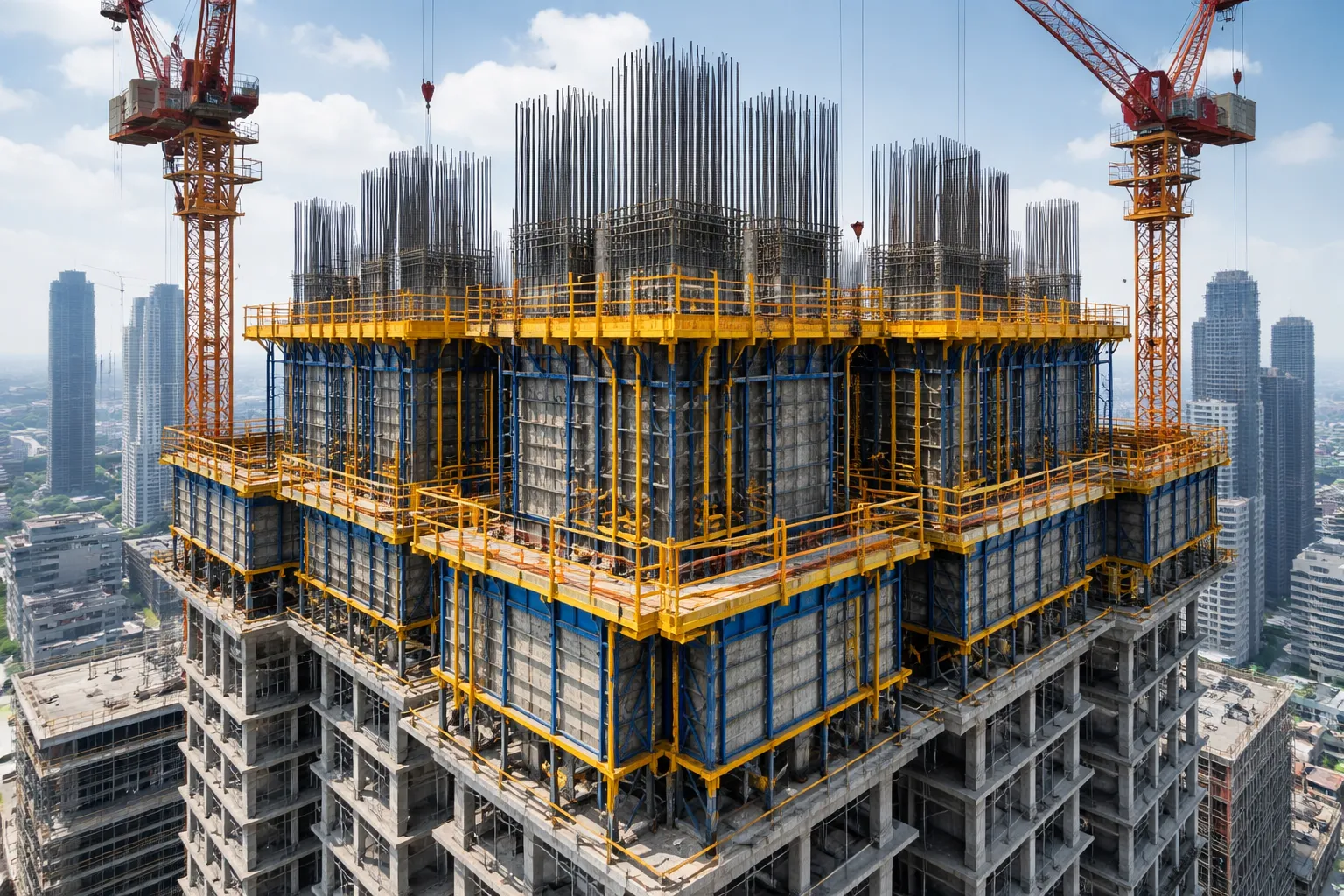
Formwork Systems for High-Rise Buildings are the fundamental skeletal frameworks that define the structural integrity, geometric precision, and overall construction pace of modern vertical cities. In the demanding realm of high-rise construction, the choice of a temporary support system is far from a secondary consideration; it is a critical engineering decision that impacts every facet of the project lifecycle. Unlike low-rise developments, tall buildings introduce unique challenges such as extreme wind loads, logistical bottlenecks for material movement, and the necessity for rapid construction cycle times to ensure financial viability. A well-designed formwork strategy ensures that the vertical concrete construction maintains its alignment while providing a safe working platform for laborers at staggering heights. By integrating efficiency with structural accuracy, these systems allow developers to achieve the repetitive floor cycles required for skyscraper projects.
What Are Formwork Systems for High-Rise Buildings?
Formwork systems for high-rise buildings represent a specialized category of temporary structures designed to contain and support fresh concrete until it reaches sufficient self-supporting strength. In the context of verticality, these systems act as a precision mold for the high-rise structural systems that constitute the building’s core and floor plates. Beyond simple containment, these systems must facilitate the load transfer in tall buildings during the curing phase, ensuring that the weight of wet concrete and construction live loads is safely distributed to the floors below. Modern systems have evolved from basic timber molds into highly engineered mechanical solutions that integrate hydraulic systems, crane-assisted lifting mechanisms, and modular panels. Their operational role is to provide a standardized environment where high-volume concrete pouring can occur with surgical precision, minimizing the risk of structural deviation as the building rises.
Why Choosing the Right Formwork System Matters in High-Rise Construction
The selection of an appropriate formwork system is a primary driver of project success, directly influencing the construction cycle time and the safety of the workforce. In tall buildings, every hour saved per floor translates into significant cost reductions across the duration of the project. A system that is too heavy or complex can lead to logistical delays, while an insufficient system might compromise the structural finish or worker safety. High-quality concrete construction formwork reduces the need for expensive post-pouring remedial work by ensuring superior surface finishes and dimensional accuracy. Furthermore, as the height of a structure increases, the wind pressure on the formwork panels grows exponentially, necessitating a system with high lateral stability. Strategic selection allows contractors to balance the high initial capital investment against the long-term gains in labor productivity and material reuse.
Main Types of Formwork Systems Used in High-Rise Buildings
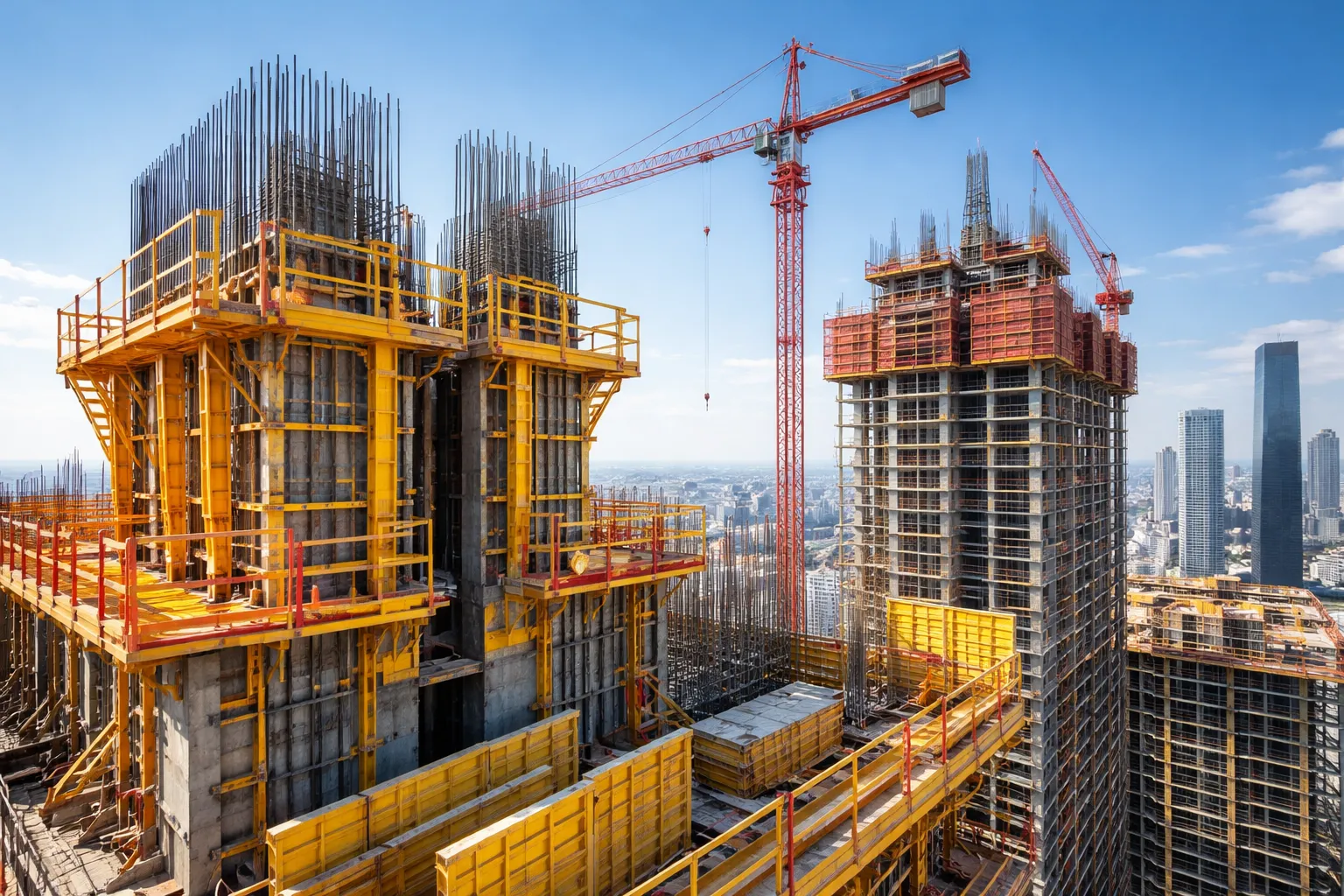
Various methodologies exist for shaping the concrete skeletons of skyscrapers, ranging from traditional manual techniques to highly industrialized modular solutions. The diversity in high-rise construction formwork reflects the varied architectural designs and regional economic factors that influence building projects globally. Each system offers a distinct balance of durability, weight, and ease of assembly. Understanding these variations is essential for engineers who must align the formwork capabilities with the specific structural requirements of the building’s design.
Traditional Timber Formwork
Traditional timber formwork involves the on-site fabrication of molds using plywood, timber beams, and horizontal supports. While this method offers high flexibility for complex architectural geometries, it is increasingly rare in high-rise projects due to its low reuse potential and high labor intensity. In the fast-paced environment of vertical concrete construction, the time required to measure, cut, and nail timber components on every floor becomes a major bottleneck. However, timber remains a secondary support material for filling gaps in modular systems or forming unique structural features where standardized panels cannot reach. Its main limitation in tall buildings is the lack of rigidity and the significant waste generated, which conflicts with modern sustainability goals and the need for a rapid, predictable construction cycle.
Steel Formwork Systems
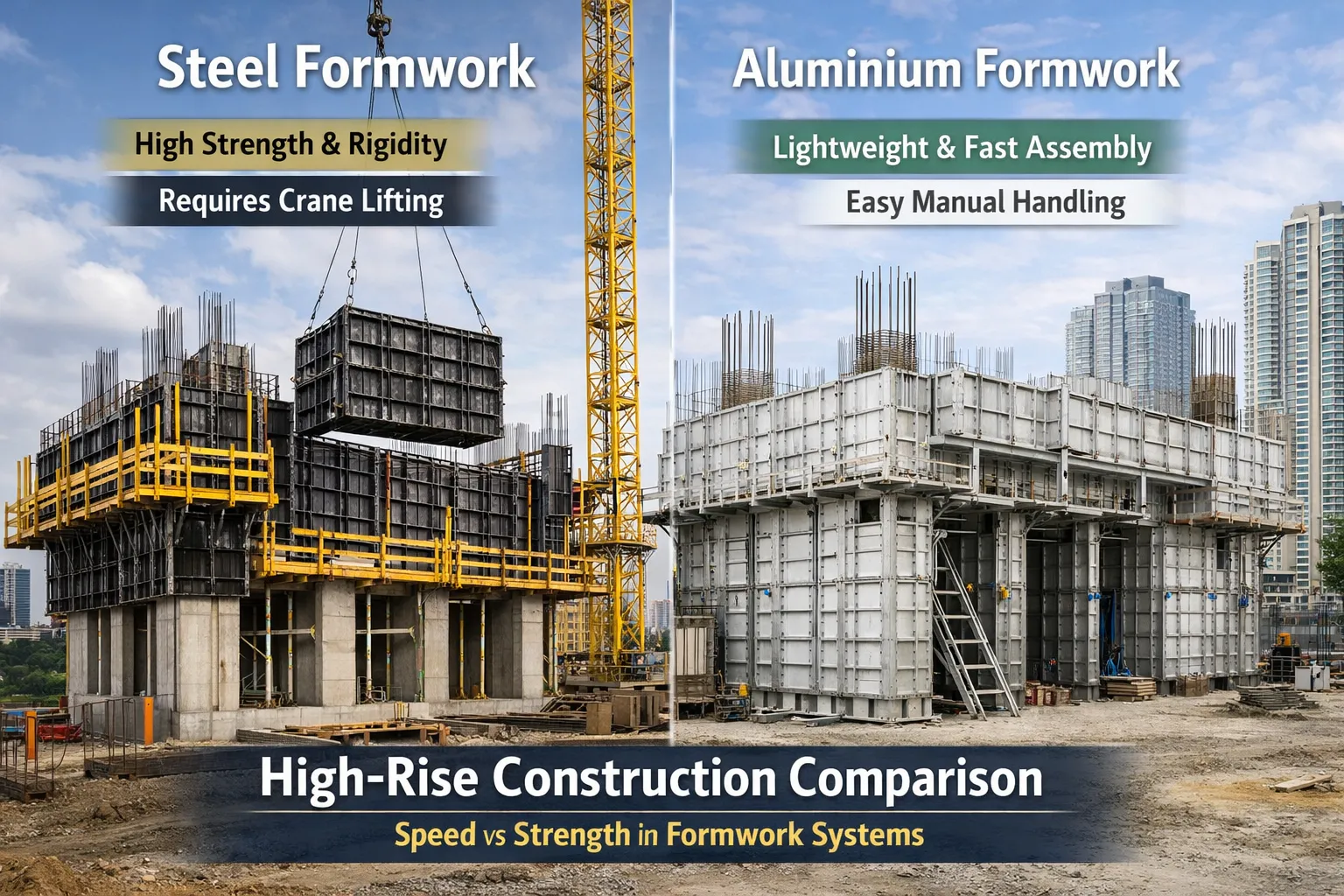
Steel formwork systems are renowned for their exceptional durability and load-bearing capacity, making them ideal for the heavy-duty requirements of lower-level high-rise columns and thick shear walls. These systems utilize heavy-gauge steel plates reinforced with ribs, providing a rigid surface that can withstand high hydrostatic pressures from wet concrete. When implementing a Concrete Column Formwork strategy, steel is often the preferred choice because it maintains its shape over hundreds of reuses without warping or degrading. The weight of steel panels generally requires the use of cranes for repositioning, which must be carefully coordinated with the site’s lifting schedule. Despite the higher initial cost, the longevity of steel components provides excellent value for projects with high repetition and demanding structural specifications.
Aluminium Formwork Systems
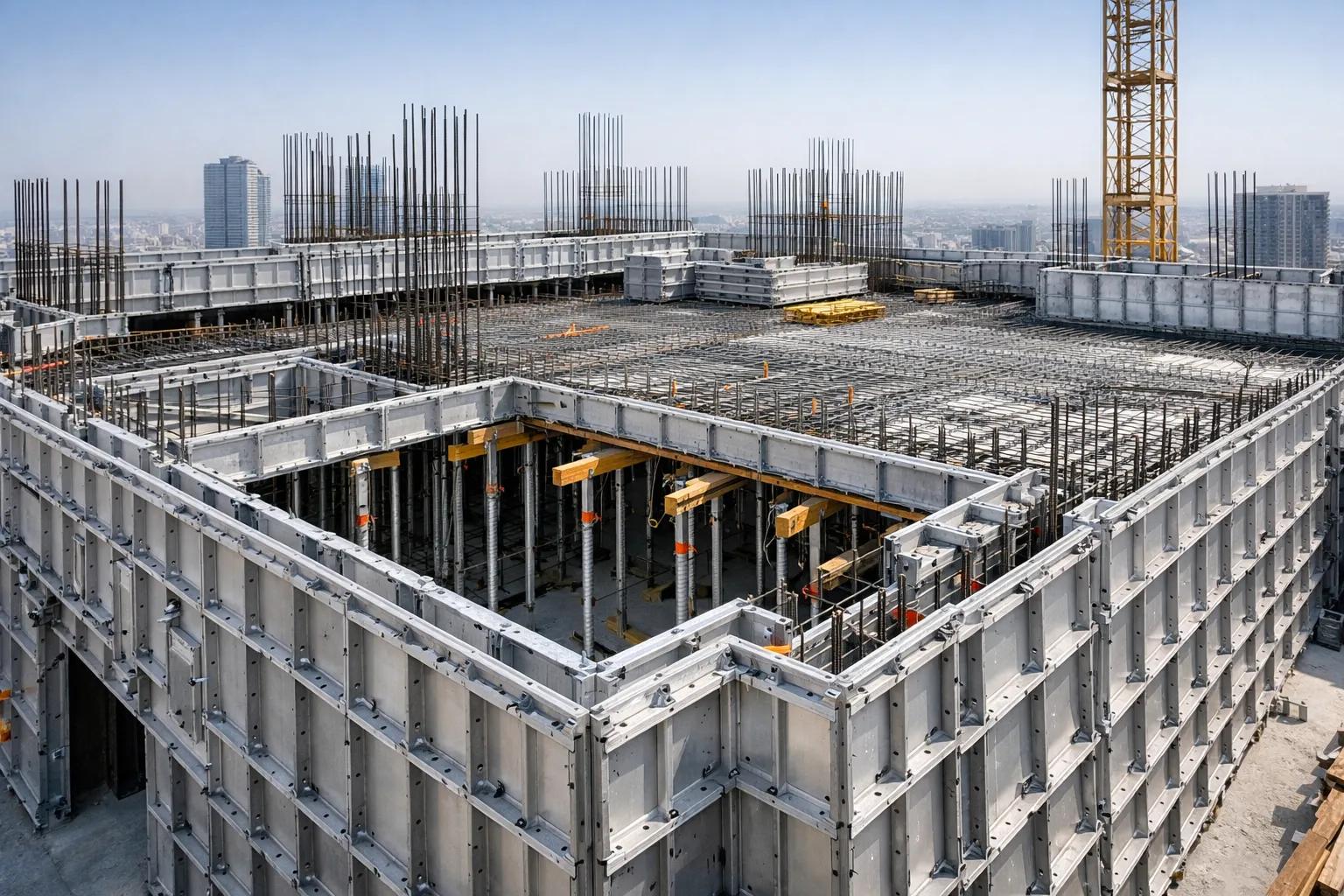
Aluminium formwork for high-rise buildings has become a global standard for residential towers due to its remarkable strength-to-weight ratio. These systems allow for the simultaneous casting of walls and slabs, a technique often supported by specialized BFS industries to maximize output. Because aluminium is light enough to be handled manually, it significantly reduces the reliance on heavy tower cranes, which are often overstretched on high-rise sites. The precision-engineered panels produce a high-quality concrete finish that requires minimal plastering, further accelerating the internal finishing stages. By optimizing the workflow, aluminium systems can achieve floor cycles as short as four to five days, making them the most efficient choice for high-repetition residential developments where speed and labor efficiency are paramount.
Modular and Plastic Formwork Systems
Modular and plastic formwork systems offer a lightweight and corrosion-resistant alternative for specific components of a tall building. These systems consist of interlocking panels made from high-density polymers or composite materials, providing a flexible solution for internal partitions and non-load-bearing elements. While they lack the extreme load-bearing capacity of steel, their ease of cleaning and high reuse potential make them attractive for projects prioritizing formwork efficiency. In high-rise applications, plastic modules are often used in conjunction with other systems to manage complex internal layouts. However, engineers must carefully evaluate their thermal expansion properties, especially when planning for Concreting Practice in Hot Weather, to ensure that the panels do not deform under intense solar radiation at high altitudes.
Advanced Formwork Systems for High-Rise Buildings
As buildings reach greater heights, the limitations of ground-based or crane-dependent systems become more apparent, leading to the development of self-climbing and automated technologies. These advanced systems are designed to operate independently of the primary site lifting equipment, allowing the core of the building to advance several floors ahead of the floor plates.
Climbing and Jump Formwork Systems
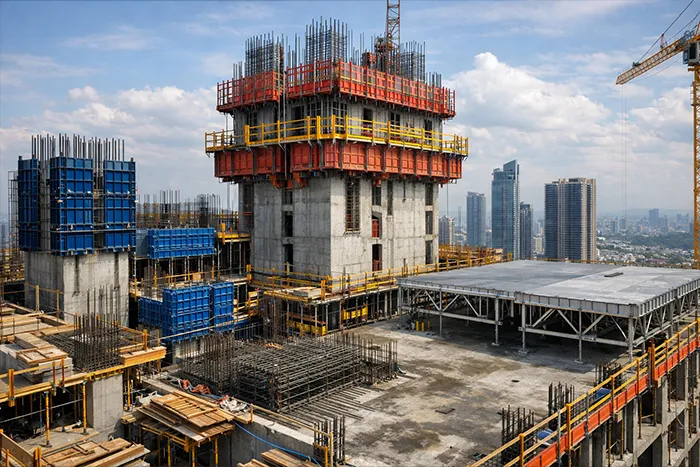
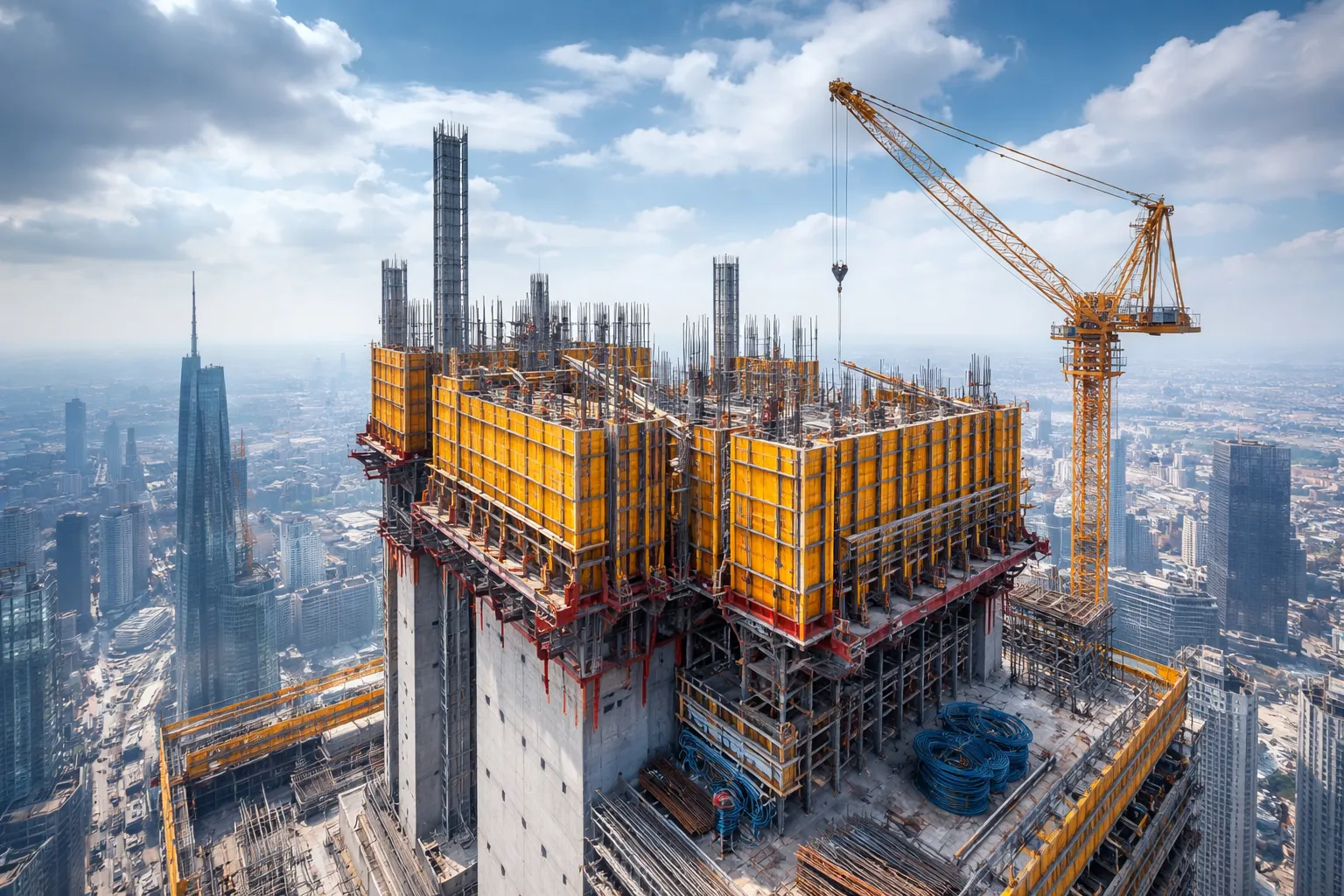
The climbing formwork system is perhaps the most iconic technology associated with modern skyscraper construction. These systems, often referred to as jump forms, utilize hydraulic jacks to lift the entire formwork assembly and working platforms to the next level without crane assistance. This independent movement is crucial for the central core of the building, which serves as the primary structural anchor. By using Concrete Wall Formwork Systems that climb autonomously, contractors can maintain a continuous work rhythm regardless of wind conditions that might otherwise ground a crane. The integration of safety screens and multi-level work platforms within the jump form assembly ensures that workers are protected from falls and external weather elements, significantly enhancing site productivity and safety.
Table Formwork Systems
Table formwork, also known as flying forms, is specifically designed to accelerate the construction of large, repetitive floor slabs in high-rise buildings. Each “table” is a large pre-assembled section of formwork that includes the decking, primary beams, and adjustable legs. Once the slab has cured, the entire table is shifted horizontally toward the edge of the building and then “flown” by crane to the next level. This method drastically reduces the labor required for stripping and reassembling slab forms, ensuring a consistent and rapid floor cycle. When combined with efficient vertical supports, table formwork provides a stable deck for reinforcement placement and concrete pouring, facilitating a smooth transition between the building’s core and its perimeter.
Performance Comparison of Steel and Aluminium Formwork in High-Rise Projects
The debate between steel and aluminium formwork often centers on the specific needs of the building’s structural design and the available site resources. Steel offers unmatched rigidity and is the superior choice for high-pressure pours and massive structural elements where deflection must be zero. However, its weight necessitates constant crane availability, which can slow down the overall project if the crane is needed for other tasks. In contrast, aluminium systems prioritize speed and manual agility, allowing for a decentralized workflow where multiple teams can work simultaneously without waiting for mechanical assistance. While aluminium may be more susceptible to denting over time, its ability to provide a monolithic pour for walls and slabs simultaneously gives it a distinct advantage in the residential high-rise sector where construction cycle time is the primary metric of success.
Key Factors to Consider When Selecting Formwork Systems for High-Rise Buildings
Selecting the right system requires a multifaceted analysis of the building’s height, geometry, and the local labor market. The repetition rate is arguably the most significant factor; a system with high initial costs, such as self-climbing formwork, only becomes cost-effective if it is used over a minimum number of floors. Site logistics also play a vital role, as the footprint of a high-rise in a dense urban area may not have the space for large-scale timber fabrication or extensive storage of unused panels. Furthermore, the skill level of the local workforce must be considered, as advanced hydraulic systems require specialized technicians for operation and maintenance. Engineers must also account for the specific concrete mix designs and curing times, ensuring the formwork can handle the thermal and chemical demands of the project.
Benefits of Using Advanced Formwork Systems in High-Rise Construction
The integration of advanced concrete formwork for tall buildings brings a transformative level of efficiency to the construction site. One of the primary benefits is the enhancement of worker safety, as modern systems include integrated guardrails, toe boards, and fully enclosed working environments that move with the formwork. This minimizes the risk of falls and provides a stable environment for complex tasks like steel fixing and MEP sleeve installation. Additionally, the precision of engineered systems results in a superior structural quality, with fewer joints and smoother surfaces that reduce the need for secondary finishing. The predictability of the construction schedule is also greatly improved, allowing developers to forecast completion dates with higher accuracy and reduce the financial risks associated with project delays.
Challenges and Limitations of Formwork Systems in High-Rise Buildings
Operating at extreme heights introduces a set of challenges that are absent in traditional construction. Wind loads are a primary concern, as large formwork panels can act as sails, creating massive lateral forces that must be resisted by the building’s permanent structure or heavy-duty anchoring systems. Vertical alignment, or “plumbness,” becomes increasingly difficult to maintain as the building grows taller, requiring constant laser monitoring and fine-tuning of the formwork jacks. Temperature effects also play a role; the difference in solar heating between the sun-facing and shaded sides of a tower can cause the building to lean slightly, necessitating complex adjustments to the formwork position. Finally, the vertical transportation of materials and personnel becomes a major logistical hurdle, requiring a highly coordinated schedule to ensure that concrete and rebar reach the top floors exactly when needed.
Best Practices for Formwork Execution in High-Rise Concrete Construction
Successful execution begins with a rigorous pre-planning phase where the formwork layout is coordinated with all other trades, including plumbing, electrical, and structural steel. It is essential to ensure that the Concrete Construction Formwork is properly cleaned and coated with release agents between every use to maintain the integrity of the concrete surface. Coordination between the core climbing systems and the floor slab systems is vital to prevent one from delaying the other. During the pouring process, contractors must adhere to strict Concreting Practice in Hot Weather, using ice or cooling systems if necessary to manage the heat of hydration in massive concrete sections. Continuous inspection of all anchor points and hydraulic lines is mandatory to prevent mechanical failures at height. By fostering a culture of precision and maintenance, contractors can ensure that the formwork system performs reliably from the ground floor to the penthouse.
Conclusion
Selecting and executing the right formwork system is the cornerstone of successful high-rise construction. As architects push the boundaries of height and complexity, the role of engineered formwork becomes even more vital in ensuring that these structures are built safely, economically, and with lasting quality. Whether opting for the manual flexibility of aluminium or the automated power of a climbing system, engineers must prioritize the alignment of technology with the specific logistical and structural demands of the tower. For developers and contractors, the investment in high-quality formwork is an investment in the project’s overall timeline and reputation. To achieve the best results, it is often necessary to explore suitable formwork systems for your high-rise project early in the design phase. By consulting formwork specialists for tall building construction, you can navigate the complexities of vertical growth and ensure your project reaches new heights with precision.
Frequently Asked Questions (FAQs)
1. What is the most suitable formwork system for high-rise buildings ?
Climbing and aluminium formwork systems are the most suitable due to their speed, precision, and ability to operate efficiently at great heights.
2. Why are climbing formwork systems widely used in skyscrapers ?
They allow the building core to progress independently of cranes, improve safety, and maintain consistent construction cycles at extreme heights.
3. How does aluminium formwork improve construction speed in high-rise projects ?
Its lightweight panels enable manual handling and simultaneous casting of walls and slabs, significantly reducing floor cycle times.
4. What are the main challenges of formwork at high elevations ?
Wind loads, vertical alignment control, temperature effects, and material logistics become increasingly complex as building height increases.
5. When is steel formwork preferred over aluminium in high-rise construction ?
Steel formwork is preferred for heavy-load elements such as thick shear walls and columns where maximum rigidity and zero deflection are required.