FREE DOWNLOAD – B.F.S. HOLDING
Explore the full spectrum of services and industries covered by B.F.S. Holding.
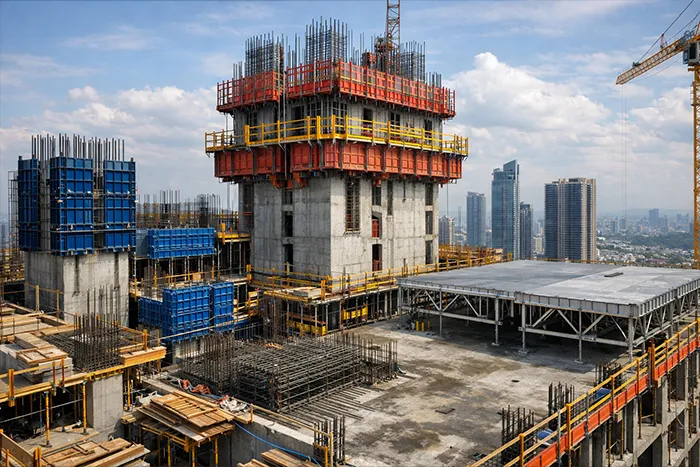
The world of civil engineering and construction is built upon precision and structural integrity, and achieving that foundational quality begins long before the concrete mixture is even poured. If you are asking What is formwork in concrete, you are touching upon one of the most critical, yet often underappreciated, elements of modern building practice. Essentially, formwork is the temporary or permanent mold into which fresh, liquid concrete is poured and held until it gains sufficient strength to support itself. It is the crucial scaffolding that determines the final shape, alignment, and surface finish of a structure, acting as the physical blueprint for the design engineer’s vision. This vital system not only contains the immense hydrostatic pressure exerted by the wet material but also ensures the newly placed concrete cures correctly, playing an indispensable role in the structural integrity and long-term durability of any project. Understanding formwork is therefore foundational knowledge for any contractor, student, or project manager operating within the construction industry today.

Understanding What Formwork Is in Concrete Construction
Formwork in construction represents a highly specialized, temporary structure engineered to hold concrete in the desired shape until the material reaches a specified level of maturity, a process commonly known as curing. This framework, sometimes also referenced by terms like “shuttering,” must be meticulously designed and constructed to withstand various forces, including the weight of the concrete itself, construction loads, and the powerful lateral pressures exerted during the pour. Defining What is formwork in concrete construction moves beyond simply calling it a mold; it is a precisely calculated system of beams, props, and panels. Its essential nature in civil engineering stems from the fact that concrete cannot hold its shape on its own in its initial, plastic state. Whether the goal is to form complex architectural features or standard structural members, the quality and accuracy of the resulting structure are directly tied to the performance and stability of the formwork system used. This makes proper management of formwork in construction a central consideration for project success, ensuring compliance with specifications for dimension, alignment, and plumb.

The Purpose and Engineering Logic Behind Formwork
The fundamental purpose of formwork is multi-layered, extending well beyond mere containment of the fresh mix. From an engineering perspective, formwork is the load-bearing apparatus responsible for controlling the geometry and surface quality of the finished element. Its key functions include defining the precise shape and dimensions of the member, whether it is a beam, column, or Formwork for slab, and acting as a secure transfer mechanism for the loads until the concrete achieves its design strength. The logic behind its design is rooted in understanding hydrostatic pressure distribution, which is highest at the base of the mold and increases with the height of the pour; this dictates the necessary strength and bracing, particularly for tall elements like walls and columns. Consideration must also be given to the curing environment, as the formwork can influence moisture retention and temperature, both of which are critical factors in minimizing defects and ensuring optimal concrete strength development. Inadequate design or construction can lead to immediate and catastrophic failures, such as grout leakage, which compromises the integrity of the concrete, or deformation, which results in permanent structural misalignment.
Types of Formwork Used in Modern Concrete Construction
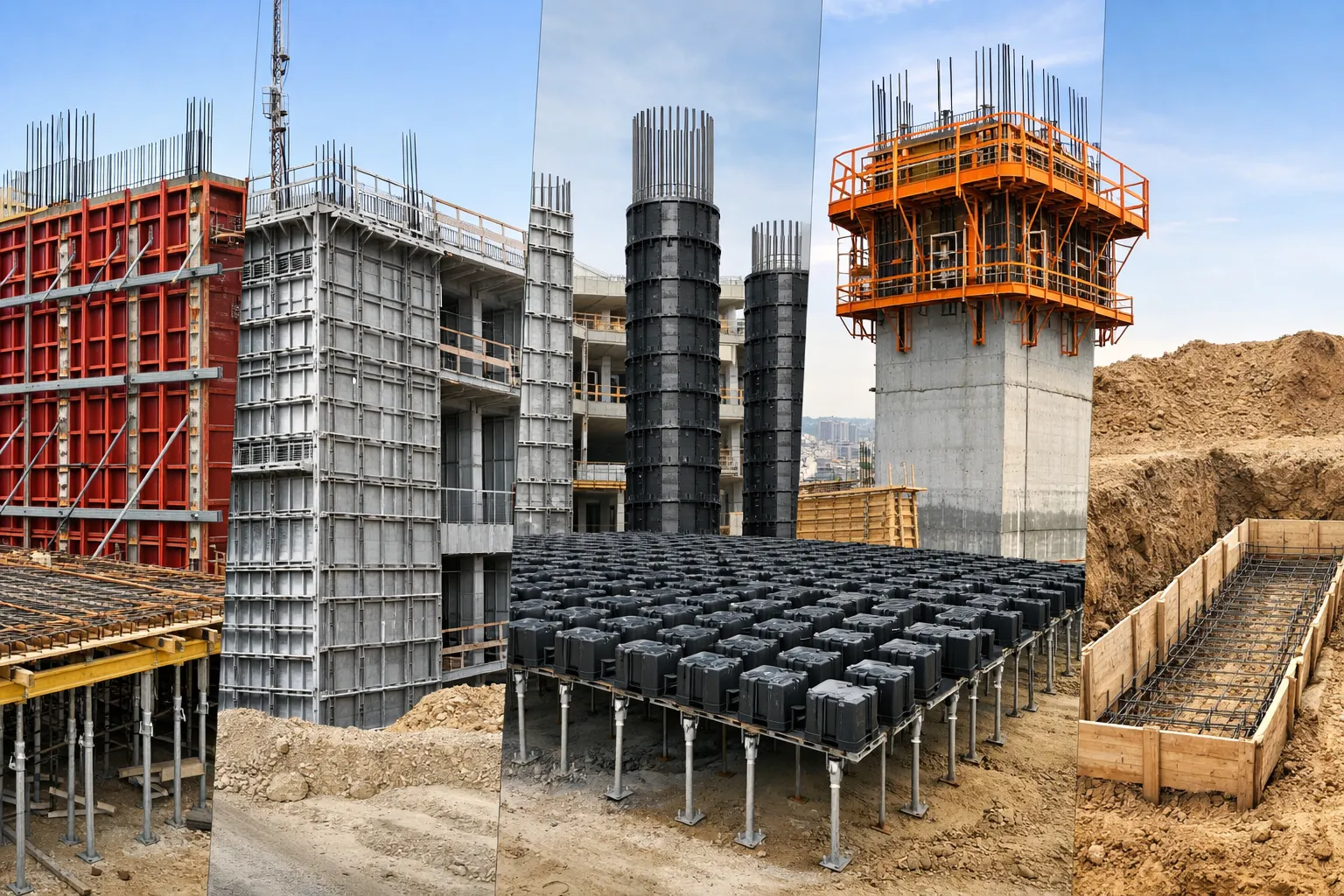
The selection of formwork materials and systems is a pivotal decision driven by project size, complexity, budget, and desired finish. The different Types of formwork in construction can be broadly categorized by the material from which they are constructed. Traditional timber formwork, often utilizing lumber and plywood, remains popular for its versatility and low initial cost, making it ideal for unique shapes and smaller, less repetitive projects; however, it has limited reusability and can deteriorate quickly. Conversely, steel formwork offers high durability, excellent surface finish, and exceptional reusability, commonly employed in large-scale infrastructure and industrial applications where high volume and repetition are required. Aluminum formwork systems share the strength of steel but offer reduced weight, improving handling and speed on site. Furthermore, plastic formwork is gaining traction, particularly for repetitive elements like columns and waffle slabs, due to its light weight and ease of assembly. Finally, proprietary engineered systems, often incorporating hydraulic climbing or self-erecting mechanisms, are crucial for constructing complex, high-rise buildings at rapid cycle times. The transition from material-based systems to highly integrated systems highlights the evolution of Formwork in civil engineering towards greater efficiency and safety.
Formwork for Slabs, Walls, Columns, and Foundations
The design principles and material choices for formwork must adapt to the specific structural element being cast. For example, Formwork for slab construction typically requires extensive scaffolding or shoring to support the horizontal load over a wide area, often utilizing proprietary adjustable jack posts and horizontal runners to maintain flatness and level. In contrast, forming vertical elements presents a challenge focused on resisting immense lateral pressure. For Concrete Column Formwork, circular or square molds—often made of fiberglass, engineered plastic, or steel—are used, needing robust tie systems to prevent outward bulging during the pour. Similarly, forming sheer or retaining walls requires heavy-duty panels and ties, a common offering from any reliable concrete wall formwork supplier, to withstand the hydrostatic pressure along the entire length and height. When dealing with underground elements, such as specific Concrete foundation types, the formwork may be simpler, sometimes consisting only of side shutters to define the perimeter, especially when the soil itself can act as a partial mold, though ensuring proper alignment and preventing soil contamination remains critical. Each application requires a specialized approach to ensure the structural shape is achieved accurately and safely.
Key Components and Materials That Make Up a Formwork System
A functional formwork system is a complex assembly of integrated components, each serving a specific structural purpose to ensure integrity and dimensional accuracy. The primary elements include the sheathing, which is the surface material that comes into direct contact with the concrete, determining the final surface finish. This sheathing is supported by a robust framework, consisting of vertical studs or ribs and horizontal walers, which distribute the massive pressure from the wet concrete across the system. This entire assembly is held rigid by ties and anchors, which pass through the sheathing to prevent the mold from expanding or collapsing. The sheathing material itself can vary widely, from water-resistant plywood for temporary systems to specialized plastic or metallic facings, which offer the ability for higher reusability and a superior architectural finish. Finally, the bracing and support system, including props, shoring, and scaffolds, must transfer the total weight of the concrete, reinforcement steel, and construction loads safely to the ground or previously cured structure. All these components must work in concert to achieve the requisite dimensional accuracy and load resistance stipulated by the design specifications.

Structural Performance and Safety Considerations
The design of formwork is a high-stakes engineering endeavor where structural performance is paramount to site safety and the quality of the finished work. A critical objective is to prevent premature failures, which include catastrophic blowouts where the formwork bursts under the weight and pressure, leading to significant delays and safety hazards. Equally important is preventing visible deformation, where the mold subtly shifts, leading to misaligned or non-plumb structural members that can compromise the overall load path of the building. Detailed pressure calculations are fundamental to selecting the correct spacing for ties and bracing, thereby mitigating the risk of Cracks During Concrete Pouring that result from external stresses on the immature concrete. Furthermore, meticulous attention to joint sealing is necessary to prevent grout leakage, which causes a weak, porous, and often unsightly surface finish, contributing to concrete defects types that may require costly remedial work. Effective formwork systems are therefore designed with specific safety factors to manage variability in concrete properties, pouring speed, and temperature, ensuring the structure maintains its geometry until the concrete is self-supporting.
How Formwork Is Installed, Used, and Removed in Practice
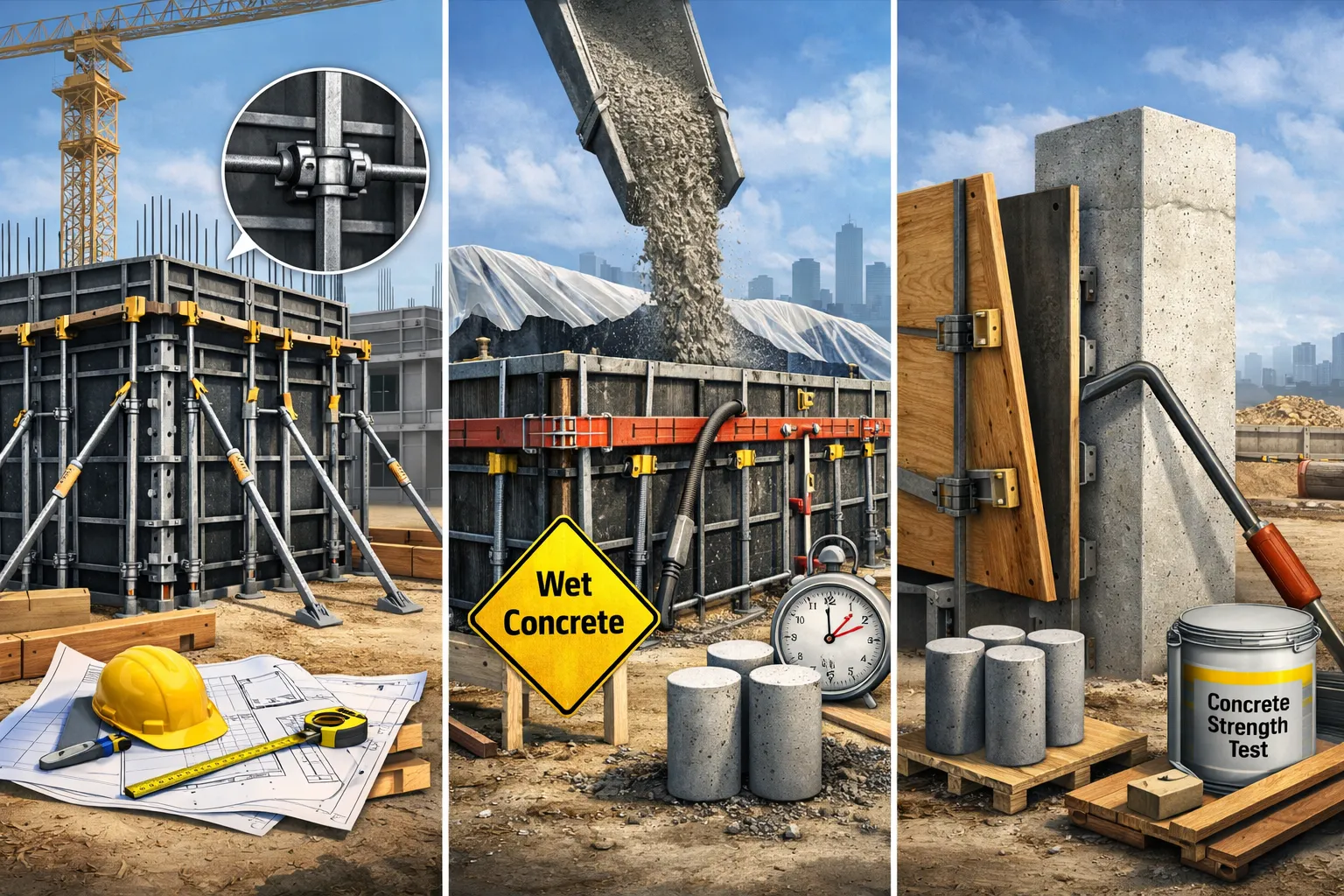
The execution phase of formwork management follows a detailed, sequential workflow, beginning with the meticulous setup of the system components according to the engineered drawings. Once all panels, shores, and bracing are in place, a mandatory pre-pour inspection is conducted to ensure perfect alignment, verify all ties and connections are secured, and confirm that safety measures are compliant. The actual pouring of the concrete must then be controlled—the rate of placing and compaction directly influences the hydrostatic pressure on the forms, meaning rapid pours require a more robust system. The concrete is left to cure, a period during which the formwork protects the material from environmental factors. The final stage is stripping or “striking” the formwork, a delicate and critical operation that requires careful timing. The removal schedule is strictly determined by the concrete’s strength, verified through cylinder tests, ensuring the newly formed element can safely carry its own weight and any subsequent construction loads without cracking or deflecting. This entire process must be executed without the use of high impact forces to avoid damaging the concrete surface or the reusable formwork panels.
Factors That Influence the Quality and Efficiency of Formwork
The overall quality and project efficiency derived from a formwork system are influenced by a convergence of technical and practical factors. Workmanship is perhaps the most significant practical variable; the skill and precision of the on-site construction team in erecting and stripping the forms directly affect the finished product’s dimensional tolerance and surface appearance. From a technical standpoint, the engineering design of the system, including accurate pressure calculations and detailed drawings, is essential for stability and safety. Material selection plays a massive role, with highly reusable materials like steel and aluminum offering superior lifecycle efficiency over traditional timber, even if the initial investment is higher. The reusability factor directly correlates with project cost reduction, especially on large sites with repetitive elements. Furthermore, the selection of the correct release agent, which facilitates the clean stripping of the formwork, is necessary to protect the concrete surface and extend the lifespan of the formwork panels, thereby contributing significantly to overall project output and efficiency.
Applications of Formwork Across Different Construction Sectors
Formwork is truly ubiquitous, serving as the hidden tool that enables nearly every reinforced concrete structure across diverse construction sectors. In the residential sector, custom-built timber forms are often used for basements and smaller structural beams, while modular plastic systems might be utilized for repetitive foundation walls. Commercial and mid-rise projects frequently rely on large, pre-assembled panel systems made of steel or engineered wood composite, which permit rapid cycle times floor after floor. The high-rise sector is characterized by the use of complex, self-climbing formwork, which allows the construction platform to vertically lift itself as the structure grows, maximizing speed and minimizing crane dependency. Industrial facilities, such as power plants and chemical processing sites, require custom, heavy-duty formwork to handle extremely thick, mass concrete elements like containment structures and heavily loaded transfer slabs. Finally, infrastructure projects—including bridges, tunnels, and retaining walls—often employ highly specialized, reusable traveling forms to cast long, continuous spans or segments efficiently, showcasing the versatility of the formwork discipline across all building typologies.

Why Proper Formwork Design Enhances Structural Integrity
The relationship between proper formwork design and long-term structural integrity is direct and profound; high-quality formwork is a precondition for a durable structure. When formwork is designed and installed meticulously, it guarantees that the concrete member achieves its intended geometric configuration without localized weaknesses. This precision is vital for ensuring the load-bearing capabilities of the structure are fully realized, as even minor deviations in the placement or thickness of concrete can significantly alter the member’s capacity and stiffness. Companies, including those that supply engineered systems like bfs industries, understand that investing in superior formwork reduces the likelihood of honeycombing, spalling, and alignment errors, all of which are common defects that diminish a structure’s lifespan. By controlling the shape, mitigating grout loss, and helping to manage optimal curing conditions, the formwork ensures the concrete reaches its specified strength and density, thereby enhancing its resilience against environmental stressors, leading directly to reduced maintenance costs and superior long-term performance and safety.
Conclusion
Understanding What is formwork in concrete is essential for anyone involved in the creation of durable, safe, and aesthetically pleasing structures. This temporary system is far more than a simple mold; it is a critical engineering component that governs geometry, structural alignment, and the critical curing process of fresh concrete. From resisting powerful hydrostatic pressures to determining the final surface finish, the integrity of the formwork directly impacts the quality, safety, and longevity of the final structure. For civil engineers, contractors, and project managers, meticulous attention to formwork design, material selection, and site execution is paramount. By choosing systems that prioritize dimensional accuracy and robust construction, professionals can significantly mitigate failure risks, minimize costly defects, and ultimately reinforce the structural performance of the building, ensuring a resilient and enduring result for every project undertaken.
FAQ questions
1. What is formwork in concrete construction?
Formwork is a temporary or permanent mold used to shape and support fresh concrete until it gains sufficient strength.
2. Why is formwork important in concrete structures?
Formwork ensures correct dimensions, alignment, surface quality, and structural integrity of concrete elements.
3. What materials are commonly used for formwork?
Common formwork materials include timber, plywood, steel, aluminum, and engineered plastic systems.
4. How long should formwork remain in place after pouring concrete?
Formwork should remain until the concrete reaches the required strength, typically determined by curing time and test results.
5. What happens if formwork is poorly designed or installed?
Poor formwork can cause deformation, concrete defects, safety hazards, and structural failure.