
FREE DOWNLOAD – B.F.S. HOLDING
Explore the full spectrum of services and industries covered by B.F.S. Holding.
The structural integrity and long-term performance of any built environment, from residential homes to massive infrastructure projects, rests entirely upon the proper design and installation of its foundation system. Understanding the critical role and various configurations of Foundation Types in Construction is not merely an academic exercise but a core professional necessity for civil engineers and structural designers aiming to deliver safe and durable assets. Every building, regardless of its scale, requires a meticulously planned base to interface with the subsurface, ensuring the superstructure’s loads are distributed safely and uniformly into the underlying soil or rock strata. The process of foundation selection is complex, serving as a critical nexus between geotechnical investigation and structural demand, where variables such as soil bearing capacity, the anticipated dead and live loads, potential seismic activity, and overall building geometry critically influence the final engineering decision. Therefore, a deep technical grasp of both shallow and deep systems is essential to mitigate the risks of excessive settlement, differential movement, and eventual structural failure, making this one of the most vital stages in the entire construction lifecycle.
Understanding the Role and Importance of Foundations in Construction
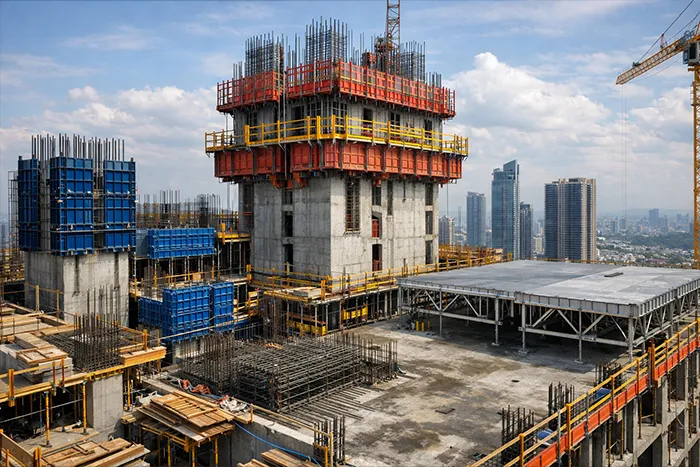
A building foundation is the subterranean interface between the superstructure—everything above ground—and the geological environment beneath, serving as the essential intermediary component designed to transfer the imposed vertical and lateral loads reliably to the ground. This transfer mechanism is vital because the foundation’s primary engineering function is to support the structure without yielding or undergoing unacceptable levels of settlement that could compromise the building’s serviceability or stability. Fundamentally, the foundation absorbs the weight of the structure, including its occupants, furnishings, and environmental forces like wind and snow, and dissipates these stresses across a sufficient area of soil mass, ensuring the pressure exerted remains well within the safe bearing capacity of the earth. A well-designed foundation is engineered to prevent two main types of failure: shear failure of the underlying soil, which is catastrophic, and excessive total or differential settlement, which leads to cracking, tilting, and serviceability issues in the superstructure. This deep comprehension of load transfer and geotechnical interaction forms the bedrock of every successful construction project, establishing the absolute structural basis for everything that follows.
Key Factors That Influence Foundation Selection
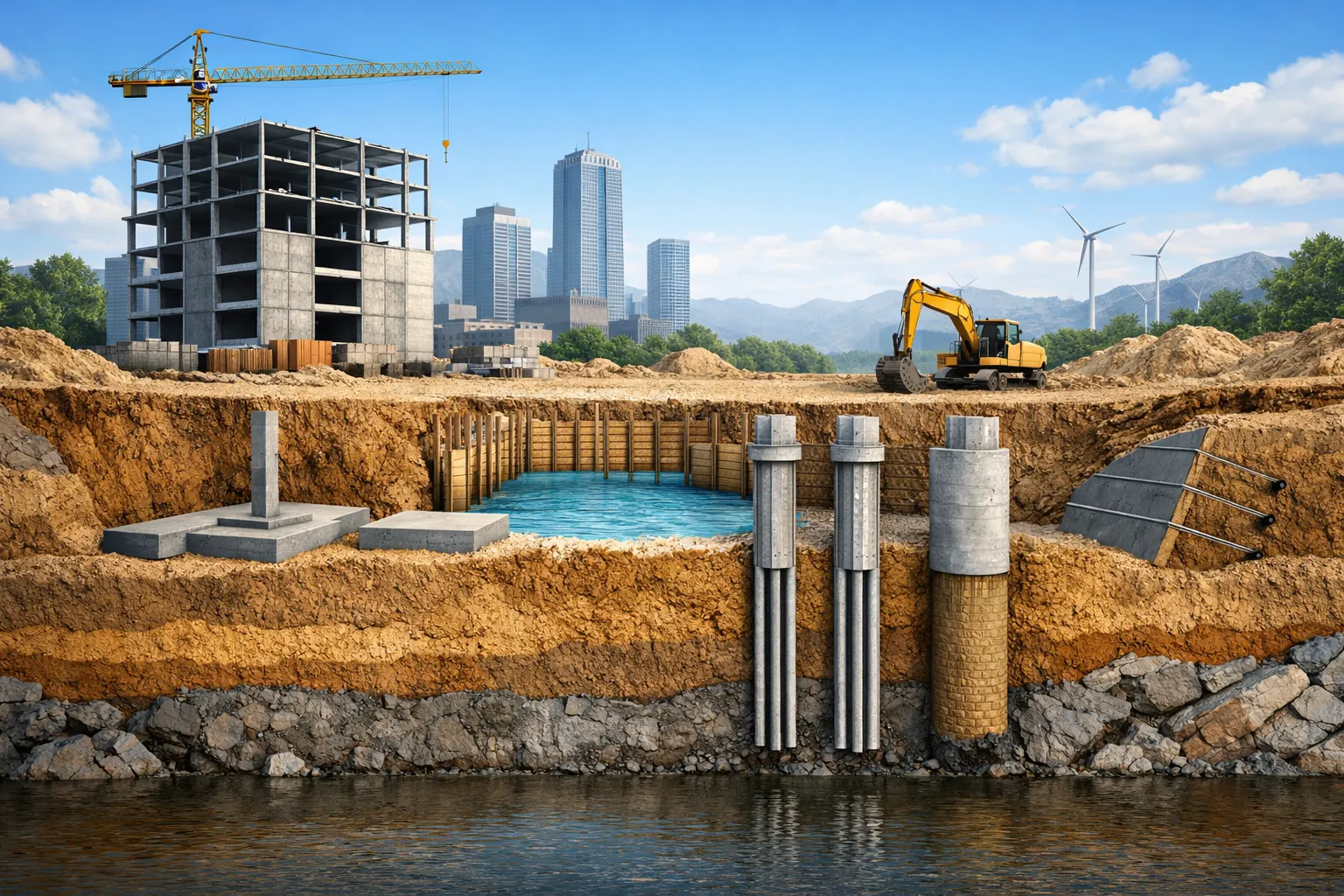
The decision-making process for selecting the appropriate foundation system is a complex convergence of several key engineering and economic variables, beginning foremost with the detailed geotechnical assessment of the construction site. Critical inputs include the soil bearing capacity, which quantifies the maximum pressure the soil can safely support; the depth of the competent load-bearing strata; and the observed groundwater levels, which significantly impact soil strength and excavation stability, often requiring careful management during the early phases of construction. Furthermore, the total and differential load distributions imposed by the proposed structure—including both static weights and dynamic forces—must be accurately calculated and accounted for. Seismic conditions and wind uplift pressures necessitate specific design modifications to ensure lateral stability, particularly in structures utilizing specialized elements like precast concrete walls where the design must prevent tipping or sliding. When preparing the site, the consideration of what is formwork in concrete and how best to implement it also plays a role, as the formwork system must be robust enough to hold the wet concrete and maintain the precise dimensions required by the foundation design specifications, connecting the theoretical design to physical reality.
Shallow Foundations: Common Types and Their Structural Applications
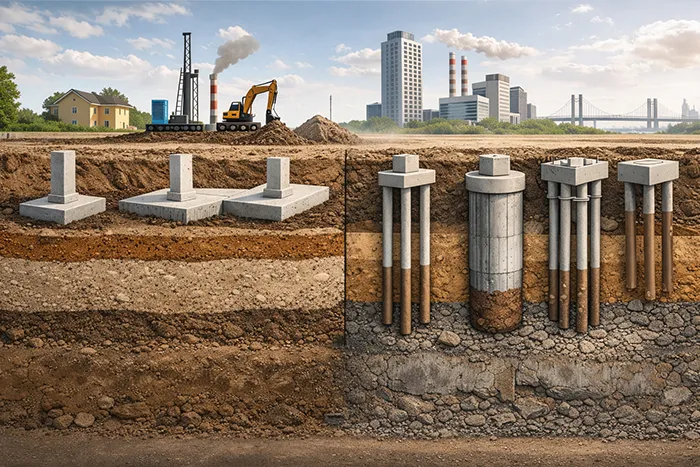
Shallow foundations, by definition, are those systems that transfer the building load to the earth at a depth relatively close to the finished ground surface, typically defined as having a depth of embedment that is less than or equal to the width of the footing itself. These systems are highly effective and economically efficient when the supporting soil stratum with adequate bearing capacity is found near the surface. The category encompasses several common types, most notably the spread footing, often used to support individual columns, and the continuous or strip footing, which runs along the length of a load-bearing wall to distribute the load evenly. For closely spaced columns or where individual footings might overlap, a combined footing or a cantilever (strap) footing may be employed to manage eccentric loads and maintain clearance. When the soil bearing capacity is very low, or when column loads are exceptionally high across a large area, engineers often turn to a mat or raft foundation, which is essentially a large, continuous concrete slab covering the entire footprint of the building, acting as a single rigid unit to minimize differential settlement across the site.
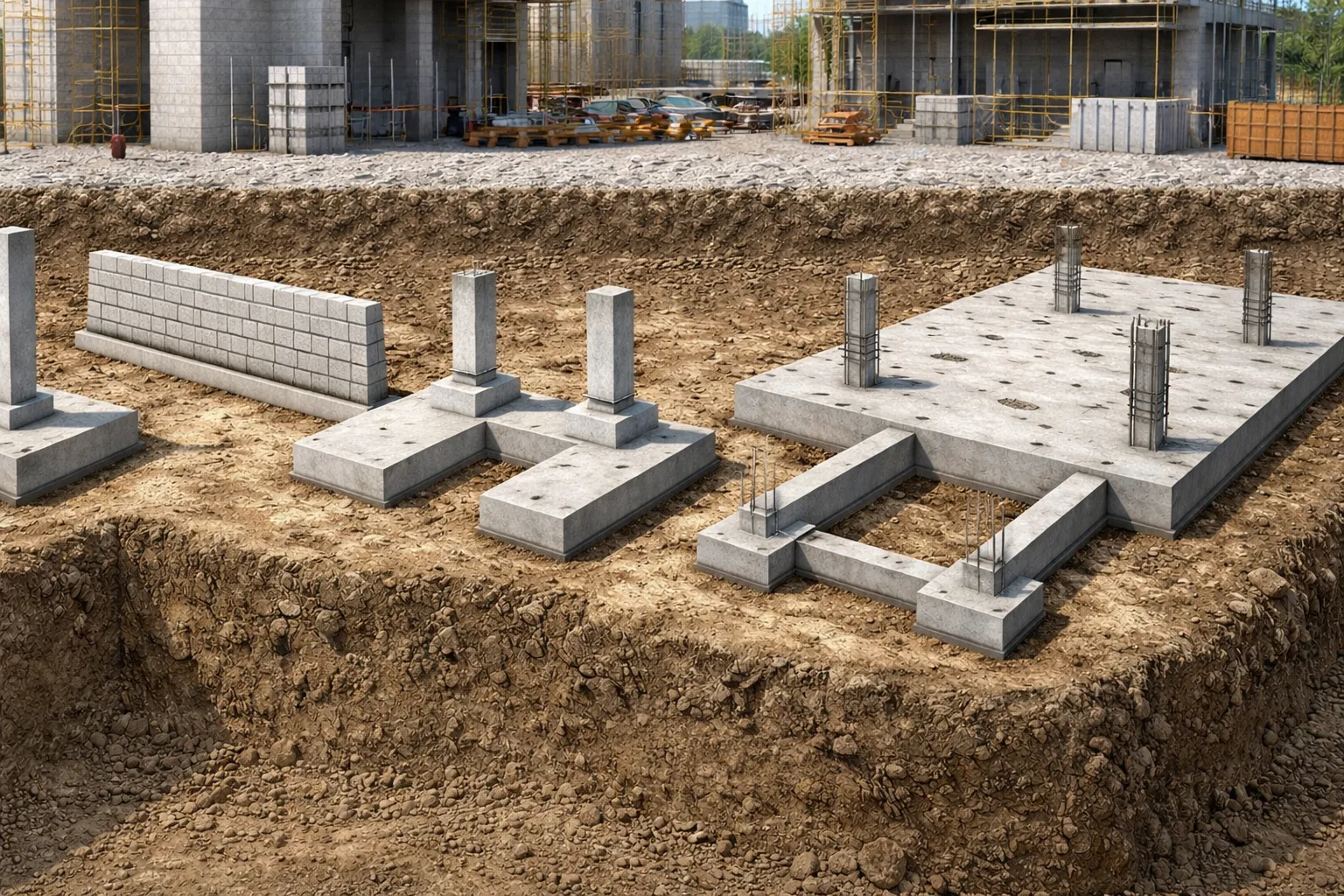
How Shallow Foundations Function in Residential and Low-Rise Projects
The primary application for shallow foundations remains within the domain of residential buildings, low-rise commercial structures, and light industrial facilities where the total structural loads are moderate and the geotechnical investigation reveals favorable soil conditions within the upper few meters of the surface. In these contexts, shallow foundations function by spreading the concentrated point loads from columns or the linear loads from walls across a significantly wider area, thereby reducing the stress intensity imparted to the underlying soil mass. The design is heavily dependent on the characteristic properties of the near-surface soil; for instance, footings in cohesive clay soils must be designed differently than those in granular sands to account for different settlement behaviors and susceptibility to seasonal moisture changes. Excavation for these systems must be carefully managed to avoid disturbing the critical bearing surface, and the subsequent construction often involves placing specialized products from companies such as bfs industries, ensuring high-quality material delivery. Furthermore, the use of robust concrete wall formwork is essential for casting the foundation walls and integrating them seamlessly with the footings, ensuring a monolithic and structurally sound transition from the subterranean base to the vertical elements of the superstructure above.
Deep Foundations: Structural Solutions for Weak Soil and Heavy Loads
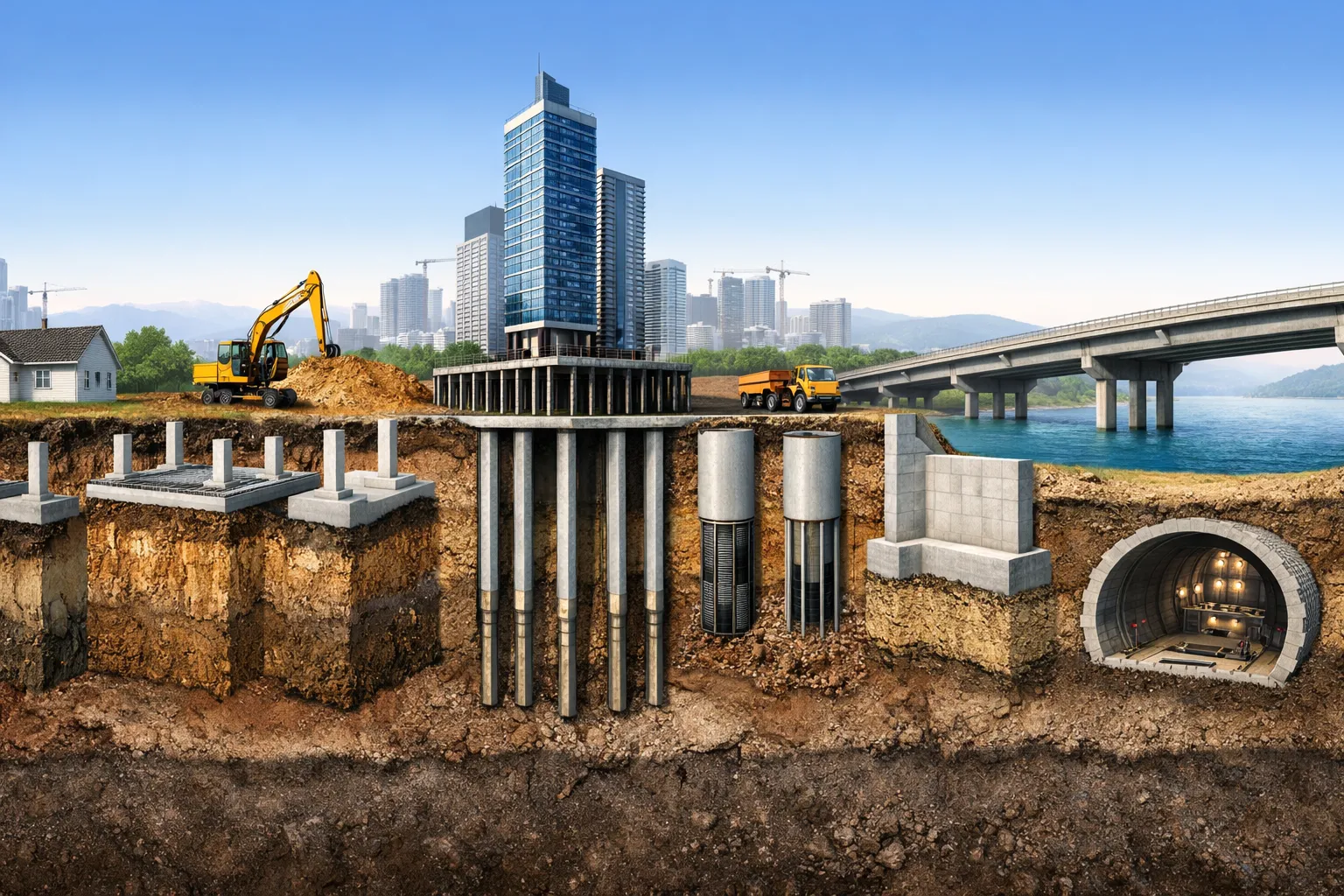
Deep foundation systems are necessitated when the upper layers of soil are weak, unstable, or highly compressible, making them unsuitable for supporting heavy structural loads, or when the magnitude of the loads themselves (as in high-rise buildings) requires load transfer to much deeper, stronger rock or soil strata. These systems penetrate the problematic surface layers to derive support either from end-bearing resistance on a competent deep layer or through skin friction developed along the shaft’s perimeter within the soil mass. The most common type is the pile foundation, which consists of long, slender elements driven or drilled into the ground, categorized by material (steel, concrete, timber) and method of installation. Other critical deep systems include piers, which are generally larger diameter concrete elements often constructed using open excavation; drilled shafts (or caissons), which are high-capacity, cast-in-place concrete cylinders that can be extended to significant depths; and, in specialized cases, buoyant foundations, designed to offset some of the structural load using the buoyancy of the excavated soil mass. These advanced engineering solutions are fundamentally chosen over shallow methods to bridge the gap between inadequate surface soil and competent deep substrata, ensuring stability where conventional footings would fail catastrophically.
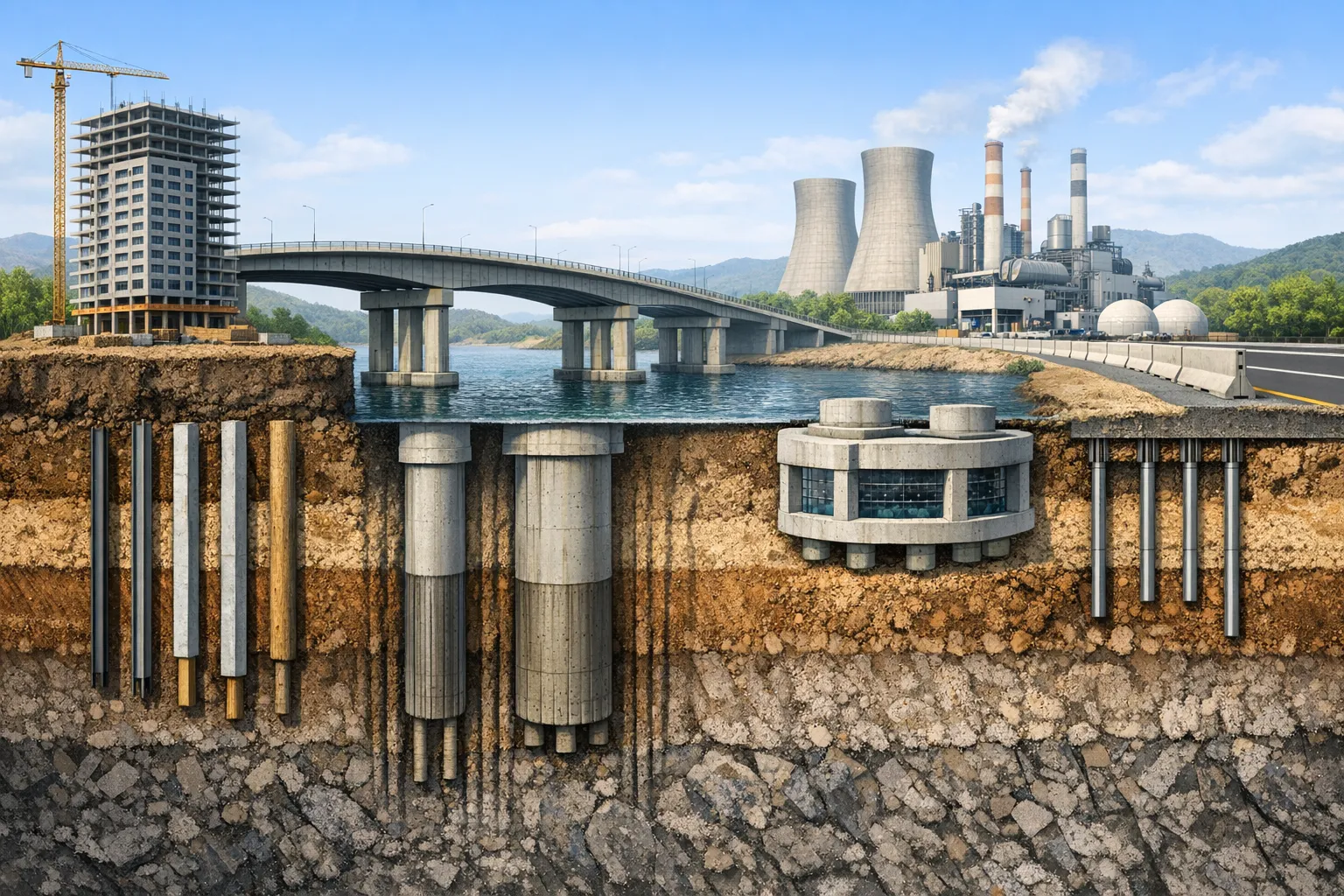
Where Deep Foundations Are Used in Modern Infrastructure
Deep foundations are the indispensable choice for almost all large-scale civil and industrial infrastructure projects that impose substantial vertical and lateral forces on the ground or where the immediate subsurface is characterized by unfavorable geotechnical conditions, such as deep alluvial deposits or soft marine clay. These systems are ubiquitously found supporting high-rise commercial towers and dense residential complexes, where the concentration of loads demands access to bedrock or deep dense soil layers. Furthermore, deep foundations are crucial for transportation infrastructure, including major bridge piers and abutments, which must withstand immense forces from traffic, water current scour, and lateral wind loading. Industrial structures, such as power plants, refineries, and large machinery foundations, also rely heavily on deep systems due to the need for minimal vibration and absolute settlement control. Even the forms utilized for external infrastructure protection, such as precast jersey barrier forms used alongside roadways and critical site boundaries, rely on stable, often deep, foundation support to maintain their alignment and functional stability against lateral forces, illustrating how deep foundation technology underpins the robustness of nearly every aspect of the modern built environment.
Comparing Foundation Types: Structural Behavior, Cost, and Performance
When comparing shallow and deep foundation systems, the fundamental difference lies in their load transfer mechanism and inherent structural behavior. Shallow foundations distribute loads primarily through direct bearing on the supporting soil stratum immediately beneath the footing, resulting in relatively predictable and often immediate settlement patterns; they are generally faster to construct and represent a lower cost solution when soil conditions are favorable. Deep foundations, however, distribute loads through a combination of toe bearing and side friction along the shaft, engaging massive volumes of soil over a significant depth, which makes their settlement behavior more complex, often involving long-term consolidation. While deep foundations require substantially more time for installation—involving specialized drilling or driving equipment—and are significantly more expensive, they offer superior structural compatibility for high-magnitude loads and sites with unfavorable upper soil, providing unparalleled durability and a higher safety factor against total collapse. Engineers must therefore weigh the economic benefits of shallow systems against the enhanced performance and risk mitigation provided by the deep solutions, ensuring the chosen system offers the required long-term reliability for the structure’s projected design life.
How Engineers Determine the Most Suitable Foundation Type
The determination of the most suitable foundation system is a rigorous, multi-stage engineering evaluation process that prioritizes safety, performance, and cost-effectiveness. The process begins with a comprehensive site investigation and geotechnical assessment, involving boreholes, cone penetration tests, and laboratory analysis of collected soil samples to accurately define the stratification, strength, and compressibility characteristics of the underlying ground. Based on this essential data, structural engineers perform detailed load calculations for the proposed structure, determining the total expected vertical, horizontal, and moment loads that the foundation must safely resist. These loads are then compared against the established soil bearing capacities, often utilizing sophisticated numerical modeling to predict total and differential settlement under various scenarios. Environmental and geographical factors, such as the proximity of existing structures, water bodies, and liquefaction potential in seismic zones, further refine the design choices. This holistic approach, integrating precise load demands with actual soil behavior and contextual environmental risks, ensures that the selected foundation type is not merely adequate, but optimally engineered for the specific challenges and requirements of the individual project.
Practical Engineering Considerations During Foundation Construction
The successful execution of any foundation design depends heavily on rigorous quality control during the construction phase, addressing critical details such as reinforcement quality, precise excavation, and effective groundwater management. Ensuring the accurate placement and proper specification of steel reinforcement is paramount, as the rebar cage provides the tensile strength necessary to resist bending moments and shear forces, a task that demands careful checking before the concrete is poured. Accurate excavation is equally important, especially for deep foundations where plumbness and stability of the shaft or borehole are essential to achieving the designed capacity, while groundwater control, often through pumping or cut-off walls, prevents the loss of soil stability and maintains a dry working environment. Crucially, the quality and preparation of the formwork system must be highly controlled; understanding precisely what is formwork in concrete informs the selection process, where systems like proprietary Concrete Modular Formwork can offer superior accuracy, speed, and dimensional stability compared to traditional timber forms. This careful attention to on-site parameters, including proper concrete curing requirements to achieve specified strength, is what translates a robust engineering design into a durable, functional reality.
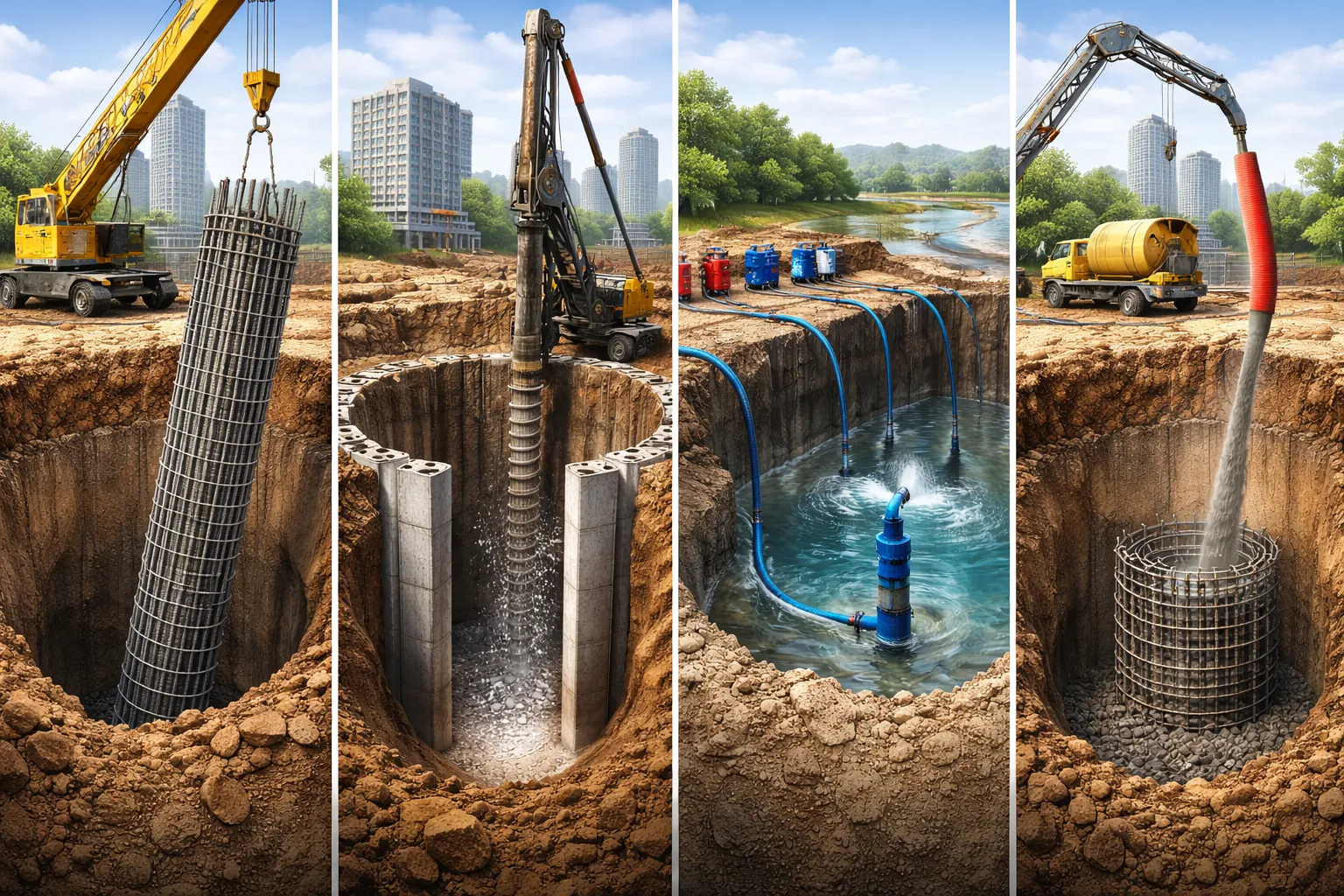
Ensuring Safety, Quality, and Long-Term Performance
Achieving the desired long-term reliability of a foundation structure mandates a commitment to strict safety and quality assurance protocols throughout the construction and post-construction phases. This includes continuous safety monitoring of excavations, especially deep ones, to prevent collapse and ensure worker protection, aligning with industry best practices like those promoted by organizations such as bfs industries. Quality assurance involves implementing rigorous inspection procedures at every stage, including checking the dimensions and bearing elevation of footings, verifying the placement and tie-spacing of reinforcement cages, and conducting slump and cylinder tests on concrete pours to confirm material compliance. For high-capacity deep foundations, load testing may be performed, involving the application of calculated forces to a test pile or shaft to empirically verify the design capacity and confirm predicted settlement behavior. Factors influencing foundation reliability long-term include managing surface water drainage away from the structure and monitoring settlement over time in geotechnical sensitive areas, all of which contribute to maintaining the foundation’s structural integrity and ensuring it fulfills its intended role for the entirety of the building’s operational life.
Conclusion
The successful realization of any structure begins and ends with an astute understanding and correct application of Foundation Types in Construction. These often-unseen structural elements are responsible for mediating the entire relationship between the built world and the natural earth, ensuring that all forces are safely and predictably transferred to the ground without causing detrimental movement or failure. Foundation selection is far from a default decision; it is a complex, data-driven engineering judgment that synthesizes geotechnical reports, rigorous structural load analysis, and site-specific environmental conditions to arrive at the optimal solution. Whether the project calls for the efficiency of a spread footing or the deep capacity of a drilled caisson, the correct choice is paramount, as it directly influences the safety, longevity, and long-term serviceability of the entire building asset. By applying deep technical knowledge and adhering to stringent quality standards throughout design and construction, civil engineers guarantee a stable, durable, and reliable structural basis for future generations.
Frequently Asked Questions
1. What is the primary function of a building foundation ?
The primary function of a foundation is to safely transfer structural loads to the ground while preventing excessive settlement or instability.
2. What is the main difference between shallow and deep foundations ?
Shallow foundations transfer loads near the ground surface, whereas deep foundations transfer loads to stronger soil or rock layers at greater depths.
3. When is a deep foundation required instead of a shallow one ?
Deep foundations are required when surface soils have low bearing capacity or when structures impose very heavy loads.
4. What factors most influence the selection of a foundation type ?
Soil bearing capacity, groundwater conditions, structural loads, seismic forces, and site constraints are the key influencing factors.
5. Why is quality control critical during foundation construction ?
Because errors in excavation, reinforcement placement, or concrete work can lead to settlement, cracking, or long-term structural failure.